
High School Musical (2006)
Story overview
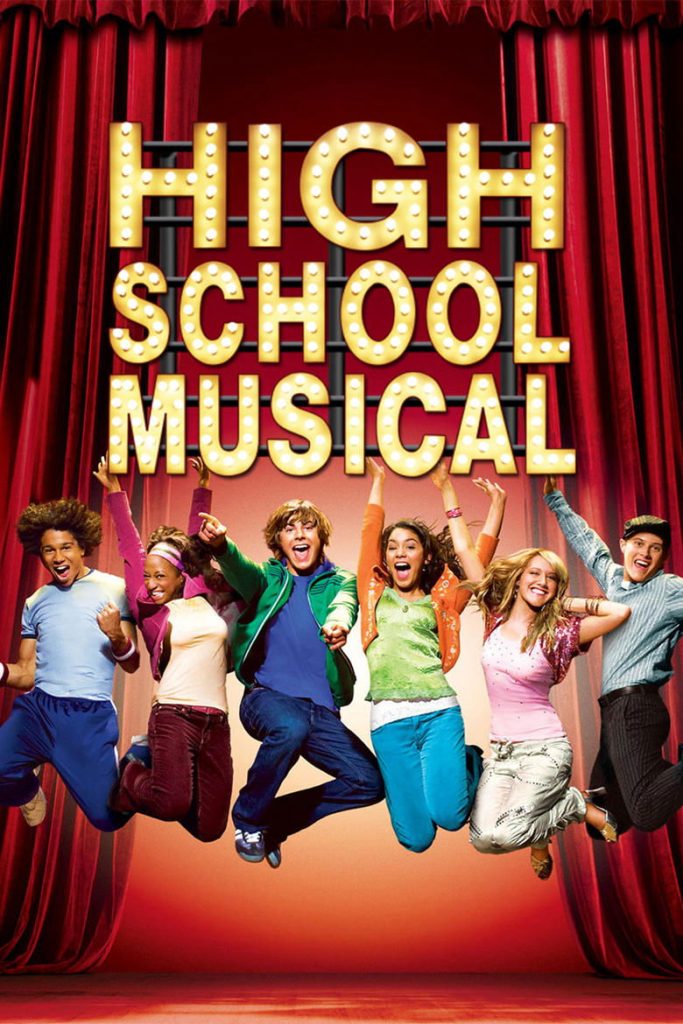
High School Musical is a 2006 TV movie musical that follows Troy Bolton, a popular basketball star, and Gabriella Montez, a shy academic achiever, who unexpectedly discover a shared passion for singing. When they audition for their high school's winter musical, they challenge the established social cliques and face pressure from peers and family to conform to their expected roles. The film explores themes of self-discovery, friendship, and breaking stereotypes through energetic musical numbers and lighthearted drama, all set in a wholesome high school environment.
Parent Guide
Family-friendly musical with positive messages about self-expression and challenging stereotypes. Minimal content concerns make it appropriate for most children.
Content breakdown
No violence. Some mild competitive tension in sports and academic settings, but all resolved peacefully.
Nothing scary or disturbing. All conflicts are mild and age-appropriate.
No profanity or inappropriate language. Clean dialogue throughout.
Very mild romantic elements including hand-holding, brief hugs, and innocent crushes. No kissing shown. Age-appropriate for family viewing.
No substance use, smoking, or drinking depicted.
Mild emotional moments related to peer pressure, fitting in, and pursuing dreams. All conflicts are resolved positively with uplifting musical numbers.
Parent tips
This film is ideal for family viewing with its positive messages about following your passions and challenging stereotypes. The TV-G rating ensures minimal content concerns. Parents can discuss themes like peer pressure, balancing interests, and teamwork. The musical format makes it engaging for children who enjoy music and dance. Note that some mild romantic elements and high school social dynamics are present but handled age-appropriately.
Parent chat guide
Parent follow-up questions
- Did you like the singing and dancing?
- What was your favorite part?
- Was it fun when they were on stage?
- Why do you think Troy's friends didn't want him to sing?
- How did Gabriella feel when she first came to the new school?
- What makes a good friend in this movie?
- How does the movie show different types of pressure teenagers face?
- What stereotypes do the characters break?
- Why is it important to try new things even if they're unexpected?
- How realistically does the film portray high school social dynamics?
- What does the movie suggest about balancing multiple passions?
- How do the adult characters influence the teenagers' decisions?
🎭 Story Kernel
High School Musical isn't about following your dreams—it's about the careful negotiation of social capital within rigid hierarchies. Troy and Gabriella's real journey isn't breaking free from cliques, but expanding their influence across them. Troy maintains his basketball captain status while dabbling in theater; Gabriella gains popularity through association. The climax isn't their audition triumph, but the cafeteria musical number where every clique performs in harmony—a fantasy of social integration where no one loses status. The film argues that true rebellion is impossible within the system; the best you can hope for is becoming popular enough to bend the rules slightly.
🎬 Visual Aesthetics
The film employs a hyper-saturated color palette that divides the school into visual territories: warm golds and reds for the basketball court, cool blues for the science lab, theatrical purples for the stage. Camera movements shift from handheld documentary-style in conflict scenes to sweeping musical choreography during numbers, visually reinforcing the tension between reality and fantasy. The basketball scenes use rapid cuts and close-ups to create intensity, while musical numbers employ wide shots and symmetrical framing reminiscent of classic Hollywood musicals. Notice how Troy and Gabriella are often shot with soft focus and backlighting during intimate moments, creating a bubble of idealized romance against the harsh fluorescent lighting of school corridors.
🔍 Details & Easter Eggs
💡 Behind the Scenes
Zac Efron's singing voice was partially dubbed by Drew Seeley, creating one of Disney's most famous vocal controversies. The film was shot in 28 days at East High School in Salt Lake City, which became such a tourist attraction that the school had to implement visiting hours. Kenny Ortega choreographed the basketball sequences to match the musical numbers' precision, training the actors for weeks. The iconic cafeteria scene took three days to film and required 60 extras to learn complex choreography. Vanessa Hudgens was only 16 during filming and had to have a tutor on set, while Ashley Tisdale's Sharpay was originally written as a one-dimensional villain until she infused the character with vulnerability.
Where to watch
Choose region:
- Disney Plus
- fuboTV
- DisneyNOW
- Amazon Video
- Google Play Movies
- YouTube
- Fandango At Home