
History of the World: Part I (1981)
Story overview
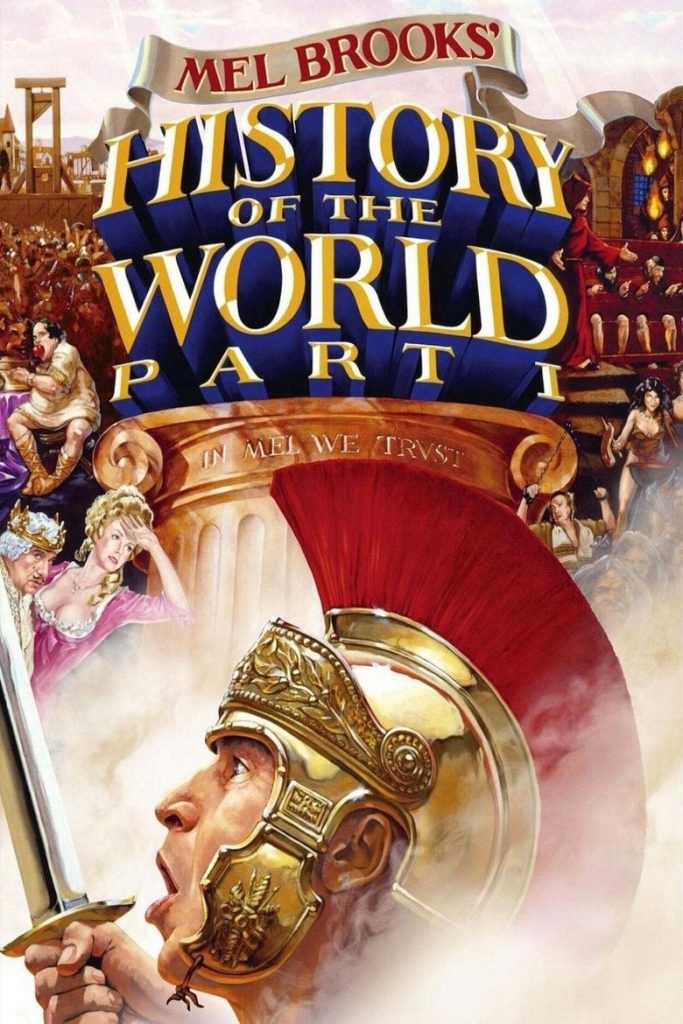
History of the World: Part I is a 1981 satirical comedy directed by and starring Mel Brooks. It presents a humorous, irreverent take on historical events, including the Roman Empire, the French Revolution, and the Spanish Inquisition. The film uses slapstick, parody, and absurd humor to mock historical figures and periods, with a cast featuring Dom DeLuise, Madeline Kahn, Harvey Korman, and Cloris Leachman. Rated R for its adult-oriented content, it's a fast-paced, over-the-top comedy that doesn't take itself seriously.
Parent Guide
This film is a raunchy, adult-oriented comedy with frequent sexual humor, strong language, and slapstick violence. It is not suitable for children under 16 without parental guidance and previewing.
Content breakdown
Comedic, exaggerated violence including slapstick fights, falls, and mock executions (e.g., in Roman and French Revolution scenes). No graphic or realistic violence, but it's frequent and played for laughs.
Some scenes might be mildly disturbing due to absurd or dark humor, such as depictions of the Spanish Inquisition or comedic peril. No truly frightening content, but younger viewers might find it confusing or unsettling.
Includes strong language (e.g., profanities, sexual references) and crude humor throughout. Language is used for comedic effect but is frequent and adult-oriented.
Frequent sexual innuendo, jokes, and references. Includes brief comedic nudity (e.g., in a Roman bathhouse scene) and suggestive situations. Sexual content is a central part of the humor.
Minor depictions of drinking (e.g., wine in historical settings) for comedic effect. No focus on substance abuse or illegal drugs.
Low emotional intensity; the film is lighthearted and farcical. Humor dominates, with no serious emotional themes or distressing moments.
Parent tips
This film is rated R primarily for sexual humor, strong language, and comedic violence. It's best suited for mature teens and adults due to its adult-oriented jokes and themes. Parents should be aware of frequent sexual innuendo, brief nudity in comedic contexts, and exaggerated slapstick violence. The humor is often crude and satirical, which may confuse or offend younger viewers. Consider watching it first to gauge appropriateness for your family.
Parent chat guide
Parent follow-up questions
—
—
- What parts of the movie did you find funny? Why?
- Did you understand that this movie is making fun of history, not telling real facts?
- How did the characters act in silly ways? Can you give an example?
- How does the film use satire to comment on historical events? Is it effective?
- What did you think about the sexual humor and language? Was it appropriate for the comedy?
- How does Mel Brooks' style of humor compare to modern comedies you've seen?
- Do you think the R rating is justified based on the content? Why or why not?
🎭 Story Kernel
The film's core theme is the absurdity of power structures throughout history, expressed through relentless satire. Characters are driven not by grand historical narratives but by base human desires: lust, greed, vanity, and survival. From Roman emperors to French revolutionaries, everyone is equally ridiculous, suggesting history is less about great men and more about foolish people in fancy costumes. The Spanish Inquisition becomes a musical number, the French Revolution a class war fought with bad accents—Brooks argues that reducing history to its most ludicrous elements reveals its essential truth: it's all theater, often bad theater.
🎬 Visual Aesthetics
The visual style is pure vaudeville—deliberately cheap sets, garish costumes, and exaggerated performances that highlight the artificiality of historical epics. Camera work favors wide shots that emphasize the stage-like quality, while sudden close-ups punctuate punchlines. The color palette shifts from the sun-bleached yellows of ancient Rome to the muddy browns of medieval Europe, each era getting its own tacky aesthetic. Action sequences are choreographed like slapstick routines, with the French Revolution's guillotine scene using rhythmic editing to turn execution into dark comedy. Symbolism is blunt and literal—the Last Supper becomes a complaint session about portion sizes.
🔍 Details & Easter Eggs
💡 Behind the Scenes
Mel Brooks shot the film's multiple historical segments back-to-back with minimal budget shifts, using many of the same crew members across different 'eras' to maintain consistent comedic timing. The French Revolution scenes were filmed at the actual Palace of Versailles, making Brooks one of the few directors to stage a musical number in the Hall of Mirrors. Most actors played multiple roles across different time periods—Dom DeLuise appears as both Emperor Nero and the Spanish Inquisition's Chief Torturer. The famous 'Jews in Space' trailer was added last-minute when Brooks decided the film needed a fake preview, inspiring his later full-length parody.
Where to watch
Choose region:
- HBO Max
- HBO Max Amazon Channel
- Amazon Video
- Apple TV Store
- Google Play Movies
- YouTube
- Fandango At Home
- Spectrum On Demand
Trailer
Trailer playback is unavailable in your region.