
Hold Your Breath: The Ice Dive (2022)
Story overview
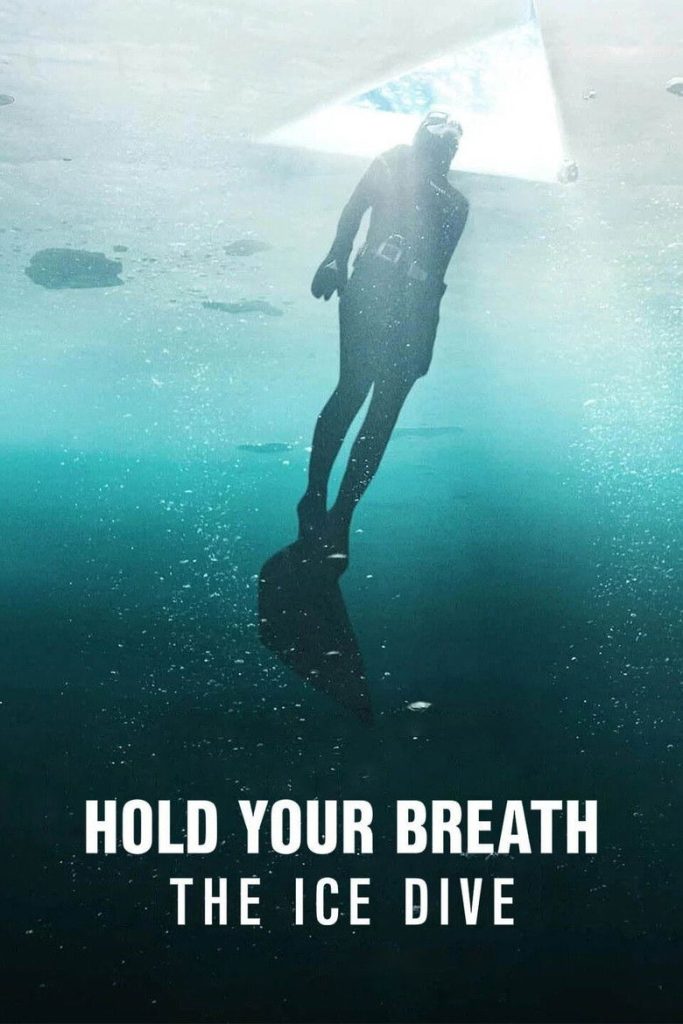
This documentary follows free diver Johanna Nordblad as she attempts to break the world record for distance traveled under ice with a single breath. The film captures her intense physical and mental preparation, the extreme conditions of diving beneath frozen surfaces, and the scientific aspects of breath-holding and cold-water physiology. It's an inspiring look at human determination and the limits of human capability in a natural, challenging environment.
Parent Guide
A family-friendly documentary about an extreme athletic achievement, with educational value and positive messages about determination and safety. Suitable for most children, with mild tension but no inappropriate content.
Content breakdown
The main peril involves the inherent risk of free diving under ice, which could cause anxiety for sensitive viewers. Scenes show the diver in potentially dangerous situations, but it's presented in a factual, non-sensational way with emphasis on safety protocols. No violence or harm occurs.
Some children might find the idea of diving under ice or holding one's breath for minutes unsettling. The underwater scenes are dark and confined, which could be mildly intense, but there are no jump scares, monsters, or graphic imagery. The tone is more awe-inspiring than frightening.
No profanity, offensive language, or inappropriate dialogue. The narration and interviews are clean and focused on the subject matter.
No sexual content, nudity, or romantic elements. The diver wears standard wetsuits or diving gear throughout.
No depiction of alcohol, drugs, tobacco, or substance use. The focus is solely on athletic performance and natural environments.
Emotional intensity comes from the suspense of the record attempt and the diver's concentration. There might be moments of tension as she pushes her limits, but it's balanced with calm preparation scenes. The overall mood is inspirational rather than highly emotional.
Parent tips
This documentary is suitable for most children, but parents should be aware of the inherent tension in watching someone perform a potentially dangerous activity. The film focuses on preparation, safety protocols, and the athlete's mindset rather than sensationalizing risk. It could spark conversations about goal-setting, perseverance, and respecting natural environments. No graphic content, strong language, or mature themes are present.
Parent chat guide
Parent follow-up questions
- What was your favorite part of the movie?
- Did you see any fish or animals under the ice?
- How do you think the diver felt in the cold water?
- Why do you think someone would want to dive under ice?
- What did Johanna do to get ready for her dive?
- What does it mean to 'hold your breath' for a long time?
- What scientific facts about breath-holding or cold water did you learn?
- How did the documentary build suspense without being scary?
- What qualities does Johanna show that help her succeed?
- How does this documentary compare to other sports or adventure films you've seen?
- What ethical considerations might there be in extreme sports like this?
- How does the film use cinematography to enhance the experience of the dive?
🎭 Story Kernel
At its core, 'Hold Your Breath: The Ice Dive' is less about a physical escape from a frozen lake and more about the psychological prison of guilt. The protagonist, trapped under ice after a diving accident, isn't just fighting hypothermia and drowning—he's wrestling with the memory of a past failure where someone died. The real tension isn't the ticking clock of his oxygen supply, but the weight of survivor's guilt that threatens to make him surrender. The film argues that our worst traumas can become the very things that either drown us or force us to surface, gasping for a new life. It's a survival thriller that uses the external, literal freeze to explore the internal, emotional freeze of unresolved pain.
🎬 Visual Aesthetics
The film's visual language masterfully uses the dichotomy of claustrophobia and vast emptiness. Underwater, the camera is tight, shaky, and personal, trapping us in the protagonist's panicked POV with the ice ceiling as a terrifying, unbreakable barrier. Above the ice, the cinematography shifts to wide, sterile, and static shots of the frozen lake landscape, emphasizing his isolation and the indifferent scale of nature. The color palette is brutally effective: a monochrome world of blues, whites, and grays, punctuated only by the alarming crimson of blood or a fading flashlight beam. This isn't just cold; it's a visual representation of emotional numbness and shock, where the only warmth is the memory-flashbacks, shot in muted sepia tones.
🔍 Details & Easter Eggs
💡 Behind the Scenes
To achieve the punishingly authentic underwater and ice-locked scenes, the production used a combination of practical effects in a controlled tank and location shooting on a frozen lake in Northern Finland. The lead actor underwent extensive free-diving and cold-water exposure training, with many of the gasping, panicked breaths being genuine reactions to the frigid water. Interestingly, the script was deliberately lean on dialogue for the present-day sequences, placing immense pressure on the actor's physical performance to convey a complex internal struggle, a challenge he reportedly relished.
Where to watch
Choose region:
- Netflix
- Netflix Standard with Ads
Trailer
Trailer playback is unavailable in your region.