
Honey, I Shrunk the Kids (1989)
Story overview
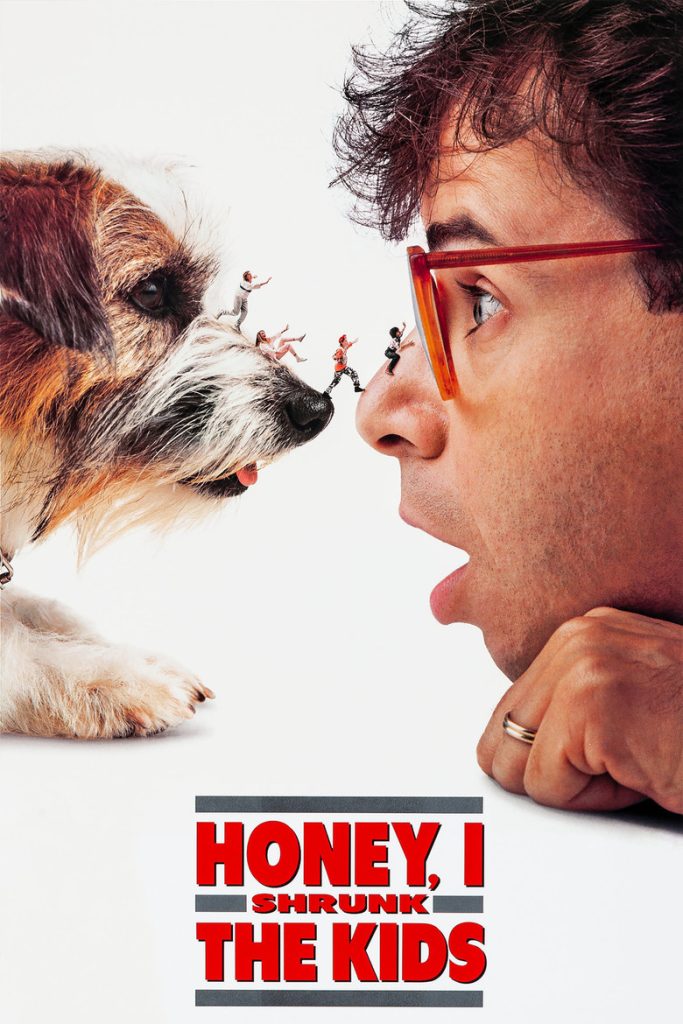
In this 1989 family adventure comedy, an eccentric inventor accidentally shrinks his two children and two neighbor kids to microscopic size using his experimental shrinking machine. The tiny teens must navigate the now-gigantic backyard wilderness, facing oversized insects and other hazards, while their frantic father searches for them and tries to reverse the process.
Parent Guide
A family-friendly adventure with mild peril and positive messages, suitable for most children ages 8 and up. Younger viewers might find some insect scenes intense.
Content breakdown
Children face peril from giant insects (ants, bees, scorpion), household dangers (lawnmower, sprinkler), and falls. No injuries shown, all resolved safely with comedic tone.
Some scenes might be intense for sensitive viewers: giant insects, being chased by a scorpion, nearly being eaten by a baby. All presented with humor and happy resolution.
No profanity or offensive language. Clean family-appropriate dialogue throughout.
No sexual content or nudity. Brief innocent teenage crush subplot.
No substance use, smoking, or drinking depicted.
Mild tension from separation anxiety and peril scenes, balanced with humor and family bonding. Father's distress when realizing his mistake is emotionally relatable but not overwhelming.
Parent tips
This classic family film combines humor with adventure, featuring mild peril as shrunken children face giant insects and household dangers. The tone remains lighthearted throughout, with positive messages about family bonds and problem-solving. Some scenes might be intense for very young viewers due to the size contrast and insect encounters.
Parent chat guide
Parent follow-up questions
- What was your favorite part of the movie?
- How did the kids feel when they got very small?
- Which big bug was the funniest to you?
- What would you do if you were shrunk like the kids in the movie?
- How did the father feel when he realized what happened?
- What lessons did the characters learn about working together?
- What scientific concepts did the movie explore about size and perspective?
- How did the film balance humor with moments of danger?
- What responsibilities do inventors have for their creations?
- How does the film use special effects to create the size contrast?
- What themes about family dynamics and communication are present?
- How does the movie compare to modern family adventure films in tone and content?
🎭 Story Kernel
The film's core theme explores the terrifying vulnerability of childhood and the fragility of the domestic sphere. While ostensibly a comedy about miniature kids, it's really about how children perceive the adult world as a dangerous, oversized landscape where ordinary objects become threats. The kids' journey isn't just physical—it's an emotional trial where they must cooperate with former rivals (the nerdy Ron and jock Russ) to survive. Wayne Szalinski's invention represents paternal ambition gone awry, creating chaos he must then fix, mirroring how parental mistakes can inadvertently endanger their children. The shrinking device becomes a metaphor for how children feel diminished and powerless in adult-controlled environments.
🎬 Visual Aesthetics
The film's visual language masterfully shifts scale to create genuine terror from mundane objects. Director Joe Johnston uses extreme low-angle shots to make grass blades appear as towering trees and a sprinkler become a monsoon. The color palette transitions from the warm, safe yellows and browns of the Szalinski home to the harsh greens and blues of the backyard wilderness. Practical effects dominate—the giant Cheerio, terrifying ant, and Lego brick all feel tactile and real. The camera often adopts the kids' ground-level perspective, making ordinary household items like a lawnmower or bee appear as apocalyptic threats, visually reinforcing how children experience the world as both wondrous and dangerous.
🔍 Details & Easter Eggs
💡 Behind the Scenes
The giant ant puppet required three puppeteers to operate—one for the head, one for the body, and one for the antennae. Rick Moranis based his performance as Wayne Szalinski on his own father, an accountant who tinkered with inventions in the basement. The backyard set was built at a 17:1 scale, with individual grass blades made from painted broom bristles. Director Joe Johnston came from a visual effects background at Industrial Light & Magic, which explains the film's emphasis on practical effects over CGI. The bee sequence used a combination of a real bee on a blue screen and a mechanical bee for close-ups.
Where to watch
Choose region:
- Disney Plus
- Amazon Video
- Apple TV Store
- Google Play Movies
- YouTube
- Fandango At Home
Trailer
Trailer playback is unavailable in your region.