
How to Be Really Bad (2018)
Story overview
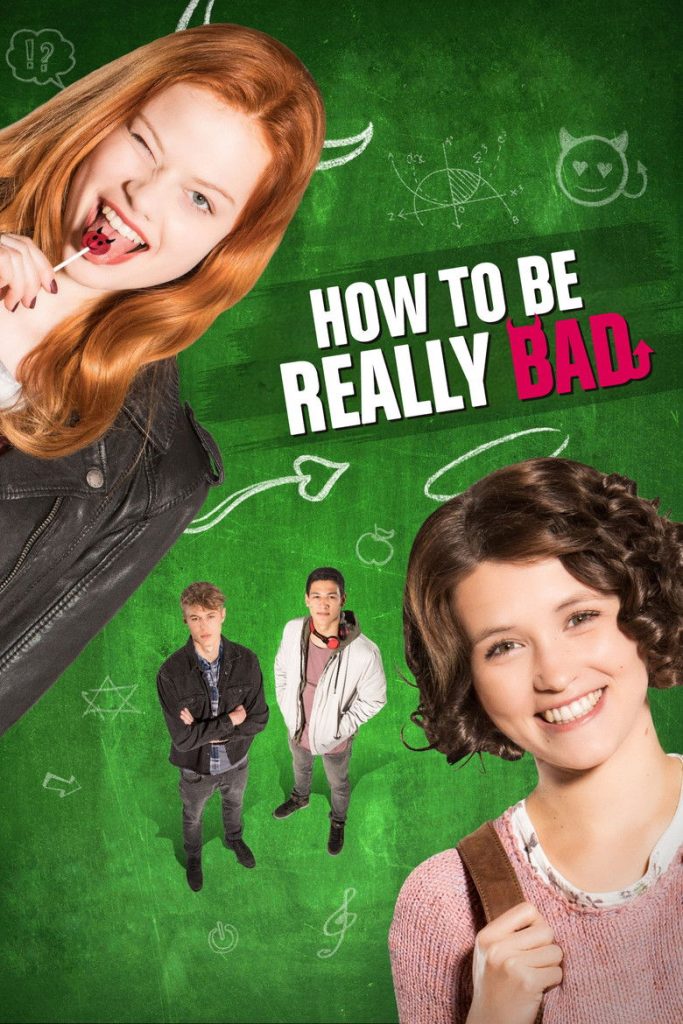
A 14-year-old girl named Lilith, who happens to be the daughter of the devil, lives in hell but is bored and wants to experience life on Earth. She makes a deal with her father: she can spend one week on Earth, but must turn a good person evil. If she succeeds, she can stay on Earth forever; if she fails, she'll be stuck with a dull job in hell's bookkeeping department. The film follows her humorous attempts to navigate human life while trying to complete her devilish task.
Parent Guide
A light supernatural comedy about a teenage devil's daughter trying to corrupt someone good during a week on Earth. The treatment of hell and evil is humorous rather than frightening, with themes of identity and moral choices presented through comedic situations.
Content breakdown
No physical violence. Some comedic peril related to supernatural elements and Lilith's attempts to cause mischief, but all presented in a cartoonish, non-threatening manner.
The concept of hell and being the devil's daughter might be conceptually unsettling to very sensitive children, but it's portrayed humorously with no frightening imagery. Some mild supernatural elements.
Likely some mild teenage slang and expressions. No strong profanity expected given the film's light comedic tone and target audience.
No sexual content or nudity. The film focuses on teenage experiences and supernatural comedy rather than romantic or sexual themes.
No depiction of substance use. The film centers on supernatural comedy and teenage life experiences.
Some mild tension around whether Lilith will succeed in her challenge, but overall maintained as light comedy. Themes of fitting in and parental expectations are present but not intensely emotional.
Parent tips
This German comedy presents a lighthearted, fantastical premise about a teenage devil's daughter trying to corrupt someone good. While the concept involves hell and evil, it's treated humorously rather than frighteningly. The film explores themes of identity, fitting in, and moral choices through a comedic lens. Parents should note the film's focus on teenage rebellion and the supernatural premise, which might prompt discussions about good vs. evil and peer pressure.
Parent chat guide
Parent follow-up questions
- What was your favorite funny part in the movie?
- How did Lilith feel about living in hell?
- What do you think Earth looks like to someone from hell?
- Why do you think Lilith made the deal with her father?
- What would you do if you had one week to try something completely new?
- Do you think it's hard to tell what's 'good' and what's 'bad' sometimes?
- How does the movie make serious topics like good vs. evil feel funny?
- What do you think the movie is saying about teenage rebellion?
- If you were Lilith, how would you try to complete your challenge?
- How does the film use fantasy to explore real teenage experiences?
- What commentary might the film be making about parental expectations vs. personal desires?
- Do you think the movie successfully balances comedy with its moral themes?
🎭 Story Kernel
At its core, 'How to Be Really Bad' is a satirical exploration of performative morality versus genuine human connection. The film follows a group of friends who attempt to become 'bad' people after a personal crisis, but their efforts consistently backfire or reveal their inherent decency. The driving force isn't villainy, but a desperate search for identity and control in a world that feels increasingly sanitized and judgmental. Their failures become the film's central thesis: true 'badness' requires a coldness they fundamentally lack, making their journey a tragicomic reflection on how society defines and punishes non-conformity. The characters are propelled by a shared disillusionment with being 'good' people who receive no rewards, leading them to test the boundaries of social acceptance.
🎬 Visual Aesthetics
The film employs a deliberately drab, naturalistic color palette dominated by grays and muted tones, visually mirroring the characters' perceived moral grayscale. Cinematography favors handheld, intimate shots during their 'bad' attempts, creating a sense of awkward, unscripted reality that contrasts with the polished, brightly lit scenes of their former 'good' lives. This visual dichotomy highlights their struggle between two artificial personas. Key symbolic elements include recurring shots of closed doors and windows, representing both opportunity and isolation, while public spaces are filmed with wide angles that make the characters appear small and insignificant against societal structures.
🔍 Details & Easter Eggs
💡 Behind the Scenes
The film was shot on location in a deliberately nondescript suburban area over 21 days with a modest budget, contributing to its authentic, unglamorous aesthetic. Several scenes involving the group's planning sessions were largely improvised, with the director providing only scenarios to capture genuine group dynamics. The script underwent significant revisions during production to lean more into character-driven humor rather than plot mechanics. Notably, the lead actor reportedly stayed in character off-camera, maintaining the protagonist's frustrated energy throughout the shoot, which the director cited as crucial for the film's consistent tone of weary rebellion.
Where to watch
Choose region:
- Netflix
- Netflix Standard with Ads