
How to Make Millions Before Grandma Dies (2024)
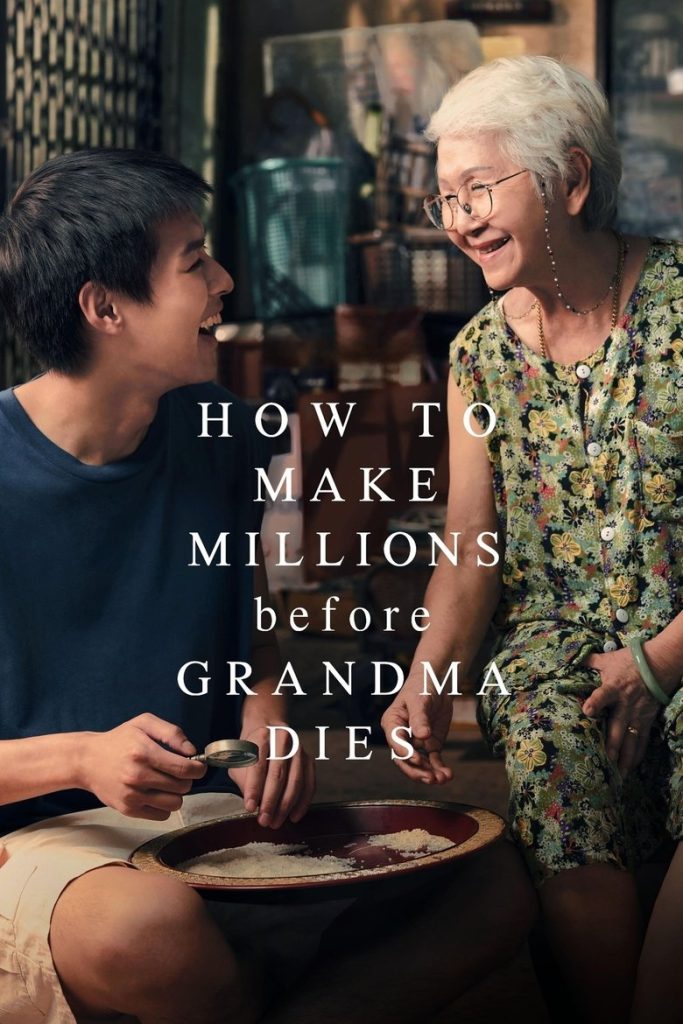
Story overview
This 2024 drama follows a character's journey to achieve financial success before their grandmother passes away. The story explores themes of family relationships, ambition, and the emotional challenges of caring for aging loved ones. With a TV-PG rating, it presents these mature themes in a generally accessible way suitable for family viewing.
Parent Guide
A family drama with emotional themes about aging and family responsibility that requires parental guidance for younger viewers.
Content breakdown
No physical violence or perilous situations depicted.
Themes of aging and mortality may be emotionally challenging for sensitive viewers.
No offensive language expected with TV-PG rating.
No sexual content or nudity expected.
No substance use depicted.
Emotional themes around family, aging, and mortality create moderate intensity.
Parent tips
This drama deals with emotional themes surrounding aging, family responsibility, and mortality that may require parental guidance for younger viewers. The TV-PG rating suggests content is generally appropriate but may contain mild thematic elements that could be confusing or upsetting to sensitive children. Consider previewing the film or watching together to discuss the family dynamics and emotional content as they arise.
Parent chat guide
Parent follow-up questions
- What did you like about the grandma in the movie?
- How did the characters show they cared about each other?
- What was your favorite part of the movie?
- How do you help people in your family?
- What makes someone a good family member?
- Why do you think the character wanted to make money before grandma died?
- How did the family members support each other in the movie?
- What did you learn about taking care of older family members?
- How can we show love to our grandparents or older relatives?
- What does it mean to be responsible for someone in your family?
- What challenges did the main character face in balancing goals and family responsibilities?
- How did the movie portray the relationship between different generations?
- What messages did the film give about money and family values?
- How do you think the characters grew or changed during the story?
- What would you do differently if you were in the main character's situation?
- How does the film explore the tension between personal ambition and family obligations?
- What commentary does the movie make about societal expectations around caregiving?
- How realistic do you find the portrayal of intergenerational relationships?
- What ethical questions does the premise raise about end-of-life situations?
- How might different cultural backgrounds influence how families handle similar situations?
🎭 Story Kernel
The film navigates the uncomfortable intersection of filial piety and financial opportunism within a contemporary Thai-Chinese household. It follows M, a cynical college dropout who attempts to 'game' his grandmother’s terminal cancer diagnosis to secure a multi-million baht inheritance. However, the narrative serves as a profound critique of the transactional nature of modern family dynamics. It exposes the 'invisible' labor of elderly women and the emotional neglect they often endure. As M’s calculated caregiving evolves into genuine companionship, the movie expresses the realization that the most significant inheritance is not the physical property or wealth, but the cultural rituals and shared memories that define a family’s identity. It is a poignant meditation on the debt of gratitude that can never be fully settled with currency.
🎬 Visual Aesthetics
Director Pat Boonnitipat utilizes a restrained, naturalistic visual language that favors long takes and static compositions, effectively capturing the slow, rhythmic decay of domestic life. The cinematography emphasizes the cramped, lived-in textures of Amah’s shophouse, using the architecture to illustrate the generational divide and the physical proximity required for intimacy. Lighting is predominantly natural, casting a soft, elegiac glow over mundane tasks like peeling fruit or preparing congee, which are framed with the reverence of sacred rituals. This visual focus on the 'mundane' transforms ordinary chores into symbols of devotion. The color palette is grounded and desaturated, avoiding melodramatic flourishes to maintain a sense of stark realism. By keeping the camera at eye level and maintaining a respectful distance, the film invites the audience to observe the characters' psychological shifts through subtle gestures rather than overt exposition.
🔍 Details & Easter Eggs
💡 Behind the Scenes
How to Make Millions Before Grandma Dies marks the feature film debut of Pat Boonnitipat, who previously directed the acclaimed Bad Genius television series. The film stars Thai superstar Putthipong 'Billkin' Assaratanakul, who intentionally shed his idol persona to portray the disheveled, aimless M. In a remarkable casting choice, 76-year-old Usha Seamkhum was selected for the role of Amah despite having no prior acting experience; her authentic performance became the film's emotional anchor. Upon release, the movie became a cultural phenomenon across Southeast Asia, breaking box-office records in Thailand, Indonesia, and Singapore, and sparking widespread public discourse on elderly care.
Where to watch
Choose region:
- Netflix
- Netflix Standard with Ads
- Amazon Video
- Apple TV
- Google Play Movies
- YouTube
- Fandango At Home
- FlixFling
Trailer
Trailer playback is unavailable in your region.