
How to Train Your Dragon (2010)
Story overview
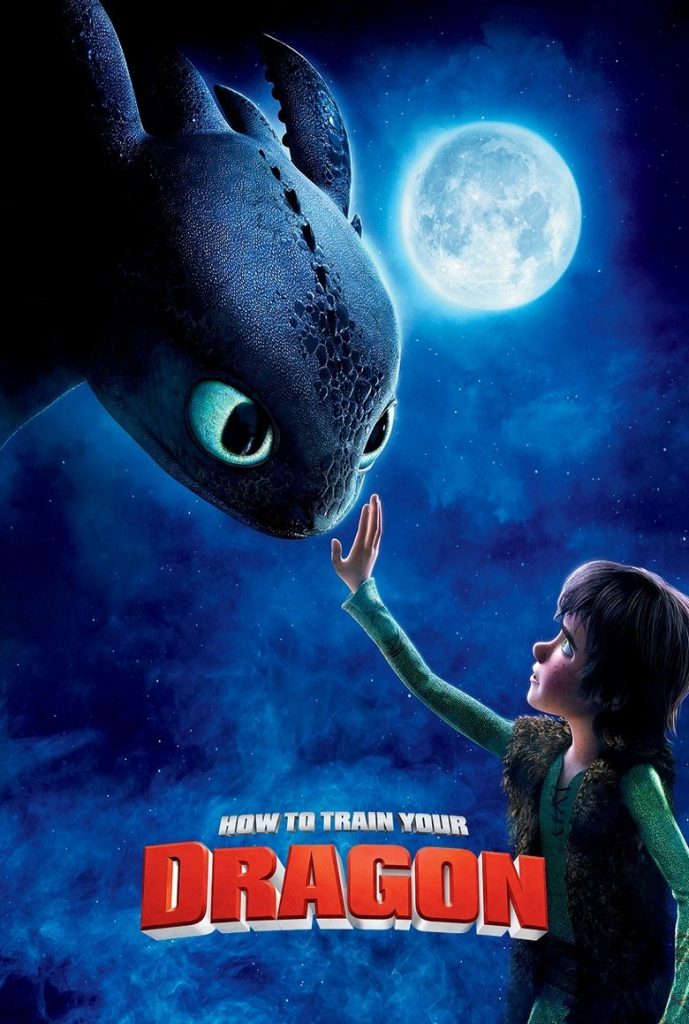
This animated adventure follows Hiccup, a shy Viking teenager who must prove himself by killing a dragon as part of his coming-of-age ritual. When he captures a feared dragon instead, he forms an unexpected friendship with the creature named Toothless, challenging his community's beliefs about dragons. The story explores themes of courage, understanding differences, and standing up for what's right against tradition.
Parent Guide
A family-friendly adventure with positive messages about empathy and courage, though some fantasy action may be intense for very young viewers.
Content breakdown
Fantasy action sequences with dragons fighting, Vikings battling dragons, scenes of peril and capture, but no graphic injuries or blood.
Some intense dragon encounters and fire-breathing scenes that might frighten sensitive younger children, but resolved positively.
No offensive language noted.
No sexual content or nudity.
No substance use depicted.
Themes of father-son conflict, social pressure, and facing fears create emotional tension throughout the story.
Parent tips
This film contains fantasy action sequences with dragons and Vikings that may be intense for younger viewers, including scenes of peril, fire-breathing, and mild combat. The PG rating reflects some scary moments and thematic elements about challenging authority and facing fears. The movie presents positive messages about empathy, friendship, and questioning traditions, but includes some emotional tension between father and son as they navigate conflicting values.
Parent chat guide
Parent follow-up questions
- How did Hiccup feel when he first met Toothless?
- What sounds did the dragons make?
- What colors did you see in the movie?
- Was Toothless friendly or scary?
- How did Hiccup help Toothless?
- Why did Hiccup's father want him to fight dragons?
- How did Hiccup and Toothless become friends?
- What did Hiccup learn about dragons that others didn't know?
- When have you felt different from others like Hiccup did?
- What does it mean to be brave in different ways?
- How did Hiccup challenge the traditions of his community?
- What does the movie show about judging others before getting to know them?
- How did the relationship between Hiccup and his father change?
- What responsibilities come with having a friend like Toothless?
- What would you do if your beliefs differed from your family's?
- How does the film explore the theme of coming-of-age and finding one's identity?
- What commentary does the movie make about violence versus understanding as solutions to conflict?
- How does the father-son relationship represent generational differences in values?
- What does the friendship between Hiccup and Toothless symbolize about overcoming prejudice?
- How does the film balance adventure entertainment with meaningful themes?
🎭 Story Kernel
At its core, 'How to Train Your Dragon' is about the transformative power of empathy over inherited prejudice. The film's engine isn't just Hiccup's desire to prove himself to his father, Stoick, but his fundamental rejection of a tribal identity built on violence and misunderstanding. The real conflict is between a worldview that sees dragons as monsters to be exterminated and one that recognizes them as complex, feeling creatures. Hiccup's journey with Toothless becomes a quiet revolution—demonstrating that understanding an 'enemy' doesn't make you weak; it redefines strength and community. The climax isn't about killing the giant Red Death, but about the village choosing to fight alongside the dragons they once hunted, completing a paradigm shift from fear to alliance.
🎬 Visual Aesthetics
The film's visual language masterfully contrasts two worlds: the earthy, grounded textures of Berk—all wood, stone, and fur—against the ethereal, otherworldly beauty of the dragons' cove. Camera work during flight sequences adopts a dynamic, almost first-person perspective, making the viewer feel the exhilarating rush of freedom alongside Hiccup and Toothless. The color palette is strategic: Berk is often shrouded in gloomy blues and greys, reflecting the villagers' limited worldview, while scenes with Toothless are bathed in warmer ambers and the vibrant greens of the hidden cove. The animation of Toothless himself is a marvel of non-verbal storytelling; his body language, blending feline curiosity with canine loyalty, communicates more emotion than any dialogue could.
🔍 Details & Easter Eggs
💡 Behind the Scenes
The animators studied real-world animal movements extensively to create the dragons. Toothless's behavior is specifically based on a combination of cats, dogs, and even horses. Actor Jay Baruchel (Hiccup) and Gerard Butler (Stoick) recorded many of their dialogue sessions together to capture a more authentic father-son dynamic, despite the animated medium. The film's iconic flying test sequence, where Hiccup builds a new tail fin for Toothless, went through countless storyboard iterations to perfectly balance humor, tension, and the sheer joy of flight.
Where to watch
Choose region:
- Peacock Premium
- Peacock Premium Plus
- Amazon Video
- Apple TV
- Google Play Movies
- YouTube
- Fandango At Home
- The Roku Channel
Trailer
Trailer playback is unavailable in your region.