
Hubble’s Cosmic Journey (2015)
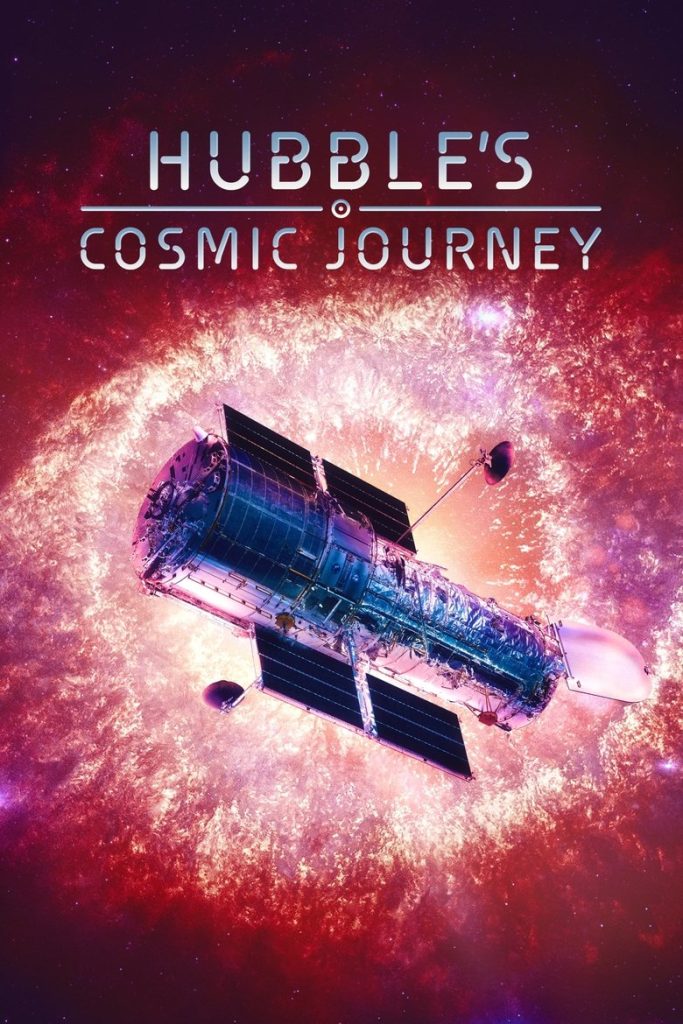
Story overview
This documentary chronicles the Hubble Space Telescope's journey from its flawed 1990 launch to becoming humanity's most celebrated scientific instrument. It highlights the technical challenges, the dedicated rescue mission, and the breathtaking cosmic discoveries that transformed our understanding of the universe.
Parent Guide
Educational documentary about space exploration with no concerning content. Best for children interested in science.
Content breakdown
No violence. Brief discussion of the telescope's initial failure and the high-stakes repair mission might create mild tension but is presented factually.
No scary or disturbing content. Images of space and celestial phenomena are awe-inspiring rather than frightening.
No offensive language. Professional, educational narration throughout.
No sexual content or nudity.
No substance use.
Mild emotional intensity from the dramatic story of Hubble's flawed launch and subsequent rescue, focusing on human determination and scientific triumph.
Parent tips
This educational documentary is suitable for most children, but younger viewers might find the technical details and the initial failure of the telescope confusing or slightly concerning. The film focuses on scientific achievement and human perseverance without any inappropriate content.
Parent chat guide
Parent follow-up questions
- What was your favorite picture from space?
- What do you think it would be like to fly in a space shuttle?
- Can you draw a picture of a telescope?
- Why was it so important to fix Hubble's mirror?
- What do you think was the hardest part of the rescue mission?
- What's the most interesting thing Hubble discovered?
- How did scientists figure out Hubble's mirror was flawed?
- What engineering challenges did the repair mission face?
- How has Hubble changed our understanding of the universe?
- What does Hubble's story teach us about scientific progress and failure?
- How do space telescopes like Hubble compare to ground-based observatories?
- What ethical considerations surround space exploration and funding?
🎭 Story Kernel
The film is less about the Hubble telescope itself and more about humanity's collective gasp at seeing the universe's raw, unfiltered reality. The driving force isn't character motivation but scientific necessity—the need to fix Hubble's flawed vision becomes a profound metaphor for correcting our own limited understanding. It chronicles the shift from seeing space as a static, beautiful backdrop to witnessing it as a dynamic, violent, and creative engine. The real 'plot' is the emotional and intellectual journey from expecting pretty pictures to confronting the evidence of cosmic evolution, stellar nurseries, and galactic collisions. The climax is the realization that we are watching creation and destruction on a timescale that humbles human history.
🎬 Visual Aesthetics
The film masterfully oscillates between two visual languages: the gritty, human-scale documentary of spacewalks and engineering, and the sublime, almost abstract art of Hubble's imagery. The Earth-bound sequences use a cold, metallic blue-gray palette and shaky, intimate cameras inside mission control, emphasizing human fragility. This starkly contrasts with the deep-space visuals, which are presented in vibrant, false-color palettes—crimson nebulae, azure gas clouds—that are not 'real' but scientifically mapped to reveal composition and temperature. The camera often slowly zooms into these cosmic landscapes, mimicking the telescope's penetrating gaze, transforming pixels into profound scale. The action isn't frenetic; it's the deliberate, balletic danger of astronauts performing surgery in a vacuum.
🔍 Details & Easter Eggs
💡 Behind the Scenes
The film's most stunning visuals aren't animations but actual data from Hubble, processed by imaging specialists who act as visual translators. Many sequences from the servicing missions use actual NASA footage, including the tense moment when astronaut Story Musgrave, working with bulky gloves, manually captures the drifting telescope. The narration is by a recognizable voice, but the film avoids celebrity cameos, keeping the focus on the instrument and its data. A significant challenge was making highly technical repair procedures—like replacing circuit boards the size of phone books—cinematically compelling, solved by emphasizing the human drama of the spacewalks.
Where to watch
Choose region:
- Disney Plus