
I Don’t Feel at Home in This World Anymore (2017)
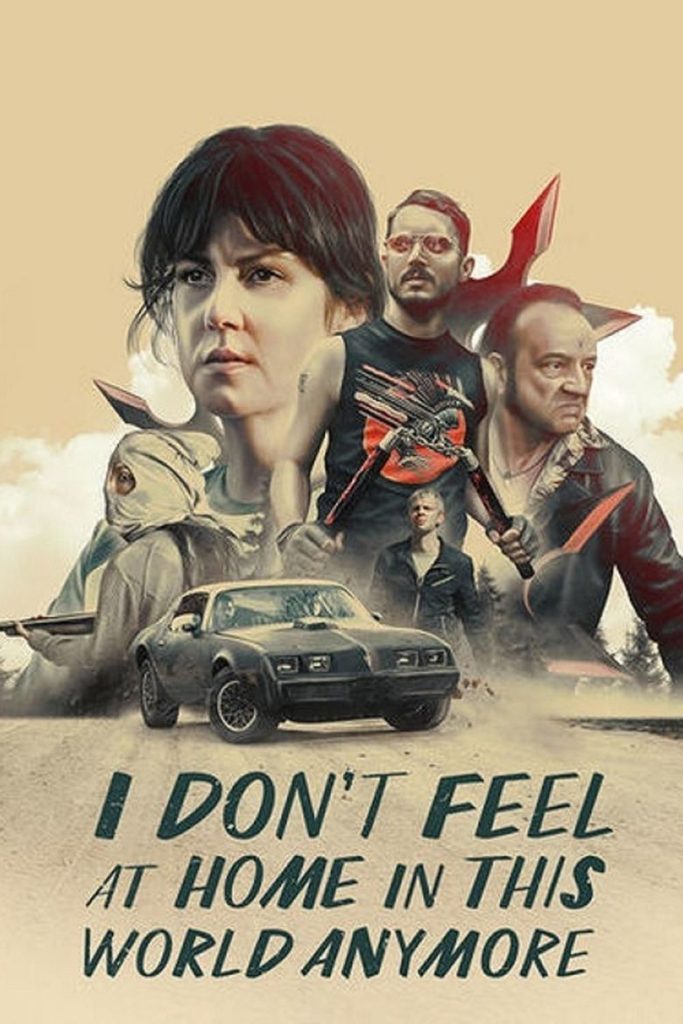
Story overview
This darkly comedic thriller follows Ruth, a disillusioned woman whose home burglary sparks an unexpected quest for justice. Teaming up with her eccentric neighbor Tony, she pursues the thieves, only to confront increasingly dangerous criminals. The film blends tense crime elements with character-driven drama and moments of dark humor, exploring themes of frustration, purpose, and ordinary people pushed to extremes.
Parent Guide
A dark comedy-thriller with mature content requiring viewer discretion. The film features graphic violence, strong language, and criminal activities that make it inappropriate for younger audiences. While containing humorous moments, the overall tone is tense and occasionally disturbing.
Content breakdown
Graphic violence includes: a man's throat being slit with blood shown, multiple brutal fights with punching and kicking, a character beaten with a baseball bat, gun violence including shootings, a character attacked with a hammer, and tense peril scenes where main characters are threatened by armed criminals. Several violent deaths occur on screen.
Disturbing elements include home invasion/burglary themes, scenes of characters in mortal danger, criminal activities involving drugs and weapons, and psychological tension as ordinary people confront violent criminals. Some dark humor moments may unsettle sensitive viewers. The film creates sustained tension rather than traditional horror scares.
Frequent strong language throughout including multiple uses of 'f**k,' 's**t,' 'a**hole,' 'b**ch,' and other profanity. Crude sexual references and insults are common in dialogue.
Brief sexual references in dialogue, some crude sexual humor, and implied sexual situations. No explicit nudity shown, though there are scenes with characters in underwear and suggestive situations.
Characters shown drinking alcohol in social settings and at home. Drug use depicted including marijuana smoking and references to harder drugs. Some scenes show characters under the influence of substances.
High emotional intensity due to the main character's depression and disillusionment, tense confrontations with criminals, and the psychological strain of pursuing dangerous individuals. The film explores themes of alienation, frustration, and the search for purpose in a seemingly indifferent world.
Parent tips
This TV-MA rated film contains strong language, graphic violence, and mature themes unsuitable for children. Recommended for mature teens 16+ with parental guidance. Parents should preview due to intense scenes, criminal behavior depictions, and dark humor that may confuse younger viewers. The film's mix of thriller tension and comedic elements creates an uneven tone that requires emotional maturity to process.
Parent chat guide
Parent follow-up questions
—
—
—
- Why do you think Ruth decided to chase the thieves instead of just calling the police?
- How did Tony's unusual personality help or hinder their mission?
- What moments made you uncomfortable, and why do you think the filmmakers included them?
- How does the movie balance serious crime elements with comedy? Does this work effectively?
- What does the film suggest about how people find meaning when they feel disconnected from the world?
🎭 Story Kernel
The film explores the psychological toll of living in a world that feels fundamentally broken by petty, selfish behavior. Ruth's journey begins with a simple burglary but becomes a quest to restore a sense of justice and order in a universe that seems to have abandoned both. Her partnership with Tony isn't just comedic relief—it's a commentary on how shared outrage can forge unexpected connections. The violence escalates not because the characters are naturally violent, but because the system has failed them so completely that direct action becomes their only language. Ultimately, the movie suggests that sometimes feeling 'at home' requires first dismantling the structures that make you feel alienated.
🎬 Visual Aesthetics
Director Macon Blair employs a deliberately drab, washed-out color palette for Ruth's suburban life, emphasizing her emotional flatness. When the action begins, the camera work becomes handheld and chaotic, mirroring her loss of control. The violence is shot with a matter-of-fact brutality—no stylized slow motion or heroic angles—making every punch and gunshot feel painfully real. Visual symbolism appears in small details: the recurring motif of fences and barriers represents both protection and imprisonment, while the contrast between Ruth's sterile home and the cluttered, lived-in spaces of the criminals highlights different types of disorder.
🔍 Details & Easter Eggs
💡 Behind the Scenes
This was Macon Blair's directorial debut, though he was already well-established as an actor in the indie film scene, particularly through collaborations with Jeremy Saulnier. Melanie Lynskey performed most of her own stunts, including the brutal fight scenes. The film was shot on location in Oregon, with many scenes filmed in actual suburban neighborhoods rather than sets, contributing to its authentic, lived-in feel. Elijah Wood's casting as Tony was intentionally against type, playing against his famous Hobbit persona to create a character who's both awkward and unexpectedly capable.
Where to watch
Choose region:
- Netflix
- Netflix Standard with Ads
Trailer
Trailer playback is unavailable in your region.