
Icarus (2017)
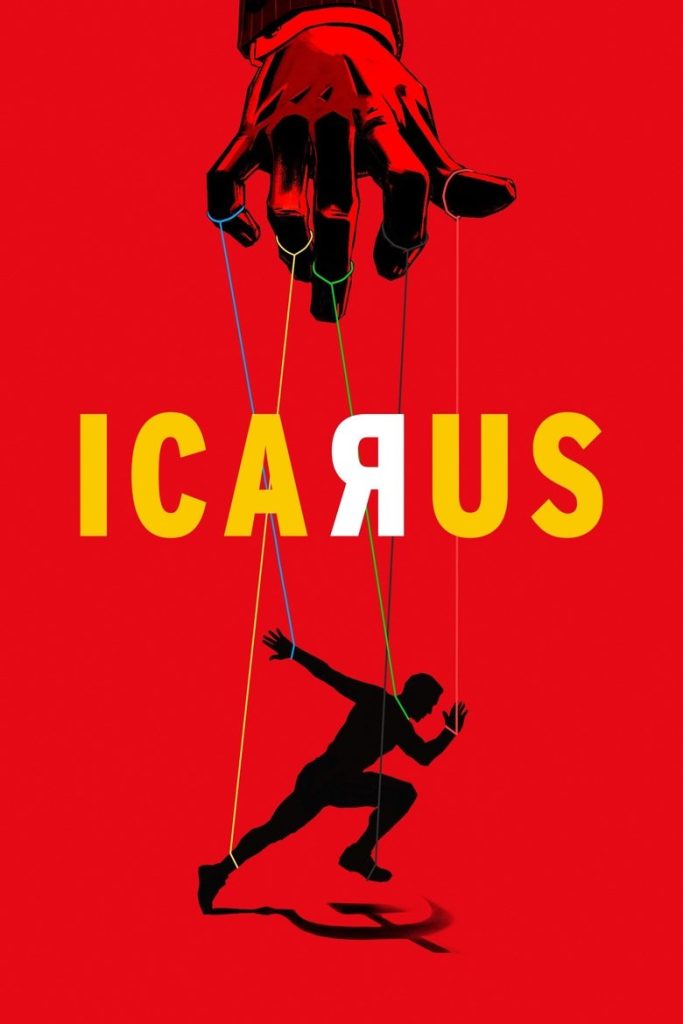
Story overview
Icarus is a 2017 documentary that begins as filmmaker Bryan Fogel's personal experiment with performance-enhancing drugs in amateur cycling, but unexpectedly evolves into a major international investigation. Through his connection with Russian scientist Dr. Grigory Rodchenkov, the film uncovers Russia's state-sponsored doping program that corrupted multiple Olympic Games. The documentary combines personal narrative with investigative journalism, revealing how institutional cheating operated at the highest levels of international sports.
Parent Guide
A compelling documentary that starts as a personal experiment and evolves into a major investigation of state-sponsored doping. While educational and important, it deals with mature themes of corruption, cheating, and political manipulation that require critical thinking to process.
Content breakdown
No physical violence shown, but there are discussions of potential danger to the Russian scientist who becomes a whistleblower. Some tension around his safety and the consequences of exposing the doping program.
The disturbing elements come from revelations about institutional corruption and the manipulation of international sports. The scientist's fear for his safety creates some tense moments, but no horror or traditionally scary content.
Occasional mild profanity. Some strong language in context of frustration or emphasis, but not pervasive throughout the documentary.
No sexual content or nudity present in this documentary.
Central theme involves performance-enhancing drugs and doping procedures. Shows discussions of drug use, blood doping, and steroid injections in sports context. Includes scenes of the filmmaker self-administering injections as part of his experiment.
Emotional intensity comes from the high-stakes investigation, the scientist's dangerous position as a whistleblower, and the revelation of widespread corruption in international sports. The personal journey of both main subjects adds emotional depth.
Parent tips
This documentary deals with mature themes of institutional corruption, cheating in sports, and international politics. While there's no graphic violence or sexual content, the film contains discussions of illegal drug use, doping procedures, and political manipulation. The emotional intensity comes from the real-world consequences and the scientist's fear for his safety. Best suited for mature teenagers who can understand complex ethical and political issues.
Parent chat guide
Parent follow-up questions
—
—
- What does 'doping' mean in sports?
- Why would athletes take drugs to help them compete?
- What makes someone a 'whistleblower'?
- Why do you think Russia created a state-sponsored doping program?
- What ethical dilemmas did Dr. Rodchenkov face throughout this story?
- How does this documentary change your view of international sports competitions?
- What responsibilities do governments have to ensure fair competition?
- How did Bryan Fogel's personal experiment turn into a major investigation?
🎭 Story Kernel
The film's core theme is the corruption of idealism by systemic power. It begins as Bryan Fogel's personal experiment to dope undetected for an amateur cycling race, driven by his competitive ego and skepticism about anti-doping systems. This personal quest becomes the Trojan horse that leads to Grigory Rodchenkov, the director of Russia's anti-doping laboratory. Rodchenkov's initial cooperation, driven by scientific pride and perhaps a desire for Western validation, unwittingly pulls back the curtain on Russia's state-sponsored doping program. The true driver becomes survival—Rodchenkov's need to escape Putin's regime after his role is exposed transforms the film from sports documentary to geopolitical thriller, revealing how individual actions can accidentally challenge entire corrupt systems.
🎬 Visual Aesthetics
The cinematography undergoes a dramatic tonal shift mirroring the narrative's escalation. Early scenes employ shaky, intimate handheld footage of Fogel's cycling training and self-administered injections, creating a sense of reckless amateur experimentation. The color palette is bright and saturated during these California sequences. As the story moves to Russia and the scandal unfolds, the visuals become more surveillance-like: static security camera angles, grainy Skype calls, and starkly lit interviews. This evolution from personal video diary to evidentiary documentation visually reinforces how Fogel's project transformed from vanity experiment to historical record. The final shots of Rodchenkov in hiding use tight close-ups and shadowy lighting, emphasizing his isolation and peril.
🔍 Details & Easter Eggs
💡 Behind the Scenes
Bryan Fogel initially planned a completely different documentary about doping in amateur sports, inspired by the Lance Armstrong scandal. He connected with Grigory Rodchenkov through a mutual acquaintance, expecting technical advice about beating tests. The production team had to use encrypted communications and burners phones once Rodchenkov became a whistleblower. Much of the Moscow footage was shot covertly. The film's title was chosen late in editing—it originally had a more sports-focused name before the geopolitical implications emerged. Rodchenkov's asylum in the U.S. was still being negotiated during the film's final edits.
Where to watch
Choose region:
- Netflix
- Netflix Standard with Ads
Trailer
Trailer playback is unavailable in your region.