
Ice Age: Dawn of the Dinosaurs (2009)
Story overview
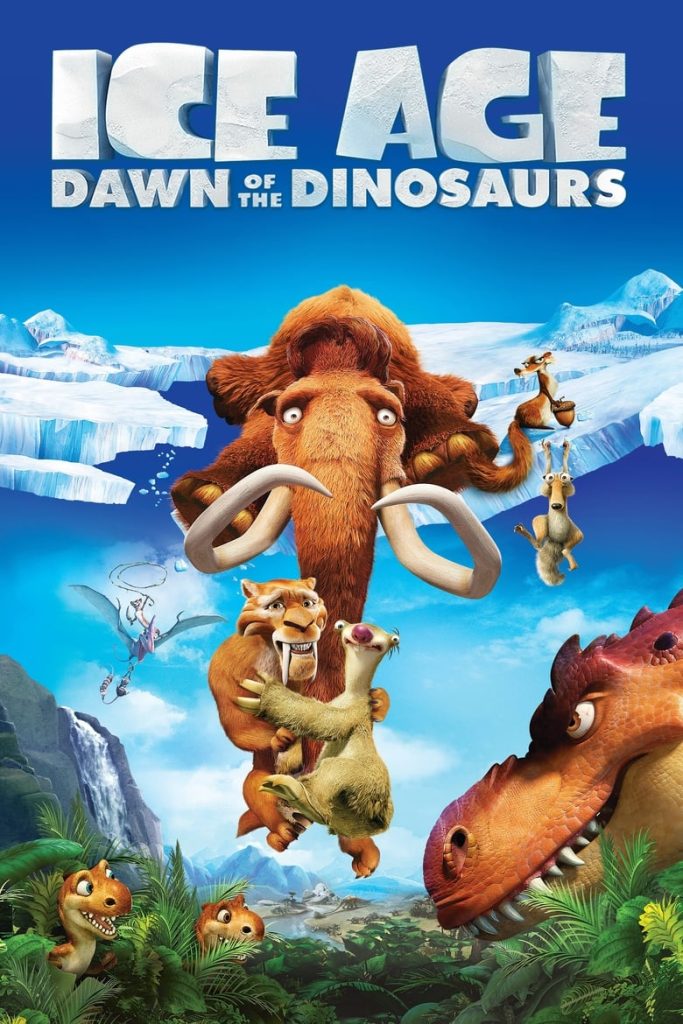
In this third Ice Age adventure, the familiar prehistoric herd—Manny the mammoth, Sid the sloth, and Diego the saber-toothed tiger—face new challenges as Manny and Ellie prepare for parenthood. Their world is upended when Sid discovers three dinosaur eggs and adopts them, leading the group into a hidden underground world teeming with dinosaurs. With the help of a quirky, one-eyed weasel named Buck, they must rescue Sid from a fearsome mother dinosaur, navigating perilous landscapes and confronting their own fears about family and change.
Parent Guide
A lively animated adventure with more intense action sequences than previous Ice Age films, suitable for most school-age children but potentially too exciting for preschoolers. Features positive messages about friendship, family, and facing fears.
Content breakdown
Multiple chase sequences with dinosaurs pursuing main characters; characters fall from heights, dodge falling rocks, and face various natural dangers. Some dinosaur fights and confrontations, but no graphic injuries. Peril is cartoonish and resolved without serious consequences.
Large, roaring dinosaurs may be intimidating for very young viewers; tense moments when characters are in danger. The underground dinosaur world has a slightly darker, more mysterious atmosphere than previous Ice Age settings. Mother dinosaur is portrayed as threatening when protecting her babies.
No offensive language; mild insults like 'idiot' or 'stupid' in playful contexts. Humor relies on physical comedy and character interactions rather than verbal jokes.
No sexual content; Manny and Ellie's relationship is portrayed as loving and committed as they prepare for parenthood. Some mild romantic themes are age-appropriate.
No substance use depicted; characters occasionally eat prehistoric plants/fruits for comic effect.
Moderate excitement during action sequences; some tension around character safety and family themes. Emotional moments related to impending parenthood and friendship loyalty are handled gently. Overall tone remains upbeat with frequent humor.
Parent tips
This animated sequel is generally family-friendly but includes more intense action and peril than previous Ice Age films. The dinosaur world features larger, more threatening creatures and several chase/escape sequences that might be too exciting for very young viewers. Positive themes of friendship, teamwork, and family loyalty are prominent. The humor includes some mild slapstick and wordplay that will appeal to different age groups.
Parent chat guide
Parent follow-up questions
- Which animal friend was your favorite?
- What was the funniest part?
- How did the friends help each other?
- Why was the dinosaur world dangerous?
- What mistakes did Sid make with the eggs?
- How did Buck help the team?
- What does this movie show about responsibility?
- How did the characters' relationships change?
- What survival skills did they use in the dinosaur world?
- How does the film balance comedy with adventure elements?
- What themes about family and change are explored?
- How does Buck's character add to the story's dynamics?
🎭 Story Kernel
Beneath the slapstick and adventure, 'Ice Age: Dawn of the Dinosaurs' explores the anxieties of impending parenthood and shifting family dynamics. Manny's overprotective obsession with creating a perfect world for his unborn child mirrors real parental fears, while Sid's misguided attempt to start his own family with dinosaur eggs reveals a universal longing for belonging. The film cleverly uses the dinosaur underground as a metaphor for the uncharted, terrifying territory of new responsibilities—showing how characters must confront their insecurities (Diego feeling obsolete, Ellie adjusting to motherhood) to evolve. It's ultimately about finding courage not in fighting T-Rexes, but in embracing vulnerability within changing relationships.
🎬 Visual Aesthetics
The film employs a stark visual dichotomy between the icy, familiar surface world and the lush, chaotic 'Lost World' below. The surface palette features cool blues and whites, representing safety and routine, while the dinosaur jungle bursts with saturated greens, oranges, and reds—visualizing danger and untamed emotion. Camera work shifts accordingly: steady, wide shots on the surface contrast with dynamic, swirling angles during chases in the vines and geodes. Buck's introduction—silhouetted against a glowing crystal—uses dramatic lighting to establish him as both guide and unhinged force of nature. The animation of water and ice maintains the series' signature tactile quality, making the peril feel physically real.
🔍 Details & Easter Eggs
💡 Behind the Scenes
Simon Pegg improvised much of Buck's manic dialogue, with the animators later adjusting the weasel's expressions to match his energetic delivery. The 'Lost World' dinosaur environments were inspired by real crystal caves in Mexico and glowing worm caves in New Zealand, with artists visiting botanical gardens to study how light filters through dense foliage. Director Carlos Saldanha pushed for more scientifically inaccurate, colorful dinosaurs to enhance the fantasy element, arguing 'if we're going underground, let's make it a party.' A deleted scene showed Scrat finally getting his acorn, but it was cut for being 'too satisfying' and disrupting the character's eternal struggle.
Where to watch
Choose region:
- Disney Plus
- Amazon Video
- Apple TV Store
- Google Play Movies
- YouTube
- Fandango At Home
Trailer
Trailer playback is unavailable in your region.