
Incendies (2010)
Story overview
Incendies is a powerful drama that follows adult twins on a journey to uncover their family history after their mother's death. Their quest takes them to a war-torn region where they discover shocking truths about their origins and their mother's past. The film explores themes of family secrets, the impact of war on generations, and the search for identity amidst conflict. It's a moving story about how love can endure through unimaginable circumstances.
Parent Guide
A mature drama about family secrets and wartime trauma that requires emotional readiness and parental guidance for younger teens.
Content breakdown
References to wartime violence and conflict, including implied violence against civilians. Some tense scenes in conflict zones, but not graphically depicted.
Emotionally intense revelations about family history and wartime experiences. Themes of trauma, loss, and shocking family secrets that could be disturbing.
Occasional strong language in emotional contexts, but not excessive.
Brief references to sexual violence in wartime context, not depicted explicitly. Some romantic themes.
No notable substance use depicted.
High emotional intensity throughout as characters uncover painful family truths and confront wartime trauma. Themes of grief, betrayal, and reconciliation.
Parent tips
This film deals with mature themes including war violence, family trauma, and disturbing revelations about the past. The R rating reflects intense emotional content, scenes of conflict, and challenging subject matter that may be difficult for younger viewers. Parents should be aware that while the film doesn't show graphic violence explicitly, it deals with the psychological aftermath of war and contains emotionally intense moments that could be upsetting. The film's complex narrative about family secrets and wartime experiences requires emotional maturity to process.
Parent chat guide
Parent follow-up questions
- What did you think about the family in the movie?
- How did the movie make you feel?
- What was your favorite part?
- Did anything confuse you?
- What do you think about brothers and sisters working together?
- Why do you think the twins wanted to learn about their family history?
- How do you think war affects families?
- What does it mean to keep a family secret?
- How did the characters show love for each other?
- What would you do if you discovered surprising things about your family?
- How does the film show the long-term effects of war on people?
- Why might someone keep painful secrets from their children?
- What does the movie teach us about forgiveness and understanding?
- How do the twins' reactions to their discoveries differ?
- What responsibilities do we have to learn about our family history?
- How does the film explore the cycle of violence and trauma across generations?
- What commentary does the movie make about identity and belonging?
- How does the structure of revealing secrets gradually affect the emotional impact?
- What does the film suggest about the nature of truth and reconciliation?
- How do cultural and political conflicts shape personal relationships in the story?
🎭 Story Kernel
At its core, 'Incendies' explores how trauma isn't merely inherited but mathematically replicated across generations. The film presents a brutal calculus: Nawal's wartime suffering produces twins who must solve for X (their father) and Y (their brother) to complete their mother's final equation. This isn't about closure but about understanding the precise mechanisms of intergenerational violence. The characters are driven by the need to decode a family cipher written in blood and silence. The shocking revelation that their father is also their brother demonstrates how war doesn't just break families—it folds them into impossible, incestuous geometries where victim and perpetrator occupy the same coordinates.
🎬 Visual Aesthetics
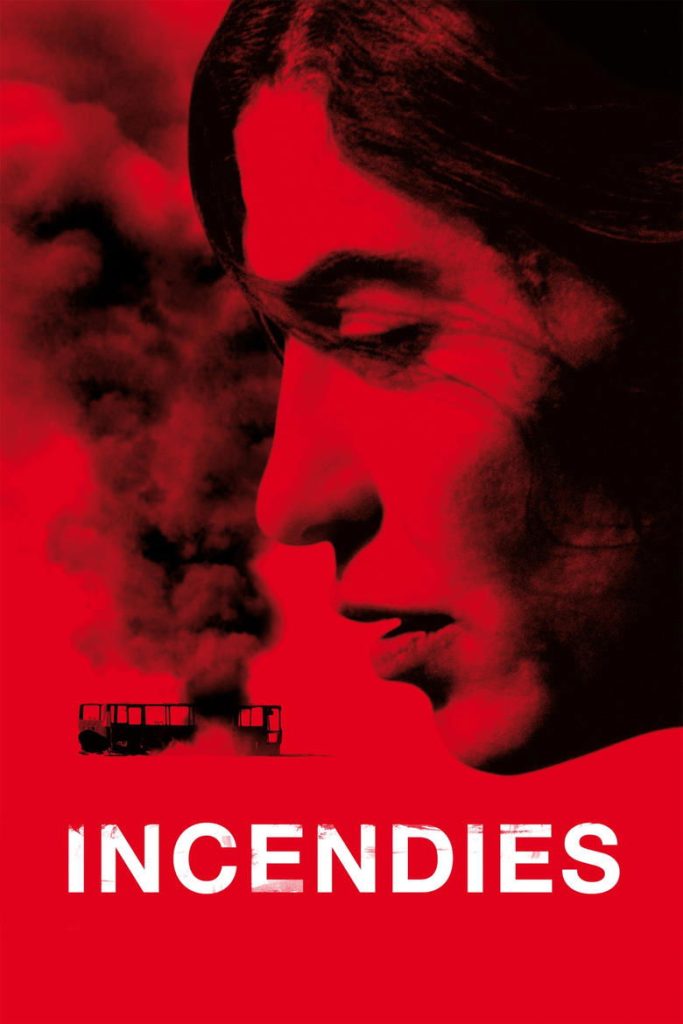
Denis Villeneuve employs a desaturated, sun-bleached palette that makes the Middle Eastern landscape feel like a faded photograph of trauma. The camera often observes characters from a distance, emphasizing their isolation within vast, hostile spaces. Water imagery flows throughout—from Nawal's baptismal prison dunking to the swimming pool where the twins receive their inheritance—suggesting both purification and drowning in history. The most powerful visual choice is the parallel editing between Nawal's past and her children's present, creating a dialogue across time where the children literally walk in their mother's footsteps, retracing her path through checkpoints and prisons.
🔍 Details & Easter Eggs
💡 Behind the Scenes
The film adapts Wajdi Mouawad's play 'Scorched,' with Villeneuve deliberately avoiding specific Middle Eastern country references to create a universal war story. Lubna Azabal (Nawal) learned French specifically for the role, adding to her character's displacement. The swimming pool scene where the notary delivers Nawal's letters was shot in Montreal's brutalist architecture, creating intentional dissonance between Middle Eastern trauma and Western bureaucracy. Villeneuve used mostly unknown actors for authenticity, with Mélissa Désormeaux-Poulin (Jeanne) making her film debut.
Where to watch
Choose region:
- Amazon Video
- Apple TV
- Google Play Movies
- YouTube
- Fandango At Home
- Tubi TV
Trailer
Trailer playback is unavailable in your region.