Inception (2010)
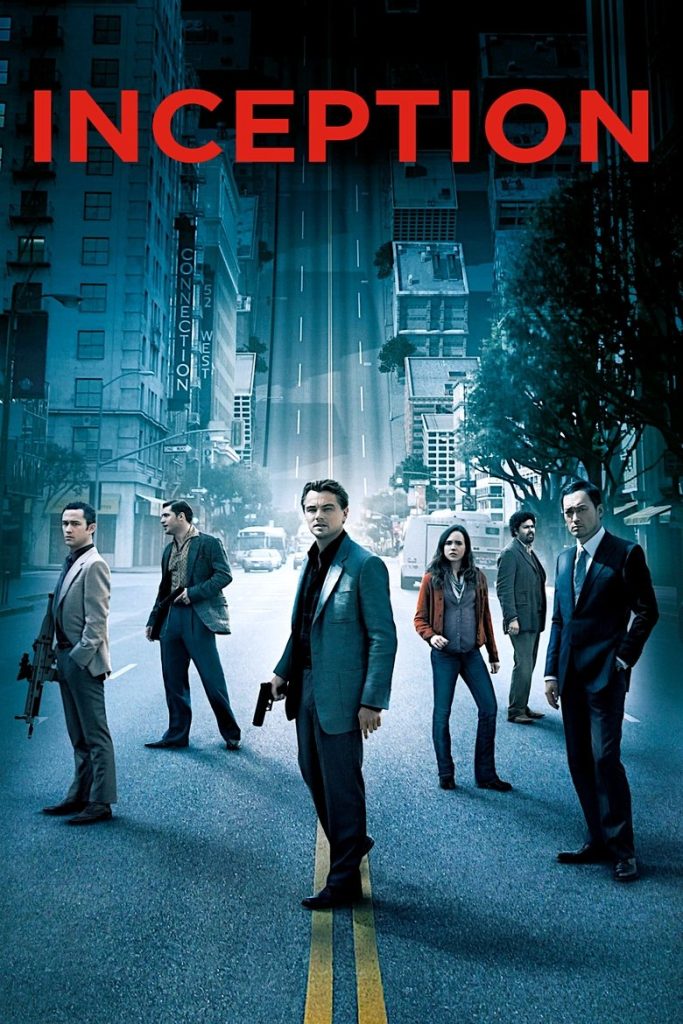
Story overview
Inception is a complex science fiction thriller about a team of specialists who enter people's dreams to extract or implant information. The protagonist, Cobb, is offered a chance to return to his normal life if he can successfully plant an idea in someone's subconscious—a process called inception. The film explores themes of reality, memory, and guilt through layered dream sequences and psychological tension.
Parent Guide
A psychologically complex action thriller best suited for mature viewers who can handle intense sequences and abstract concepts.
Content breakdown
Frequent action violence including gunfights, explosions, hand-to-hand combat, and perilous situations in shifting dream environments. No graphic gore, but scenes are intense and sustained.
Psychological tension from blurred reality, surreal dream imagery, and themes of loss/guilt. Some disorienting sequences and menacing situations, though not traditionally horror-oriented.
Occasional mild profanity. No strong or frequent offensive language.
No sexual content or nudity.
Brief social drinking in one scene. No depiction of substance abuse.
High-stakes scenarios, psychological complexity, and themes of grief/redemption create substantial emotional weight. The non-linear narrative adds cognitive intensity.
Parent tips
Inception is rated PG-13 for sequences of violence and action throughout. The film features intense action scenes with gunfire, explosions, and hand-to-hand combat, though without graphic gore. Its complex, non-linear plot involving dream-within-dream scenarios may be confusing for younger viewers, and some psychological themes about guilt and loss could be emotionally heavy.
Parents should note the film's 148-minute runtime requires sustained attention. The science fiction concepts of shared dreaming and subconscious manipulation provide intellectual stimulation but may raise questions about reality versus fantasy. While there's minimal strong language and no sexual content, the overall intensity makes it best for mature pre-teens and teenagers.
Parent chat guide
During viewing, pause if needed to clarify the layered dream structure or check on emotional reactions to tense scenes. The film's shifting realities can be disorienting, so occasional breaks might help younger viewers process.
Afterward, talk about the film's themes: What does it suggest about how our minds work? How do characters deal with difficult memories? Discuss the difference between entertainment violence and real-world consequences, and explore how stories can make us think about big ideas like reality and responsibility.
Parent follow-up questions
- What was your favorite part of the movie?
- Did any parts feel scary or confusing?
- What do you think dreams are like?
- How did the characters work together?
- What colors or sounds did you notice?
- What did you think about the dream worlds in the movie?
- How did the characters solve problems?
- What makes something real or not real?
- Which character did you relate to most?
- What would you do in a dream adventure?
- How does the movie explore the power of ideas?
- What challenges did characters face in distinguishing dreams from reality?
- How did teamwork help achieve goals in the story?
- What ethical questions does the concept of inception raise?
- How does the film use action to advance its psychological themes?
- How does the film comment on memory and guilt?
- What philosophical questions about reality does the narrative pose?
- How does the structure of layered dreams reflect the complexity of human consciousness?
- In what ways do the characters' motivations drive the plot's tension?
- How does the film balance intellectual concepts with action entertainment?
🎭 Story Kernel
At its core, 'Inception' explores the architecture of grief and the seductive danger of manufactured realities. Cobb isn't driven by corporate espionage or money—he's a man trying to outrun his guilt over Mal's suicide, which he inadvertently caused by planting the idea that her world wasn't real. The film argues that our deepest motivations aren't rational goals but emotional wounds. Fischer's reconciliation with his father isn't just a plot device; it mirrors Cobb's need to forgive himself. The real heist isn't planting an idea in Fischer's mind, but Cobb extracting himself from the prison of his own guilt and choosing the painful, uncertain reality of his children over the perfect, controlled dream of Mal.
🎬 Visual Aesthetics
Nolan employs a clinical, precise visual language that mirrors the film's thematic obsession with architecture and control. The camera often glides with sterile smoothness through dream spaces, emphasizing their artificial construction. Action sequences are geometrically staged—the rotating hallway fight, the zero-gravity hotel corridor—turning chaos into a solvable puzzle. The color palette subtly shifts: the real world is often washed in cool blues and grays, while dreams lean warmer, with Saito's limbo a stark, decaying gold. The most powerful visual motif is the endless, recursive architecture—the Penrose stairs, the mirrored doors—visually trapping us in the film's central question: how do we know when we've reached the foundation?
🔍 Details & Easter Eggs
💡 Behind the Scenes
The iconic rotating hallway fight, where Joseph Gordon-Levitt appears to defy gravity, was achieved with a massive, practical set built to rotate 360 degrees. The actors and crew were strapped in and learned to time their movements with the set's rotation. Hans Zimmer's score is built around Edith Piaf's 'Non, Je Ne Regrette Rien,' which is also the 'kick' music in the film. Zimmer slowed down the song's brass fanfare to create the film's haunting, drawn-out main theme, literally embedding the plot device into the soundtrack's DNA.
Where to watch
Choose region:
- HBO Max
- HBO Max Amazon Channel
- Cinemax Amazon Channel
- Cinemax Apple TV Channel
- Amazon Video
- Apple TV
- Google Play Movies
- YouTube
- Fandango At Home
- Spectrum On Demand
- Plex
Trailer
Trailer playback is unavailable in your region.