
Infernal Affairs (2002)
Story overview
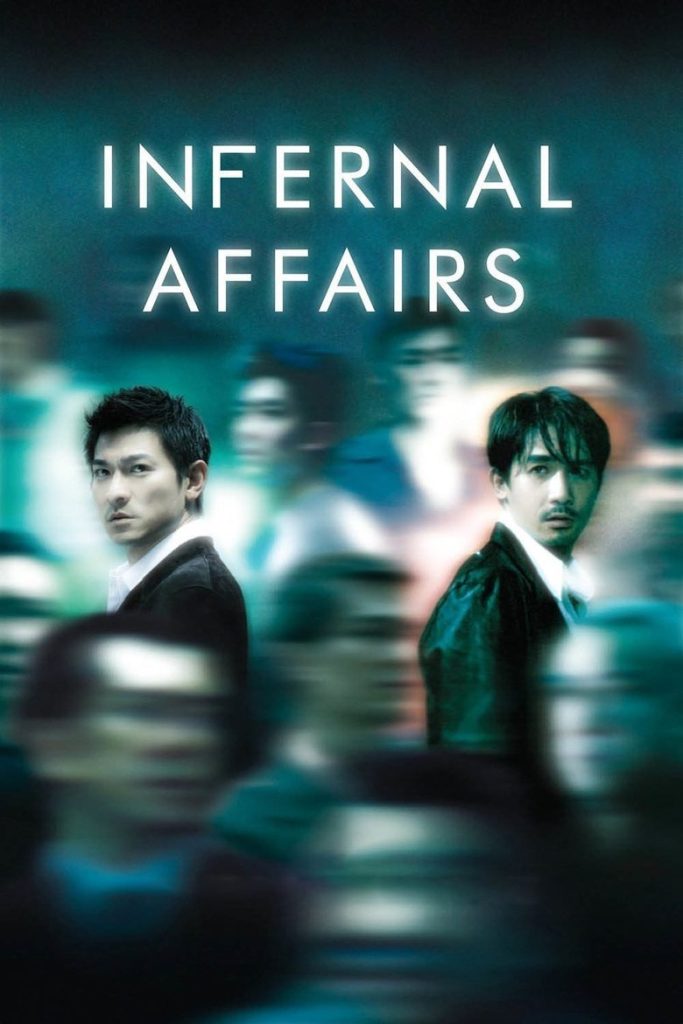
Infernal Affairs is a tense Hong Kong crime thriller about an undercover police officer infiltrating a triad gang and a mole within the police force working for the same gang. The film follows both men as they navigate dangerous double lives, constantly at risk of exposure. Their parallel journeys create a high-stakes cat-and-mouse game where trust is nonexistent and survival depends on deception.
Parent Guide
Intense crime thriller with mature themes and violence, suitable only for older teens and adults.
Content breakdown
Gun violence, physical confrontations, and characters in constant life-threatening situations.
Psychological tension, betrayal themes, and characters living under constant threat.
Strong language consistent with crime drama context.
Brief romantic situations without explicit content.
Social drinking and smoking depicted in adult settings.
High-stakes situations, moral dilemmas, and psychological pressure throughout.
Parent tips
This R-rated film contains intense violence, peril, and mature themes unsuitable for younger viewers. The psychological tension and moral ambiguity may be disturbing for sensitive teenagers. Parents should be aware that the film portrays criminal organizations, police corruption, and characters living under constant threat of violence.
Parent chat guide
Parent follow-up questions
- What jobs did the people in the movie have?
- Did you see any police cars or uniforms?
- How did the characters talk to each other?
- Why were some characters keeping secrets from others?
- What makes someone a good friend in difficult situations?
- How did the characters show they were worried or scared?
- What pressures did the undercover characters face in their double lives?
- How did the characters deal with conflicting loyalties?
- What consequences did characters face for their choices?
- How does the film explore themes of identity and authenticity?
- What commentary does the film make about institutional corruption?
- How do the characters' moral compromises affect their sense of self?
🎭 Story Kernel
At its core, 'Infernal Affairs' explores identity as a prison. Chan Wing-yan and Lau Kin-ming aren't just undercover agents—they're men who've become their covers. Yan, the cop in triad clothing, has absorbed criminal mannerisms so deeply he questions his own morality. Ming, the triad in police uniform, finds himself craving the legitimacy and respect his fake identity provides. The film isn't about good versus evil but about how environment shapes identity. Both men are drowning in their roles, and the tragedy isn't that they're discovered, but that they've lost themselves completely in the performance. Their final confrontation isn't between cop and criminal, but between two ghosts haunting each other's lives.
🎬 Visual Aesthetics
The visual language mirrors the characters' psychological states through claustrophobic framing and surveillance aesthetics. Director Andrew Lau and cinematographer Lai Yiu-fai use tight close-ups in elevators, cars, and narrow hallways to create a sense of entrapment. The color palette shifts subtly—police scenes lean toward cool blues and grays, triad moments warmer yellows and browns—yet these distinctions blur as identities merge. Notice how the rooftop, the film's symbolic 'neutral ground,' is shot with wide angles and natural light, representing the brief moments when both men can breathe. The editing creates psychological tension through parallel cutting, visually linking the two protagonists even when they're apart.
🔍 Details & Easter Eggs
💡 Behind the Scenes
The film's iconic rooftop scenes were shot at the old Police Headquarters in Central, Hong Kong—the actual building adds authenticity to the police procedural elements. Andy Lau and Tony Leung reportedly avoided each other off-set to maintain the tension between their characters. Director Andrew Lau (no relation to Andy) originally envisioned a more action-heavy film but shifted focus to psychological drama after seeing the actors' chemistry during rehearsals. The script went through 20 drafts, with the writers studying real undercover operations to capture the psychological toll. The film's success spawned the 'Infernal Affairs' trilogy and inspired Martin Scorsese's 'The Departed,' though the original maintains a distinctly Hong Kong cinematic sensibility.
Where to watch
Choose region:
- HBO Max
- HBO Max Amazon Channel
- Criterion Channel
- Shout! Factory TV
- Amazon Video
- Apple TV
- YouTube
- Fandango At Home
Trailer
Trailer playback is unavailable in your region.