
Inside Out (2015)
Story overview
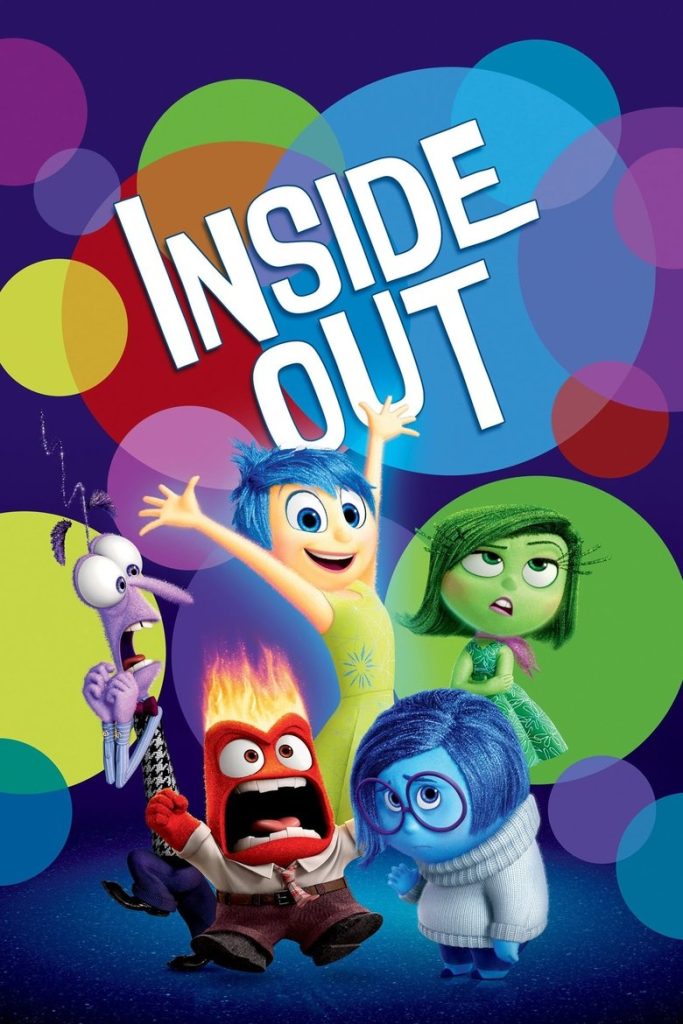
Inside Out is an imaginative animated film that explores the emotional life of an 11-year-old girl named Riley. When her family moves to a new city, her personified emotions—Joy, Fear, Anger, Disgust, and Sadness—work together to help her navigate this major life change. The story follows Joy and Sadness as they become separated from headquarters and must journey through Riley's mind to restore emotional balance. This creative adventure offers insights into how emotions shape our experiences and memories.
Parent Guide
A thoughtful animated film that explores emotions in a creative, child-appropriate way, best suited for elementary school children and up with parental guidance for emotional discussions.
Content breakdown
Some mild peril as characters navigate abstract mind landscapes, including a crumbling memory area and a character in danger of being forgotten. No physical violence.
Abstract concepts like fading memories or a character's potential disappearance might be unsettling for sensitive young viewers. Some emotional intensity around family conflict and change.
No offensive language. Some mild expressions of frustration from emotion characters.
No sexual content or nudity.
No substance use depicted.
Significant emotional themes around change, loss of childhood, family dynamics, and the value of all emotions including sadness. May provoke strong emotional responses in sensitive viewers.
Parent tips
Inside Out provides an excellent opportunity to discuss emotions with children in an accessible way. The film portrays complex feelings like sadness and anxiety in a child-friendly manner, showing that all emotions have value. Parents should be aware that some scenes might be emotionally intense for younger viewers, particularly those dealing with change, loss of childhood memories, or moments of family tension.
The movie's PG rating reflects some mild peril and emotional themes that may require explanation for sensitive children. While there's no inappropriate content, the abstract concepts about memory and personality might be challenging for very young viewers to grasp fully. This film works best when parents are available to help children process the emotional journey.
Parent chat guide
Focus conversations on how all emotions—even sadness—serve important purposes in our lives. You can relate the film's themes to your child's own experiences with change, friendship, or family dynamics. Encourage them to think about how their different emotions work together rather than against each other.
Parent follow-up questions
- Which emotion character did you like the most?
- How did Riley feel when she moved to a new house?
- What makes you feel happy like Joy?
- Can you show me your angry face like Anger?
- What color would your happiness be?
- Why do you think Sadness was important to Riley?
- How did the emotions work together as a team?
- Have you ever felt mixed emotions like Riley did?
- What memory would be in your own memory bank?
- How do you handle big changes like moving?
- What did the film teach you about the purpose of sadness?
- How do you think emotions affect our memories?
- Why was it important for Joy to understand Sadness's role?
- How does this movie help you understand your own emotional experiences?
- What strategies do you use when you feel overwhelmed by emotions?
- How does the film represent the complexity of emotional development during adolescence?
- What insights does the movie offer about emotional intelligence?
- How do cultural or personal factors influence how we experience and express emotions?
- What connections do you see between the film's portrayal of memory and real psychological concepts?
- How can understanding emotional dynamics improve relationships with family and friends?
🎭 Story Kernel
Inside Out isn't about controlling emotions, but about letting them coexist. The real conflict isn't Joy vs. Sadness—it's Joy's misguided belief that happiness requires suppressing all other feelings. Riley's journey mirrors every child's transition: core memories aren't fixed but constantly rewritten, and personality isn't static but evolves through emotional complexity. The film argues that true emotional maturity comes from integration, not exclusion—Sadness' ability to connect with others and process loss is what ultimately saves Riley's psyche. Pixar cleverly subverts the 'follow your joy' trope by showing how sadness creates depth, empathy, and authentic human connection.
🎬 Visual Aesthetics
Pixar's visual genius lies in making abstract psychology tangible. Headquarters' control panel evolves from simple buttons to complex interfaces as Riley matures. The color-coded emotions create immediate visual shorthand—Joy's sparkling gold, Sadness's muted blue, Anger's fiery red. Memory orbs shift hues when reinterpreted, visually demonstrating how emotions color our past. Abstract Thought's surrealist landscape and Imagination Land's chaotic creativity perfectly visualize cognitive processes. Most striking is the visual contrast between Headquarters' orderly chaos and the sprawling, decaying memory dump—the latter's crumbling islands representing forgotten aspects of self, visually mapping psychological abandonment.
🔍 Details & Easter Eggs
💡 Behind the Scenes
Pete Docter spent five years developing the concept after observing his daughter's changing personality. The emotions' designs went through 177 iterations—Sadness was originally shaped like a teardrop. Psychologists Dacher Keltner and Paul Ekman consulted extensively, ensuring scientific accuracy about memory formation and emotional expression. Amy Poehler ad-libbed many of Joy's lines, including the 'take her to the moon' scene with Bing Bong. The memory orbs contain subtle reflections of Riley's life events, requiring animators to create thousands of unique miniature scenes within each glowing sphere.
Where to watch
Choose region:
- Disney Plus
- Amazon Video
- Apple TV
- Google Play Movies
- YouTube
- Fandango At Home
Trailer
Trailer playback is unavailable in your region.