Inside Out 2 (2024)
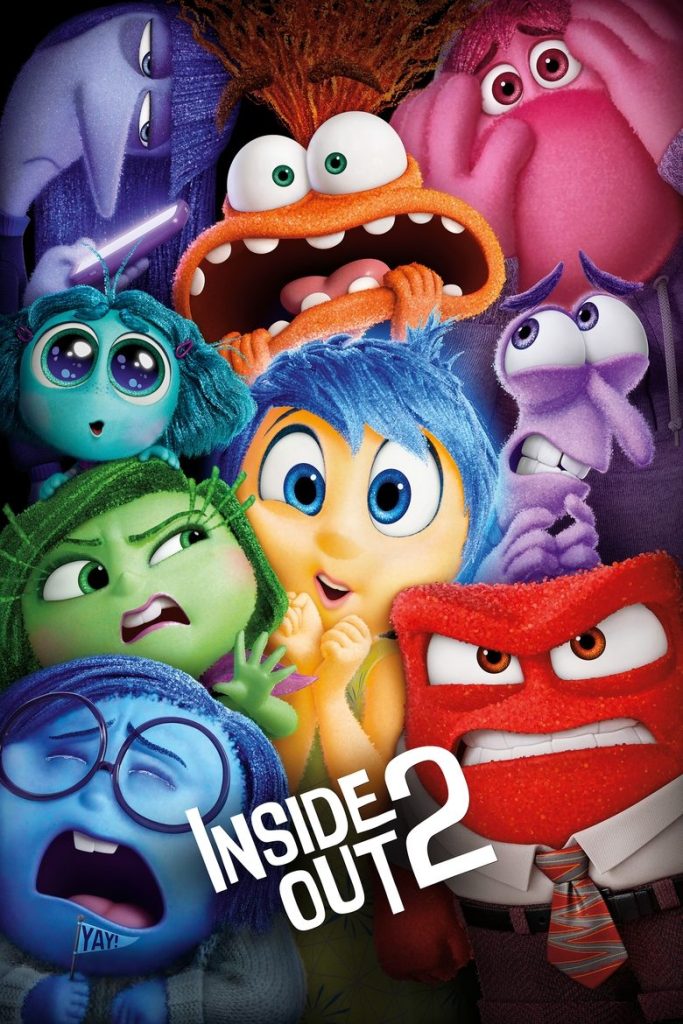
Story overview
Inside Out 2 follows teenager Riley as her mind undergoes significant changes to accommodate new emotions. The familiar emotions of Joy, Sadness, Anger, Fear, and Disgust must adapt when Anxiety arrives unexpectedly, bringing additional emotional complexity. This animated adventure explores how growing up introduces new feelings and challenges to emotional management. The film uses imaginative animation to represent the inner workings of a developing adolescent mind.
Parent Guide
An animated exploration of emotional development during adolescence, using personified emotions to discuss mental health concepts. Best for children who can understand metaphors about feelings.
Content breakdown
Some mild peril as emotions navigate changing mental landscapes, but no physical violence between characters.
Scenes depicting emotional turmoil or anxiety might be intense for sensitive viewers, but presented through animated metaphors.
No offensive language noted; typical family-friendly dialogue.
No sexual content or nudity; characters are personified emotions.
No depiction of substance use.
Moderate emotional intensity exploring anxiety, change, and adolescent emotional development through metaphorical storytelling.
Parent tips
This film provides an excellent opportunity to discuss emotional awareness and mental health with children. The personification of emotions makes abstract concepts accessible, showing how different feelings can coexist and influence decisions. Parents should be prepared for conversations about anxiety and emotional transitions that come with adolescence.
The PG rating suggests some content may be challenging for younger viewers, particularly around themes of emotional upheaval and change. The film's exploration of anxiety and new emotions could resonate strongly with pre-teens and teenagers experiencing similar transitions. Consider watching together to support discussions about emotional regulation and self-awareness.
This sequel builds on emotional concepts from the first film while introducing more complex feelings appropriate for older children. The animated format makes potentially intense emotional content more approachable, but some scenes depicting emotional turmoil might require parental guidance for sensitive viewers.
Parent chat guide
During viewing, pause if needed to check in about how certain emotional scenes make your child feel. Point out how different emotions in the film interact and influence decisions. Validate that experiencing anxiety or mixed emotions is normal during transitions.
After watching, ask open-ended questions about which emotions your child relates to and why. Discuss healthy ways to manage overwhelming feelings and recognize when to seek support. Use the film's metaphors to continue conversations about emotional intelligence and self-awareness in daily life.
Parent follow-up questions
- Which emotion character did you like the most?
- What colors did you see in the movie?
- Did any parts make you feel happy or sad?
- Can you name some feelings you have?
- What was your favorite part of the movie?
- How do you think Joy felt when new emotions arrived?
- What does anxiety mean to you?
- Have you ever felt different emotions at the same time?
- Why do you think Riley needed new emotions?
- How can we help when someone feels anxious?
- How does the movie show emotions working together?
- What strategies could help manage anxiety like in the film?
- How do you think growing up changes our emotions?
- Why might someone feel multiple emotions about the same situation?
- What did you learn about emotional balance from the movie?
- How accurately does the film represent emotional complexity during adolescence?
- What connections do you see between the film's metaphors and real emotional experiences?
- How can understanding different emotions improve relationships?
- What healthy coping mechanisms does the film suggest for emotional transitions?
- How does media representation of mental health impact real-world understanding?
🎭 Story Kernel
Inside Out 2 pivots from the binary struggle of Joy and Sadness to the sophisticated chaos of the adolescent ego. It explores the transition from a curated sense of self to a fractured, anxiety-laden identity. The film posits that growing up isn't just about adding new emotions, but about the painful demolition of a simplified moral compass to make room for a complex, often contradictory, belief system. It captures the universal shift where the internal monologue moves from 'I am a good person' to 'I am not good enough,' illustrating that maturity requires integrating our most uncomfortable anxieties rather than suppressing them. Ultimately, it’s a profound meditation on self-compassion during the messy, construction-zone phase of human development.
🎬 Visual Aesthetics
The film expands the geography of Riley’s mind with striking symbolic architecture, most notably the Belief System—a luminous, subterranean grove of vibrating strings that represent core convictions. The cinematography shifts to reflect Riley’s internal state; when Anxiety takes control, the pacing becomes frenetic, and the camera work mimics a sense of claustrophobia. The color theory remains rigorous, with the new emotions introducing a palette that disrupts the primary-color harmony of the original cast. Anxiety’s jagged, electric orange contrasts sharply with Joy’s soft glow, while the Sar-chasm provides a literal and figurative rift in the landscape, visually representing the linguistic and emotional distancing typical of the teenage years.
🔍 Details & Easter Eggs
💡 Behind the Scenes
Director Kelsey Mann, making his feature debut, leaned heavily on the Adolescent Girls' Brain Trust, a group of nine teenagers who provided feedback on the film’s authenticity. This ensured the social pressures of hockey camp and the nuances of friendship breakups felt grounded. Maya Hawke’s performance as Anxiety was so high-energy that she reportedly recorded her lines while pacing to capture the character's frantic essence. Additionally, the production team consulted with psychologists to ensure the Belief System and the transition to puberty accurately mirrored real-world cognitive development and the neurological pruning that occurs during these years.
Where to watch
Choose region:
- Disney Plus
- Amazon Video
- Apple TV
- Google Play Movies
- YouTube
- Fandango At Home
- Spectrum On Demand
Trailer
Trailer playback is unavailable in your region.