
Insidious: Chapter 2 (2013)
Story overview
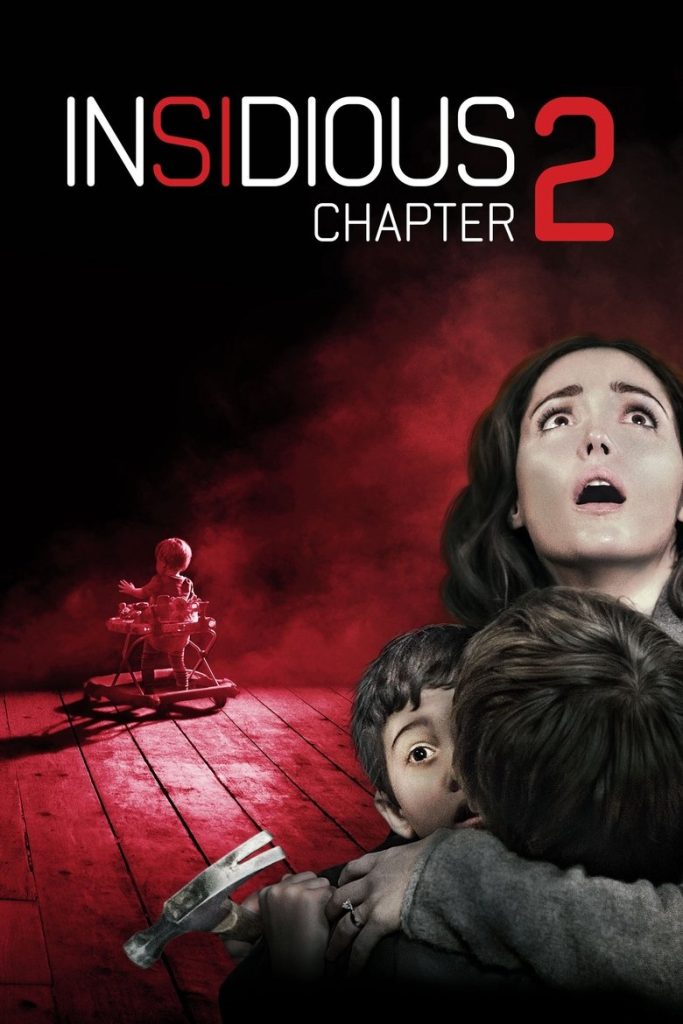
Insidious: Chapter 2 is a 2013 horror-thriller directed by James Wan, continuing the story of the Lambert family as they grapple with supernatural threats. Following the events of the first film, the family investigates a childhood secret that has left them dangerously linked to the spirit world, leading to eerie encounters and psychological tension. The film blends supernatural horror with family drama, focusing on themes of fear, memory, and the afterlife.
Parent Guide
Insidious: Chapter 2 is a horror film with strong supernatural and psychological elements. It is intended for mature audiences due to its intense and frightening content. Parents should be aware of the film's focus on terror and disturbing imagery, which may not be suitable for younger viewers.
Content breakdown
Includes supernatural violence such as characters being attacked by spirits, with some physical altercations and perilous situations. No graphic gore, but there are scenes of implied harm and tension.
Features frequent jump scares, ghostly apparitions, eerie settings, and psychological horror. Themes include possession and the afterlife, which can be deeply unsettling. Disturbing imagery and sounds are used to create fear.
Minimal strong language; may include occasional mild profanity. Not a focus of the film.
No sexual content or nudity present in the film.
No depiction of substance use or abuse.
High emotional intensity due to fear, tension, and family drama. Characters experience distress and terror, which may evoke strong reactions in viewers.
Parent tips
This film is rated PG-13 for intense sequences of terror and violence, and frightening images. It is not suitable for young children due to its horror elements. Parents should consider their child's sensitivity to scary content before viewing. The movie includes jump scares, ghostly apparitions, and psychological horror that may disturb viewers. It is best for mature teens and adults who enjoy the horror genre.
Parent chat guide
Parent follow-up questions
—
—
- What did you think about the ghost scenes? Were they too scary?
- How do you think the family handled their fears?
- Can you tell the difference between movie scares and real-life dangers?
- What themes about family and memory did you notice in the film?
- How does the movie use sound and visuals to create fear?
- Do you think the horror elements were effective, and why?
🎭 Story Kernel
At its core, 'Insidious: Chapter 2' explores how trauma and guilt can haunt us more persistently than any supernatural entity. The film cleverly reveals that the Lambert family's haunting is actually a manifestation of their own unresolved past—specifically Josh's childhood trauma and his mother's desperate, misguided attempts to protect him. The demonic presence of the Bride in Black isn't just a random spirit; it's the physical manifestation of Josh's repressed memories and his mother's psychological manipulation. The characters are driven by the need to confront buried truths rather than escape external threats, making this less a ghost story and more a psychological thriller about inherited trauma.
🎬 Visual Aesthetics
Director James Wan masterfully uses color coding to distinguish timelines and realities. The present-day sequences feature cool, desaturated blues and grays, while flashbacks to 1986 are bathed in warm, nostalgic amber tones. The 'Further' maintains its signature monochromatic palette with stark contrasts. Camera work is deliberately restrained in domestic scenes, using slow pans and static shots to build unease, then switches to frantic handheld movements during supernatural encounters. The production design cleverly mirrors locations across timelines—the Lambert house and Parker Crane's childhood home share identical layouts, visually reinforcing the theme of cyclical trauma.
🔍 Details & Easter Eggs
💡 Behind the Scenes
Patrick Wilson and Rose Byrne performed most of their scenes in practical sets rather than green screens, with Wilson noting the claustrophobic Lambert house set helped generate genuine tension. The film's two timelines were shot back-to-back with different cinematographers—John R. Leonetti for 1986 scenes and David M. Brewer for present day—to achieve distinct visual textures. Lin Shaye's psychic character Elise Rainier appears via clever editing of footage from the first film combined with new material, as her character died in the previous installment. The production used the same Los Angeles Victorian house from the first film, with modifications to make it appear both modern and period-appropriate for flashbacks.
Where to watch
Choose region:
- HBO Max
- HBO Max Amazon Channel
- Amazon Video
- Apple TV Store
- Google Play Movies
- YouTube
- Fandango At Home
Trailer
Trailer playback is unavailable in your region.