
Inu-Oh (2022)
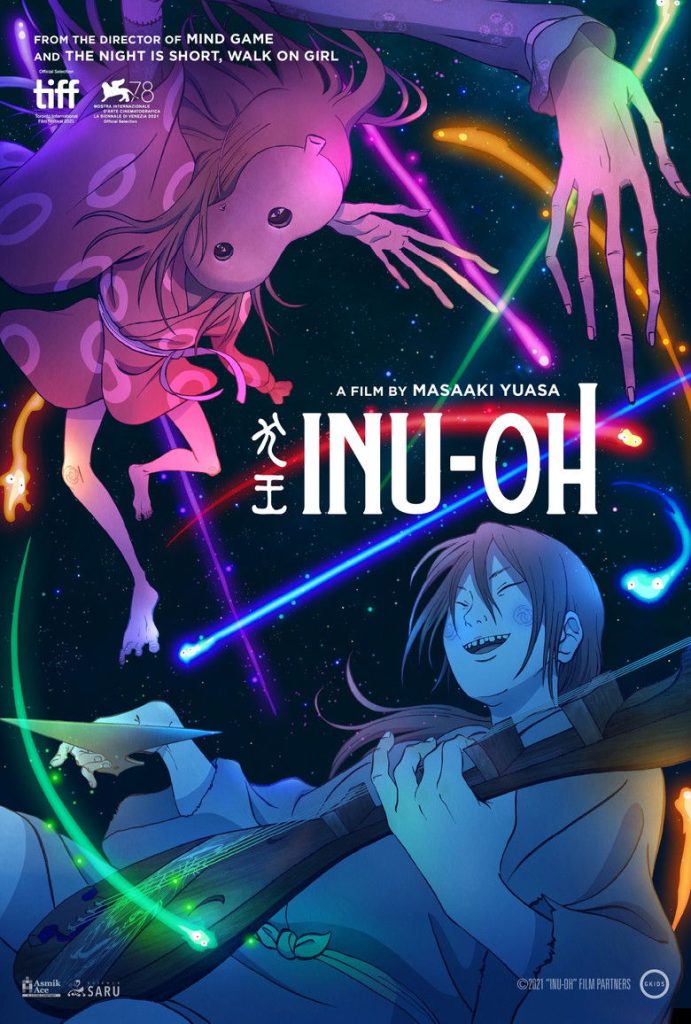
Story overview
Inu-Oh is an animated historical fantasy set in 14th century Japan that follows two outcasts who form an unlikely partnership. A cursed dancer and a blind musician, both rejected by society, discover they can create spectacular performances together. Their journey explores themes of friendship, artistic expression, and overcoming social prejudice through music and dance.
Parent Guide
An animated historical fantasy with mature themes about social rejection and artistic expression, best suited for older children and teens.
Content breakdown
Some tense moments and fantasy peril related to curses and social conflict, but no graphic violence.
Elements of curses, physical transformations, and social rejection that could be disturbing to sensitive viewers. The fantasy elements might be intense for younger children.
No concerning language noted in the overview.
No sexual content or nudity indicated in the overview.
No substance use indicated in the overview.
Themes of social rejection, friendship under pressure, and dealing with physical differences create emotional depth that might be intense for younger viewers.
Parent tips
This PG-13 animated film contains some mature themes that may require parental guidance. The story deals with characters who are cursed and ostracized from society, which could be emotionally intense for younger viewers. The historical fantasy setting includes elements of magic and transformation that might be confusing or slightly frightening for sensitive children.
Parents should be aware that while this is an animated film, it's not designed for young children. The themes of social rejection, physical differences, and the pressure of fame are presented in ways that are more appropriate for older children and teens. The film's artistic style is vibrant and imaginative, but some sequences might be intense for viewers under 10.
Parent chat guide
Consider asking your child how they think the characters felt when they were rejected by society, and what they learned about friendship from the story. You could also discuss how music and art can help people express emotions they might not be able to put into words. For older children, you might explore themes of identity and how society treats people who don't fit traditional expectations.
Parent follow-up questions
- What was your favorite part of the movie?
- How did the music make you feel?
- What colors did you like in the movie?
- Did you see any dancing in the movie?
- What was the nicest thing someone did in the story?
- Why do you think people were mean to the main characters at first?
- How did music help the characters become friends?
- What does it mean to be 'cursed' in this story?
- How did the characters help each other?
- What would you do if you saw someone being treated unfairly?
- How does the movie show that being different can be a strength?
- What historical elements did you notice in the film?
- How did the characters deal with fame and pressure?
- What do you think the movie says about creativity and self-expression?
- How did the friendship between the main characters change throughout the story?
- How does the film explore themes of social exclusion and prejudice?
- What commentary does the movie make about artistic integrity versus commercial success?
- How does the historical setting influence the characters' struggles?
- What does the film suggest about the power of performance to transform both performers and audiences?
- How are themes of identity and acceptance portrayed through the characters' physical differences?
🎭 Story Kernel
At its core, 'Inu-Oh' is about the revolutionary power of storytelling to reclaim history from those who erase it. The film follows Inu-Oh and Tomona, two outcasts who transform forgotten war dead into rock stars, literally giving voice to the silenced. Their driving force isn't just fame—it's a desperate need for identity and catharsis. Inu-Oh seeks to shed his monstrous appearance through performance, while Tomona, blinded by political violence, uses music to process trauma. Their collaboration becomes an act of historical rebellion against the Ashikaga shogunate, which seeks to control narratives. The film argues that art, especially populist art like their anachronistic rock performances, can challenge authoritarian control by making the past visceral and emotionally resonant for the masses.
🎬 Visual Aesthetics
Masaaki Yuasa's signature psychedelic animation style is fully unleashed, creating a visual language where reality bends to emotional and musical crescendos. The color palette shifts dramatically: muted, earthy tones dominate the oppressive political scenes, while Inu-Oh's performances explode in neon-bright, hyper-saturated hues. The camera work is dynamic and rhythmic, often mimicking the POV of a concertgoer or spiraling with the characters' euphoria. The character designs are deliberately grotesque and exaggerated—Inu-Oh's deformities are rendered with unsettling detail, making his transformation on stage visually cathartic. Symbolism is direct yet powerful: the Noh masks represent fixed, controlled history, shattered by the raw, physical spectacle of rock and roll. The animation style itself becomes a metaphor for breaking free from traditional forms.
🔍 Details & Easter Eggs
💡 Behind the Scenes
The film is loosely based on the 14th-century Noh tale 'Inu-Oh Monogatari,' but director Masaaki Yuasa and screenwriter Akiko Nogi took massive creative liberties, inventing the rock concert format and the character of Tomona. The music was composed by rock musician Yoshihide Otomo, who blended traditional Japanese instruments with electric guitar riffs to create the anachronistic sound. Voice actor Avu-chan (Queen Bee) performed Inu-Oh's singing voice, bringing a unique androgynous rock quality. The production at Science SARU studio utilized a hybrid of digital and hand-drawn techniques to achieve its fluid, hallucinatory motion, a hallmark of Yuasa's direction. The film's development coincided with contemporary debates in Japan about historical revisionism in textbooks, adding a layer of modern political resonance.
Where to watch
Choose region:
- Netflix
- Netflix Standard with Ads
- Amazon Video
- Apple TV
- Google Play Movies
- YouTube
- Fandango At Home
Trailer
Trailer playback is unavailable in your region.