
Isle of Dogs (2018)
Story overview
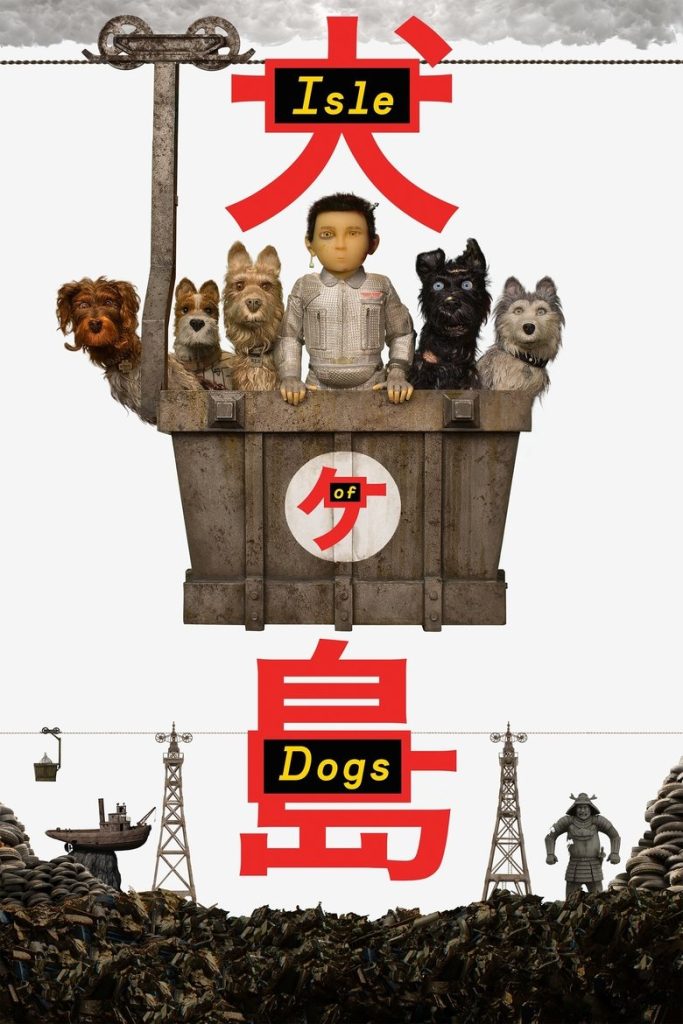
In a futuristic Japanese city, all dogs are exiled to a trash island due to a canine flu outbreak. The story follows a group of these banished dogs as they navigate their harsh new environment. Their journey becomes an adventure when a determined 12-year-old boy arrives on the island searching for his lost pet. The film explores themes of loyalty, friendship, and perseverance through this unique animated tale.
Parent Guide
An animated adventure with some intense moments and mature themes that may require parental guidance for younger viewers.
Content breakdown
Dogs face dangerous situations including threats from other animals and hazardous environments. Some scenes show characters in peril.
Themes of abandonment and exile may be unsettling. Some scenes show sick dogs and harsh living conditions.
Occasional mild language typical of PG-13 films. No strong profanity.
No sexual content or nudity present.
No substance use depicted.
Themes of loyalty, loss, and perseverance create emotional moments. Some scenes may be intense for sensitive viewers.
Parent tips
This animated adventure features some intense moments that might be challenging for younger viewers. The dogs face perilous situations on the trash island, and there are scenes of canine illness and political corruption that could be confusing or unsettling. The PG-13 rating reflects these elements, though the film maintains a generally hopeful tone. Parents should be aware that while the animation style is distinctive and often humorous, the story deals with themes of abandonment and societal rejection.
Parent chat guide
Parent follow-up questions
- What was your favorite dog in the movie?
- How did the boy show he cared about his pet?
- What would you do if you lost your pet?
- Why do you think the dogs were sent to the island?
- How did the dogs work together to help each other?
- What does this story teach us about friendship?
- What do you think about how the city leaders treated the dogs?
- How did different characters show courage in the story?
- What messages about loyalty did you notice in the film?
- How does the film comment on societal attitudes toward those who are different?
- What political themes did you notice in the story?
- How does the animation style contribute to the film's messages?
🎭 Story Kernel
At its core, 'Isle of Dogs' explores how societies manufacture enemies through language barriers and propaganda. The film isn't just about a boy finding his pet—it's about how fear is weaponized against the 'other.' Mayor Kobayashi's political dynasty thrives by scapegoating dogs as disease carriers, mirroring real-world xenophobia. The dogs' struggle for survival becomes a metaphor for marginalized groups fighting systemic oppression. What drives Atari isn't just love for Spots, but rebellion against authoritarian lies. The resolution—where dogs and humans reconcile—suggests that understanding requires breaking down constructed barriers, both linguistic and ideological.
🎬 Visual Aesthetics
Anderson's stop-motion aesthetic achieves remarkable texture—every tuft of fur, every scrap of trash feels tactile. The color palette sharply divides worlds: Megasaki City appears in sterile grays and bureaucratic beiges, while Trash Island explodes with rusted oranges, muddy browns, and the vibrant red of Atari's pilot suit. Camera movements are deliberately theatrical, with lateral tracking shots mimicking stage productions. The action sequences, particularly the sushi kitchen raid, blend balletic precision with chaotic energy. Visual symbolism abounds: the ever-present garbage mountains represent both literal and societal waste, while the recurring Megasaki skyline looms like an unattainable paradise.
🔍 Details & Easter Eggs
💡 Behind the Scenes
The voice cast features frequent Anderson collaborators (Bill Murray, Edward Norton) alongside Japanese actors like Yoko Ono and Akira Takayama, creating authentic cultural layers. Filming used replacement animation—where puppets have interchangeable facial parts—requiring 240 sets and over 1,000 puppets. The Japanese dialogue is intentionally left untranslated, forcing non-Japanese speakers to experience the dogs' linguistic alienation. Composer Alexandre Desplat studied taiko drumming to create the score's distinctive percussion, while the end credits sequence was hand-painted by animator Frida Ek.
Where to watch
Choose region:
- Disney Plus
- Amazon Video
- Apple TV
- Google Play Movies
- YouTube
- Fandango At Home
Trailer
Trailer playback is unavailable in your region.