
Jai Bhim (2021)
Story overview
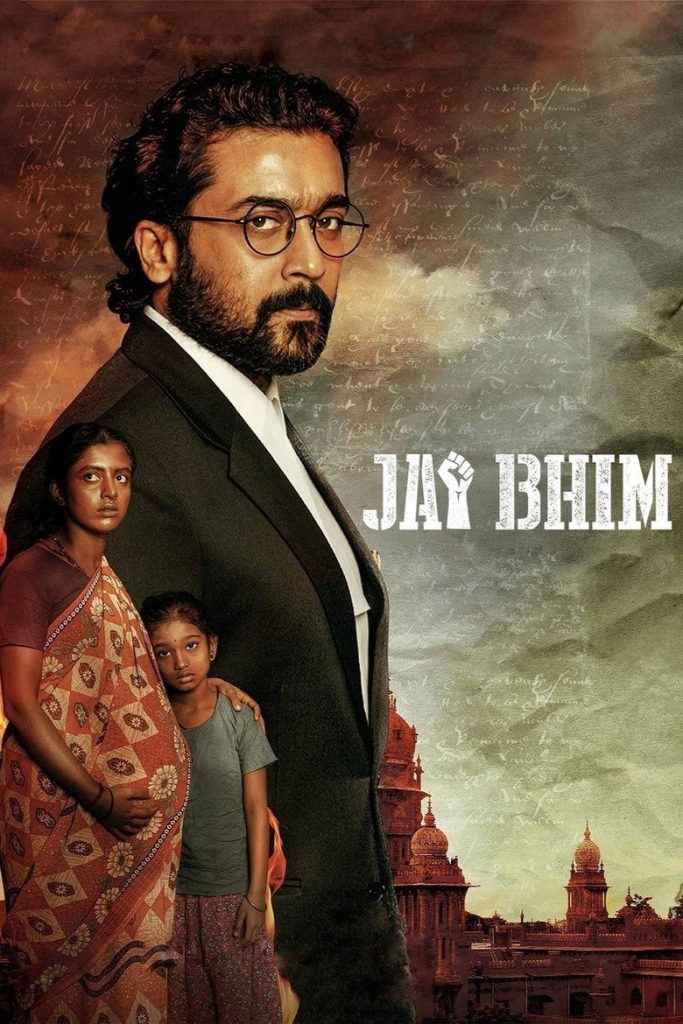
Jai Bhim is a 2021 Indian crime drama based on true events, following a pregnant tribal woman's desperate search for her husband who disappeared while in police custody. A compassionate High Court lawyer takes up their case, fighting against systemic injustice to seek truth and accountability. The film explores themes of social inequality, human rights, and the power of perseverance in the face of oppression.
Parent Guide
A socially conscious drama dealing with serious themes of injustice and institutional oppression, suitable for mature viewers who can process complex social issues.
Content breakdown
Contains scenes of police aggression, implied violence, and perilous situations related to the central disappearance, though not graphically depicted.
Themes of injustice, discrimination, and the trauma of marginalized communities may be emotionally intense and disturbing for sensitive viewers.
May contain occasional strong language in emotional contexts, but not pervasive.
No sexual content or nudity present.
No depiction of substance use.
High emotional intensity throughout due to themes of injustice, family separation, and systemic oppression.
Parent tips
This film deals with mature themes including police brutality, social injustice, and the struggles of marginalized communities. While it contains no graphic violence or explicit content, the emotional intensity and depictions of institutional oppression may be distressing for younger viewers. The 164-minute runtime and complex legal drama elements require sustained attention, making it more suitable for older children and teenagers who can engage with serious social issues.
Parents should be aware that the film portrays systemic discrimination and the trauma experienced by vulnerable populations. The central mystery involves a disappearance under troubling circumstances, which could raise questions about authority figures and justice systems. The film's powerful message about standing up against injustice is valuable, but requires contextual understanding.
Parent chat guide
Help children process the film's social commentary by connecting it to real-world examples of fairness and equality. Emphasize that while the story shows difficult realities, it also highlights positive values like perseverance and compassion. For teenagers, discussions might explore how legal systems work and the importance of advocacy for marginalized groups.
Parent follow-up questions
- How did the characters help each other in the movie?
- What does it mean to be fair to everyone?
- How did the story make you feel?
- Who was being kind in the movie?
- What is something good you learned from the story?
- Why was it important for the lawyer to help the family?
- What does justice mean to you?
- How do you think the characters felt when things were unfair?
- What can people do when they see someone being treated unfairly?
- What was the bravest thing someone did in the movie?
- What systemic issues does the film highlight about society?
- How does the movie show the importance of standing up for what's right?
- What challenges do marginalized communities face according to the story?
- How can legal systems protect vulnerable people?
- What did you learn about perseverance from the characters?
- How does the film critique institutional power structures?
- What real-world parallels can you draw from the film's themes?
- How does the movie balance emotional storytelling with social commentary?
- What responsibilities do educated professionals have toward marginalized communities?
- How can art like this film contribute to social change?
🎭 Story Kernel
At its core, 'Jai Bhim' is less about a single case of injustice and more about exposing the systemic machinery of caste oppression. The film's true driver is not just the quest for Rajakannu's justice, but the dismantling of an entire power structure that treats certain lives as disposable. The characters are propelled by this systemic force: the police by ingrained prejudice and impunity, the Irula community by generational trauma and survival, and Chandru by the realization that legal victory requires challenging the system's very foundations. The film argues that true justice must address the institutional rot, not just its individual symptoms.
🎬 Visual Aesthetics
The film employs a stark, documentary-like visual grammar. The color palette is deliberately desaturated in the Irula village and police station, emphasizing grime and oppression, while the courtroom and Chandru's world feature warmer, more stable lighting. Camera work is crucial: handheld, shaky shots convey the terror and instability of the oppressed, while steady, composed frames represent the cold order of the judiciary and the state. Key symbolism is found in contrasts—the cramped, dark police cell versus the vast, open fields of the Irula's homeland, visually reinforcing their stolen freedom and connection to the land.
🔍 Details & Easter Eggs
💡 Behind the Scenes
Suriya, who plays advocate Chandru, reportedly took no fee for the film, aligning with its social message. The actor playing Rajakannu, Manikandan, actually spent time living with the Irula community to authentically portray their lifestyle and mannerisms. Much of the village scenes were shot on location in Tamil Nadu to capture the authentic environment. The film is based on a real 1993 case fought by Justice K. Chandru, whose career inspired the protagonist; the title 'Jai Bhim' is a salute to B.R. Ambedkar, the architect of India's constitution and a champion against caste discrimination.
Where to watch
Choose region:
- Amazon Prime Video
- Amazon Prime Video with Ads