
Jaws (1975)
Story overview
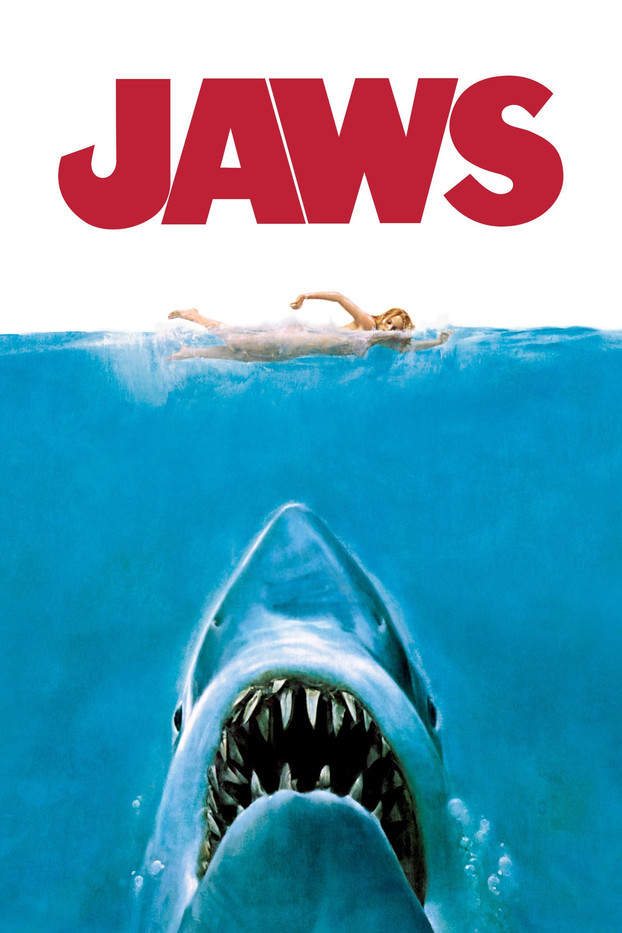
Jaws is a classic thriller about a coastal town terrorized by a great white shark. The local police chief teams up with a marine biologist and an experienced shark hunter to track down and eliminate the dangerous predator. Their mission creates suspenseful moments as they face the threat both on land and at sea. The film builds tension through its iconic score and underwater scenes.
Parent Guide
A suspenseful thriller with intense shark attack scenes that may be too frightening for younger children.
Content breakdown
Shark attacks shown with blood in water, characters in peril, and suspenseful chase sequences.
Tense underwater scenes, sudden shark appearances, and suspenseful music create frightening moments.
Occasional mild profanity and exclamations.
No sexual content or nudity present.
Adults shown drinking alcohol in social settings.
High suspense and moments of fear throughout, with characters facing life-threatening situations.
Parent tips
Jaws is rated PG but contains intense sequences that may frighten younger viewers. The shark attacks are suspenseful and graphic for its time, with blood shown in water and moments of peril. Some characters use mild language, and there are scenes of alcohol consumption by adults. The overall tone is thrilling but could be overwhelming for sensitive children.
Parent chat guide
Parent follow-up questions
- Did you see the big fish in the water?
- How did the people work together to stay safe?
- What sounds did you hear when the shark was near?
- Was there a part that made you feel scared?
- What would you do if you saw a big fish?
- Why do you think the shark was attacking people?
- How did the characters show bravery in the story?
- What did you think about the music during scary parts?
- How did the town try to solve the shark problem?
- What would you have done differently if you were there?
- What makes this movie suspenseful even though it's old?
- How do the different characters approach the shark threat?
- What role does fear play in the characters' decisions?
- How realistic do you think the shark behavior is?
- What does this movie say about human vs. nature conflicts?
- How does the film build tension without showing the shark constantly?
- What social commentary might be present about community responses to crisis?
- How do the characters' motivations differ in dealing with the threat?
- What film techniques make this movie effective as a thriller?
- How does this 1975 film compare to modern creature features?
🎭 Story Kernel
At its core, 'Jaws' explores the tension between primal fear and civic responsibility. The shark isn't just a monster—it's a catalyst that exposes the fragile social contract of Amity Island. Chief Brody's journey from reluctant outsider to determined protector mirrors society's struggle to confront collective threats. The film masterfully dissects how economic interests (Mayor Vaughn's tourism obsession), masculine bravado (Quint's Ahab-like obsession), and scientific detachment (Hooper's initial coolness) all fail against nature's raw power. Ultimately, it's Brody's everyman pragmatism—not heroics—that prevails, suggesting that facing reality, however terrifying, is our only defense against chaos.
🎬 Visual Aesthetics
Spielberg's genius lies in what he doesn't show. The shark's delayed reveal builds unbearable tension through suggestion—the yellow barrels, the POV shots, John Williams' iconic score. The color palette shifts from sunny, tourist-brochure brights to the cold blues and grays of the open ocean, mirroring the transition from civilized illusion to primal reality. The famous dolly-zoom on Brody's face as he realizes the attack visually conveys his sinking horror. The final act's claustrophobic boat setting creates a pressure cooker where character flaws surface as violently as the shark itself.
🔍 Details & Easter Eggs
💡 Behind the Scenes
The mechanical shark (nicknamed 'Bruce' after Spielberg's lawyer) malfunctioned constantly, forcing Spielberg to suggest the shark's presence rather than show it—accidentally creating the film's suspenseful style. The Orca was actually sinking during the final scenes, adding genuine panic to the actors' performances. Roy Scheider's improvised 'You're gonna need a bigger boat' line became cinema history. The film was shot in Martha's Vineyard, where real great white sightings occurred during production, blurring the line between fiction and reality for the cast.
Where to watch
Choose region:
- Amazon Video
- Apple TV
- Google Play Movies
- YouTube
- Fandango At Home
- Spectrum On Demand
Trailer
Trailer playback is unavailable in your region.