
Jimi Plays Monterey (1987)
Story overview
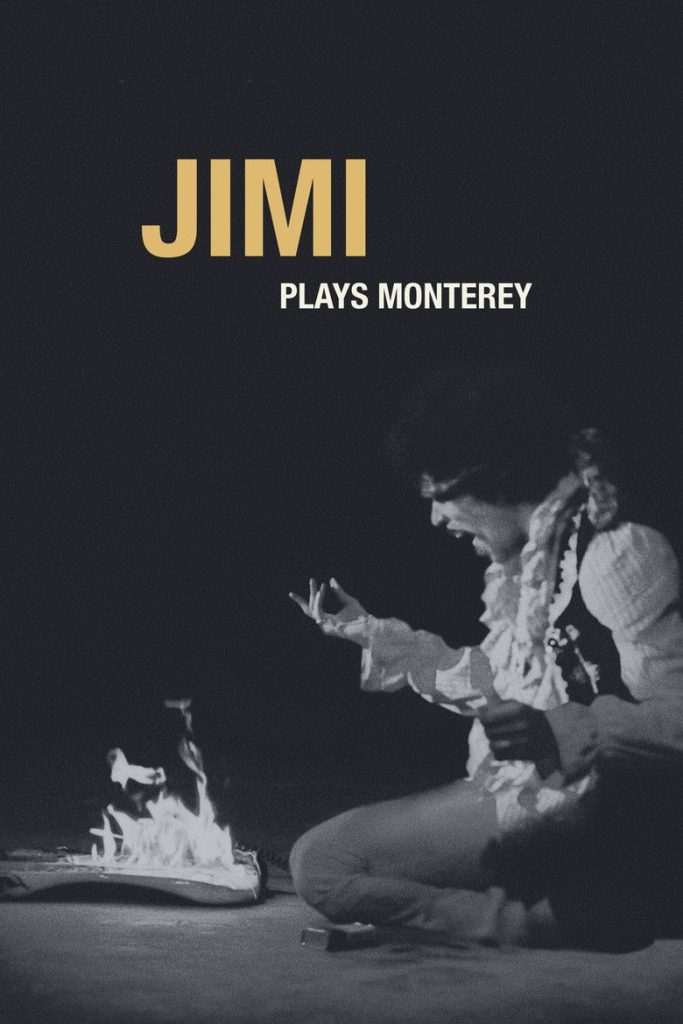
This documentary captures Jimi Hendrix's legendary 1967 performance at the Monterey Pop Festival, showcasing his groundbreaking guitar techniques and explosive stage presence. The film features blues classics, Dylan interpretations, and his iconic guitar-burning finale during 'Wild Thing.'
Parent Guide
A historical music documentary suitable for most families, with no concerning content beyond intense musical performances.
Content breakdown
No violence, but includes the intentional burning/destruction of a guitar during the finale.
Loud music, feedback distortion, and dramatic stage lighting might startle sensitive viewers. Guitar burning could be concerning to some children.
No profanity or concerning language in the performance or documentary narration.
No sexual content or nudity.
No depiction or reference to substance use.
High-energy musical performance with intense guitar playing and dramatic finale. The historical significance and artistic passion are emotionally engaging.
Parent tips
This music documentary contains no explicit content but features intense musical performances with loud volume, feedback distortion, and the dramatic burning of a guitar at the end. Best suited for children interested in music history.
Parent chat guide
Parent follow-up questions
- What sounds did the guitar make?
- Why was the man playing so loudly?
- What colors did you see in the lights?
- Why do you think Jimi Hendrix burned his guitar?
- How does music make you feel when it's very loud?
- What makes a performance 'legendary'?
- How did Hendrix's use of feedback change rock music?
- Why was this festival important in music history?
- What's the difference between artistic expression and destruction?
- How did Hendrix's UK success contrast with his US reception?
- What does the guitar burning symbolize in counterculture context?
- How does this documentary capture a cultural moment?
🎭 Story Kernel
The film's core theme is the explosive birth of a cultural icon, driven by Hendrix's raw, unbridled artistic expression rather than a traditional narrative. It's not about a plot but a moment—the 1967 Monterey Pop Festival—where Hendrix, as an outsider in the American music scene, uses his performance to shatter conventions and claim his place. His motivation is pure musical transcendence, channeling rebellion and innovation through his guitar, culminating in the ritualistic burning of his instrument as a symbolic act of creation and destruction. The movie expresses the power of live art to disrupt and inspire, capturing a pivotal shift in rock history.
🎬 Visual Aesthetics
The visuals are gritty and immersive, relying on handheld 16mm footage that places the viewer in the crowd, emphasizing the festival's chaotic energy. The color palette is muted with bursts of vibrancy from stage lights, reflecting the era's psychedelic aesthetic without over-glamorizing it. Camera work focuses intensely on Hendrix's physicality—his fingers on the fretboard, his expressive face—symbolizing the intimate connection between artist and instrument. Shots of the audience's awed reactions underscore the performance's impact, while the burning guitar scene uses slow motion to heighten its mythic, almost sacrificial quality.
🔍 Details & Easter Eggs
💡 Behind the Scenes
The film was directed by D.A. Pennebaker, a pioneer of direct cinema, who shot it as part of the Monterey Pop documentary. Hendrix was relatively unknown in the U.S. at the time, having gained fame in the UK; his booking was a last-minute addition. The performance was his American breakthrough, with the guitar burning improvised on stage—inspired by The Who's instrument-smashing, but Hendrix made it his own ritual. Footage was restored from original reels in the 1980s, preserving its raw, unfiltered quality that contrasts with later polished concert films.
Where to watch
Choose region:
- HBO Max
- HBO Max Amazon Channel
- Criterion Channel
- The Coda Collection Amazon Channel
- Shout! Factory TV
- Tubi TV
Trailer
Trailer playback is unavailable in your region.