
Joan Didion: The Center Will Not Hold (2017)
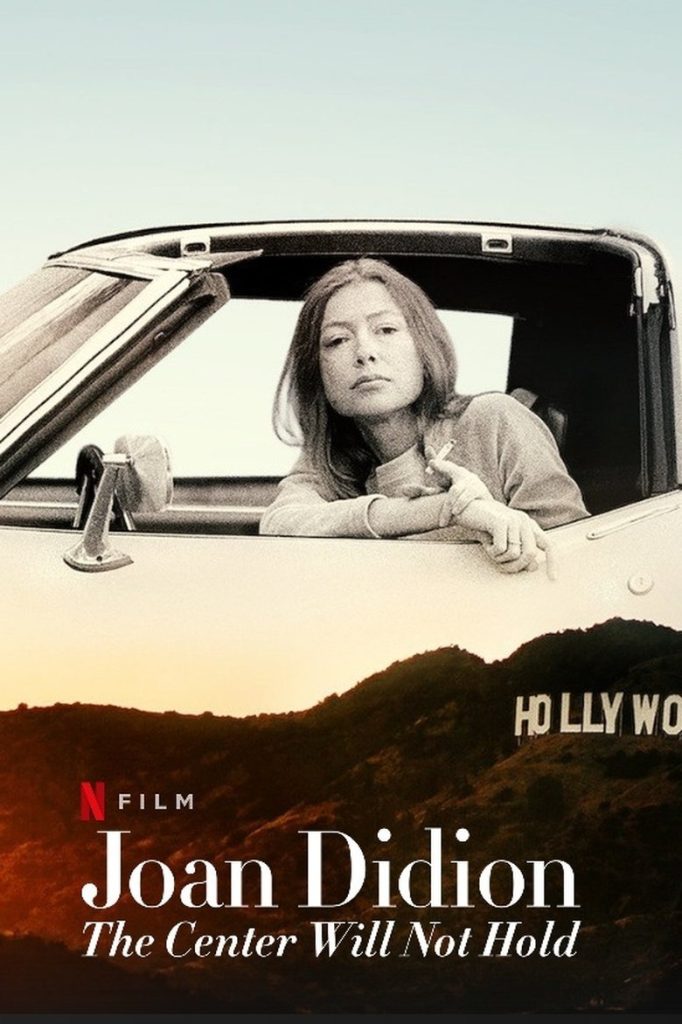
Story overview
This intimate 2017 documentary profiles literary icon Joan Didion, directed by her nephew Griffin Dunne. Through interviews and archival footage, it explores her influential writing career spanning decades, her distinctive observational style, and personal struggles including the deaths of her husband and daughter. The film provides insight into American culture, journalism, and grief through Didion's perspective.
Parent Guide
A thoughtful documentary about a significant American writer that deals maturely with themes of creativity, observation, and personal loss. Most appropriate for teenagers and adults.
Content breakdown
No violence or peril depicted. The film discusses death and loss but shows no violent imagery.
Discussion of death, grief, and personal tragedy could be emotionally challenging for sensitive viewers, particularly regarding the deaths of Didion's husband and daughter. No graphic or disturbing imagery.
Standard documentary language with occasional sophisticated vocabulary appropriate to literary discussion. No profanity or offensive language noted.
No sexual content or nudity.
No depiction or discussion of substance use.
Emotionally reflective with discussions of significant personal loss and grief. The tone is contemplative rather than intensely dramatic, but themes may resonate deeply with viewers who have experienced similar losses.
Parent tips
This documentary is suitable for mature children interested in literature, writing, or American culture. It deals thoughtfully with themes of grief and loss, so previewing or watching together with sensitive children is recommended. The pacing is reflective rather than fast-paced, which may require patience from younger viewers. Consider discussing Didion's writing process and how personal experiences shape creative work.
Parent chat guide
Parent follow-up questions
—
- What did you notice about how Joan Didion looked at things around her?
- What kind of books or stories do you think she wrote?
- How did Joan Didion's way of observing people and places help her as a writer?
- What did you learn about how personal experiences can shape someone's work?
- How does this documentary present the relationship between personal grief and creative expression?
- What insights did you gain about American culture and journalism from different time periods?
- How effective was the film's structure in telling Didion's story while exploring broader themes?
🎭 Story Kernel
The film's core isn't a chronological biography but an autopsy of how Didion processed unimaginable loss through writing. It explores her central paradox: a writer who famously declared 'we tell ourselves stories in order to live' while simultaneously dismantling the narratives that sustain us. The driving force is her relentless intellectual honesty—watching her confront the deaths of her husband and daughter becomes a masterclass in how to stare directly at what most people look away from. This isn't about overcoming grief but about documenting its exact dimensions, making the personal catastrophe universal through meticulous observation.
🎬 Visual Aesthetics
Director Griffin Dunne employs a minimalist visual language that mirrors Didion's prose: clean, unadorned, and devastatingly precise. The camera lingers on Didion's face in extreme close-ups, capturing every micro-expression as she recounts traumatic events. The color palette is deliberately muted—grays, beiges, and whites—creating a clinical atmosphere that contrasts with the emotional intensity of her stories. Archival footage is presented without nostalgic filters, maintaining documentary integrity. The most powerful visual motif is the empty space around Didion in her sparse apartment, visually representing the absences she writes about.
🔍 Details & Easter Eggs
💡 Behind the Scenes
Director Griffin Dunne is Didion's nephew, giving the film an intimate family perspective rarely seen in literary documentaries. The film was shot primarily in Didion's New York apartment over several years, capturing her in familiar surroundings. Dunne initially resisted directing, feeling too close to the subject, but Didion insisted. The production team discovered previously unseen home movies in Didion's storage unit, including footage of her daughter Quintana that appears in the film. Didion maintained final editorial approval but reportedly made only minor factual corrections.
Where to watch
Choose region:
- Netflix
- Netflix Standard with Ads
Trailer
Trailer playback is unavailable in your region.