
Jogi (2022)
Story overview
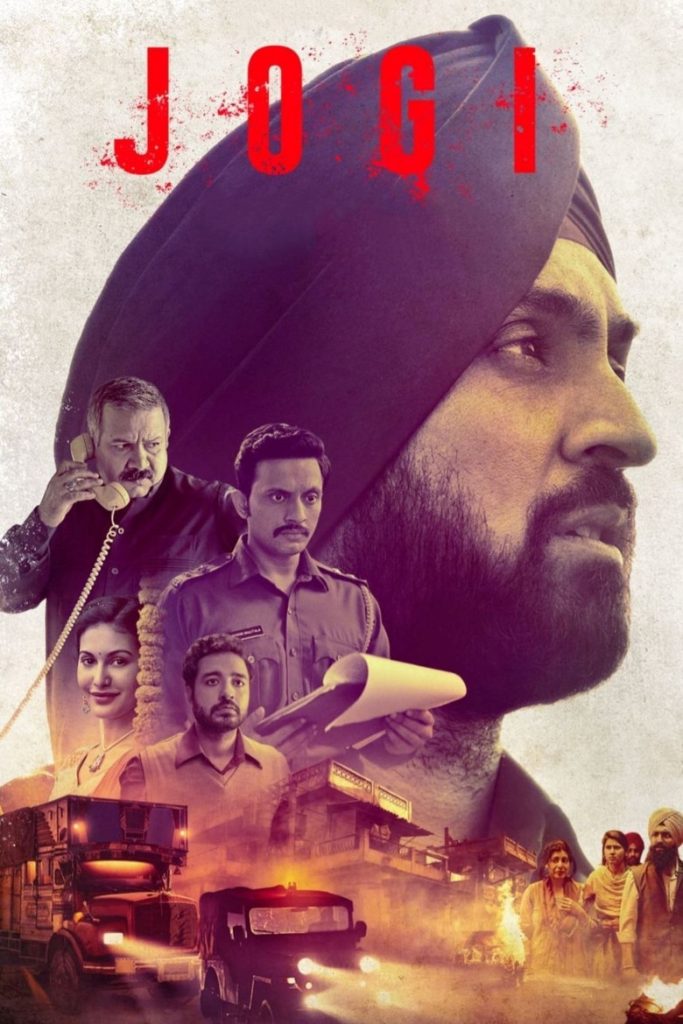
Set in 1980s India during a period of religious and political tension, 'Jogi' follows three friends from different faiths who risk their lives to organize a daring rescue mission to save hundreds of their fellow townspeople from violent conflict. The film explores themes of friendship, courage, and unity in the face of communal violence and societal division.
Parent Guide
A tense historical drama about interfaith friendship during communal violence, featuring strong peril, emotional intensity, and mature themes. Recommended for mature teens with parental guidance due to violent content and complex historical context.
Content breakdown
Scenes of mob violence, attacks on communities, implied deaths, threats with weapons, and intense peril as characters risk their lives. While not excessively graphic, the violence is emotionally impactful and central to the plot.
Tense situations of hiding from mobs, emotional scenes of families in danger, and depictions of community trauma. The atmosphere of fear and urgency may be disturbing to sensitive viewers.
Some strong language in subtitles (Hindi dialogue), including occasional profanity related to religious tensions and emotional situations.
No sexual content or nudity present in the film.
Brief social drinking in a few scenes, but not a focus of the story.
High emotional stakes throughout as characters risk everything to save others. Themes of loss, fear, courage, and communal trauma create sustained emotional intensity.
Parent tips
This film contains intense scenes of communal violence, peril, and emotional distress that may be too mature for younger viewers. Parents should be prepared to discuss historical context, religious tolerance, and the impact of violence on communities. The TV-MA rating indicates content is specifically designed for adults and may be unsuitable for children under 17.
Parent chat guide
Parent follow-up questions
—
- What did the friends do to help people?
- Why were the different religions important in the story?
- How did the friends work together?
- What historical events might this story reference?
- Why was it dangerous for the friends to help?
- How did the film show the consequences of violence?
- What does 'unity in diversity' mean in this context?
- How does the film portray the complexities of religious conflict?
- What sacrifices did the characters make and why?
- How accurate do you think the historical portrayal is?
- What contemporary parallels can you draw from this story?
🎭 Story Kernel
At its core, 'Jogi' is less about the 1984 anti-Sikh riots and more about the anatomy of a rescue mission born from pure, defiant friendship. The film's true engine isn't political ideology, but the raw, unspoken bond between Jogi, his Hindu friend Karan, and the police officer Meghna. Their drive is primal: to protect their 'own' against a state-sanctioned pogrom. The narrative dissects how ordinary humanity becomes extraordinary resistance when institutional structures fail. It posits that in the face of engineered hatred, the most radical act is the simple, persistent refusal to abandon your friend. The characters are propelled not by grand heroism, but by the unbearable weight of a promise and the quiet terror of failing it.
🎬 Visual Aesthetics
The film employs a desaturated, gritty color palette dominated by concrete grays, smoky blues, and the ominous orange of street fires, visually mirroring the suffocating atmosphere of fear. Director Ali Abbas Zafar uses tight, handheld close-ups during moments of crisis, trapping us in the characters' panic and making the vastness of the violence feel intensely personal. The action is brutal and chaotic, devoid of stylized heroics, emphasizing the sheer, exhausting scramble for survival. Key symbolism lies in the confined spaces—sewers, safe houses, a butcher's shop—which become both prisons and sanctuaries, visually representing the claustrophobia of being hunted in your own city.
🔍 Details & Easter Eggs
💡 Behind the Scenes
Diljit Dosanjh, who plays Jogi, immersed himself in the role by spending time with survivors of the 1984 riots to understand their trauma and resilience. The film was shot extensively in Delhi, with many riot sequences filmed in the narrow, labyrinthine lanes of Old Delhi to capture authentic urban claustrophobia. Director Ali Abbas Zafar, known for big Bollywood action spectacles like 'Tiger Zinda Hai', deliberately shifted to a more grounded, visceral style here, citing a personal commitment to the story. The script was workshopped for over two years to ensure historical sensitivity while focusing on the human drama over political lecturing.
Where to watch
Choose region:
- Netflix
- Netflix Standard with Ads