
John Leguizamo’s Latin History for Morons (2018)
Story overview
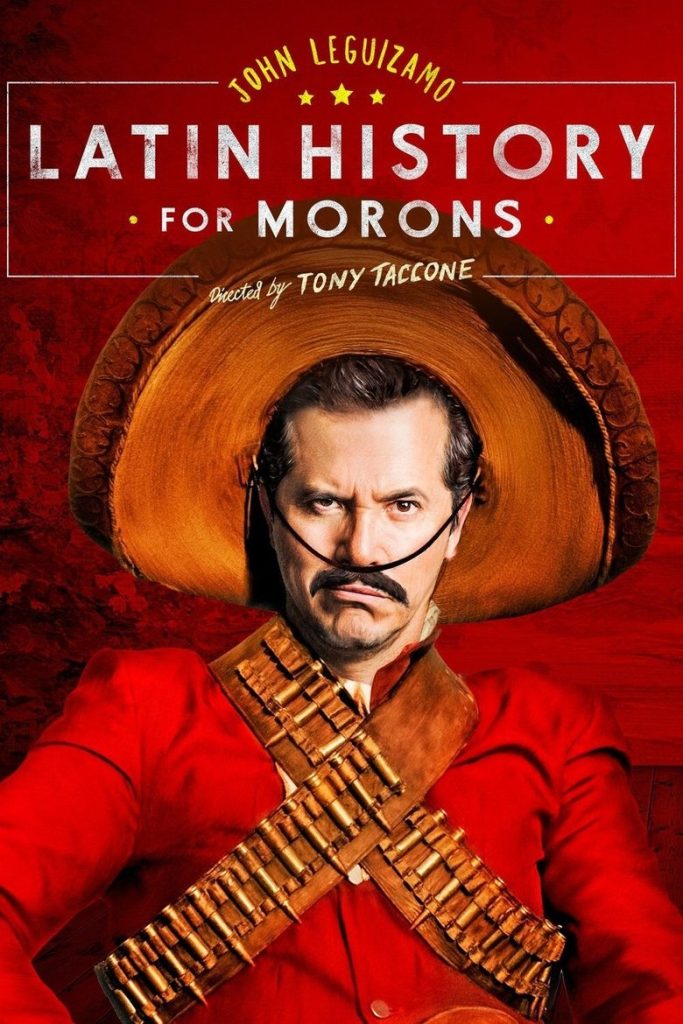
John Leguizamo's Latin History for Morons is a 2018 comedy special based on his one-man Broadway show. In this performance, Leguizamo humorously explores Latin American history and culture through personal anecdotes and educational segments. The show blends stand-up comedy with historical storytelling to make complex topics accessible and entertaining.
Parent Guide
Comedy special blending historical education with stand-up humor; contains mature themes and language typical of adult comedy performances.
Content breakdown
May include comedic references to historical conflicts or tensions without graphic depiction.
Historical topics may include challenging subjects presented through humor.
Contains adult language and humor typical of stand-up comedy performances.
May include mature humor or references typical of adult comedy.
No substance use depicted based on available information.
Educational content presented through comedy with occasional serious historical references.
Parent tips
This comedy special uses humor to discuss historical and cultural topics that may require some context for younger viewers. Parents should be aware that while it's educational in nature, it's presented as adult-oriented comedy with potentially mature themes and language typical of stand-up performances. Consider previewing content to determine appropriateness for your family, as comedy styles and historical references vary in complexity.
Parent chat guide
Parent follow-up questions
- What was your favorite funny part?
- Did you learn anything new about different places?
- How do people tell stories in different ways?
- What did you think about how history was presented?
- Why do you think humor helps people learn?
- What cultures or places were mentioned that you'd like to know more about?
- How does comedy change how we think about historical events?
- What cultural perspectives did you notice in the performance?
- Why might it be important to learn about different cultural histories?
- How effective is humor as a tool for discussing serious historical topics?
- What cultural stereotypes or assumptions might this performance challenge?
- How does personal storytelling influence our understanding of history?
🎭 Story Kernel
At its core, this film adaptation of Leguizamo's one-man Broadway show is about the desperate search for identity in a system designed to erase it. The plot follows Leguizamo's attempt to help his bullied son with a school project on historical heroes, which spirals into his own excavation of Latin American history. What drives him isn't just paternal love, but a raw, personal need to fill the void left by an education that omitted his people's stories. The narrative climax isn't in finding a single hero for his son, but in the overwhelming realization of a collective, resilient history. It's a story about inheritance—what we pass down when the textbooks fail us.
🎬 Visual Aesthetics
The film's visual language is deceptively simple, masterfully translating stagecraft to screen. The camera is an intimate confidant, holding tight on Leguizamo's face as he cycles through rage, vulnerability, and comic exasperation. The color palette is warm and theatrical, dominated by the rich browns of the wooden stage and Leguizamo's casual attire, keeping the focus squarely on the performer. The 'action' is all in Leguizamo's physical comedy—his frantic scribbling on a chalkboard, his transformations into conquistadors and revolutionaries with just a change of posture. The primary visual symbol is the ever-present chalkboard, a messy, evolving mind-map of history that literally and figuratively frames the story.
🔍 Details & Easter Eggs
💡 Behind the Scenes
The film is a direct capture of Leguizamo's Tony-nominated Broadway show, filmed over two live performances at the Public Theater in New York. Leguizamo, who also wrote the show, developed it through extensive historical research, consulting with scholars to correct the record. The show's title is intentionally provocative, a jab at the willful ignorance it seeks to combat. Notably, the transition from stage to screen was directed by Tony Taccone, who also directed the original theatrical production, ensuring the film retained the raw, immediate energy of the live performance that made it a critical hit.
Where to watch
Choose region:
- Netflix
- Netflix Standard with Ads
Trailer
Trailer playback is unavailable in your region.