
Joker (2019)
Story overview
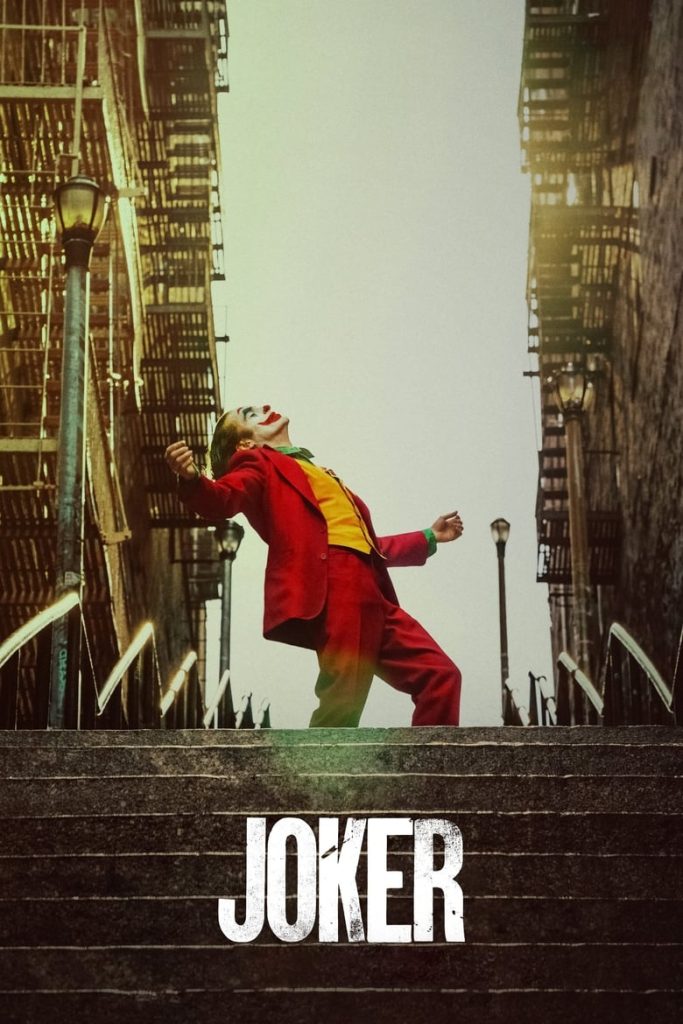
Joker is a psychological character study set in 1980s Gotham City. It follows Arthur Fleck, a struggling comedian with mental health challenges who faces constant rejection and mistreatment from society. As his circumstances deteriorate, he descends into violence and becomes a symbol of chaos, exploring themes of isolation, mental illness, and societal breakdown.
Parent Guide
Joker contains intense psychological themes, graphic violence, and mature content that requires careful consideration for any viewer, particularly younger audiences.
Content breakdown
Graphic violence including shootings, beatings, and stabbings with blood and injury detail. Multiple scenes show characters being killed or seriously harmed.
Intense psychological themes, depictions of mental illness, disturbing character transformations, and scenes of cruelty and humiliation.
Strong language including profanity and derogatory terms throughout the film.
Some suggestive dialogue and brief non-explicit references to sexual situations.
Depictions of smoking, drinking, and prescription medication use in various scenes.
High emotional intensity throughout with themes of isolation, despair, anger, and psychological distress.
Parent tips
Joker is an R-rated film with intense psychological themes and graphic violence that makes it inappropriate for children and most teenagers. The film contains disturbing depictions of mental illness, brutal violence including shootings and beatings, strong language, and mature themes about societal decay. Parents should be aware that this is not a typical superhero movie but rather a dark character study that could be distressing for viewers of any age.
Parent chat guide
Parent follow-up questions
- What makes you feel safe when you watch movies?
- How do you know when something on TV isn't real?
- What should you do if a movie makes you feel scared?
- How can you tell when a movie character is making bad choices?
- What are some healthy ways to deal with feeling angry or sad?
- Why do you think some movies show people being mean to each other?
- How does this movie show the difference between fantasy violence and real violence?
- What messages does the film send about how people should treat each other?
- How can movies help us understand people who are different from us?
- How does the film explore the relationship between mental illness and violence?
- What societal factors does the movie suggest contribute to the main character's actions?
- How does this portrayal compare to real-world understanding of mental health issues?
🎭 Story Kernel
Joker explores the terrifying birth of a symbol born from systemic neglect. Arthur Fleck isn't driven by a desire for chaos, but by a desperate, failed search for recognition and connection in a city that treats him as invisible. The film argues that the Joker isn't a cause of Gotham's decay, but its most honest symptom—a violent, theatrical reaction to a world that offers cruelty instead of compassion and laughs at pain rather than healing it. His transformation is less about embracing evil and more about shedding the last vestiges of a society that never wanted him, finding power in the authenticity of his suffering.
🎬 Visual Aesthetics
The film's visual language is a character in itself, using a gritty, 1970s-inspired palette of grimy yellows, sickly greens, and oppressive grays to mirror Arthur's mental state. The camera often feels claustrophobic, trapping him in frames, before breaking into fluid, almost balletic movements during his transformative moments, like the iconic bathroom dance. The contrast between the bleak realism of his apartment and the garish, artificial brightness of the talk show studio visually underscores the gap between his grim reality and the hollow spectacle of public life he yearns for.
🔍 Details & Easter Eggs
💡 Behind the Scenes
Joaquin Phoenix lost 52 pounds for the role, studying the physicality of pathological laughter from a medical condition known as pseudobulbar affect. The film's budget was a relatively modest $55 million, a fraction of typical superhero films, with much of it shot on location in Newark, New Jersey, standing in for a decaying 1981 Gotham. Director Todd Phillips fought to keep the film's R-rating and standalone nature, insisting it was a character study, not a franchise launchpad.
Where to watch
Choose region:
- HBO Max
- HBO Max Amazon Channel
- Amazon Video
- Apple TV
- Google Play Movies
- YouTube
- Fandango At Home
- Spectrum On Demand
- Plex
Trailer
Trailer playback is unavailable in your region.