
Journeys with George (2002)
Story overview
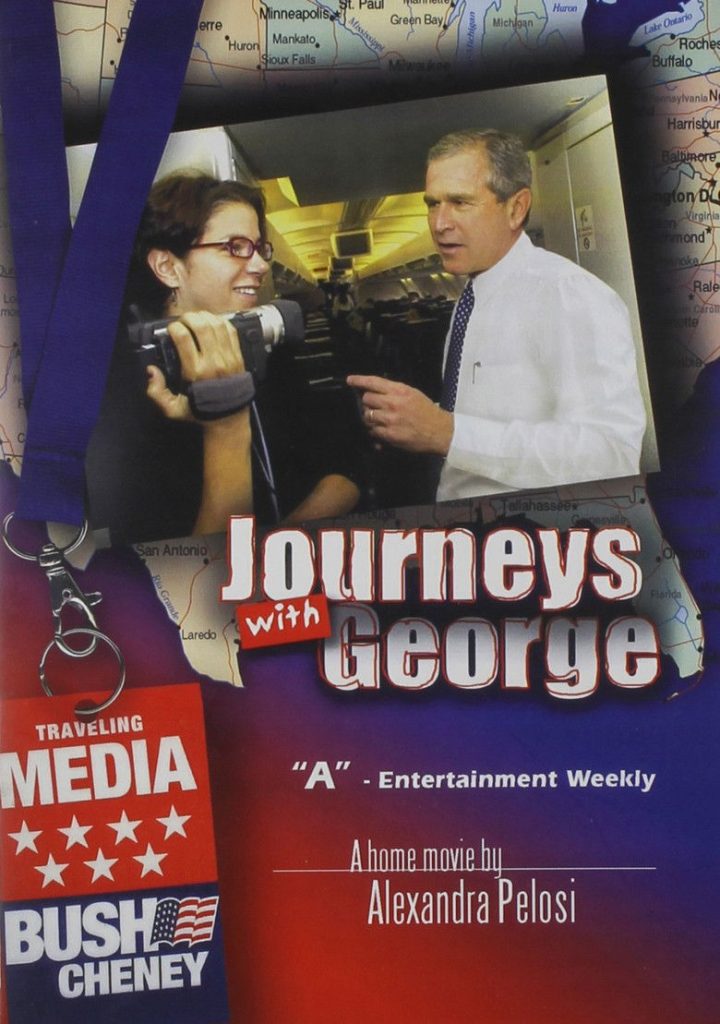
Journeys with George is a 2002 documentary that offers an intimate, behind-the-scenes look at George W. Bush's 2000 presidential campaign. Filmed by journalist Alexandra Pelosi, it captures the candidate's interactions with the press, campaign staff, and supporters during his travels across the United States. The film provides a humanizing perspective on the political process, showcasing Bush's personality, humor, and campaign strategies in a candid, fly-on-the-wall style.
Parent Guide
This documentary is generally family-friendly, focusing on the process of a presidential campaign without controversial or intense content. It's educational for children curious about politics, with mild thematic elements appropriate for elementary school ages and up.
Content breakdown
No violence or peril depicted. The film consists of campaign footage, interviews, and travel scenes without any threatening situations.
Nothing scary or disturbing. The tone is observational and occasionally lighthearted, with no frightening imagery or themes.
Occasional mild language may be heard in casual conversations, such as 'hell' or 'damn,' but no strong profanity. The dialogue is generally polite and campaign-focused.
No sexual content or nudity. The film strictly documents campaign activities and interactions.
No depiction of substance use. Scenes show typical campaign events like rallies and meetings without any reference to alcohol, drugs, or smoking.
Low emotional intensity. The film maintains a documentary tone without high-stakes drama or intense emotional scenes. Some moments may show campaign pressure or fatigue, but it's presented calmly.
Parent tips
This documentary is suitable for families interested in politics or American history. It presents a non-partisan, observational view of a presidential campaign without graphic content or intense conflict. Parents can use it to discuss how elections work, media coverage of politicians, and the personal side of public figures. The TV-PG rating reflects its mild thematic elements and straightforward documentary style.
Parent chat guide
Parent follow-up questions
—
- What is a president?
- Why do people travel to talk to others during an election?
- What did you notice about how George Bush talked to people?
- How does this documentary show the difference between a candidate's public and private moments?
- What role do journalists play in elections based on this film?
- Why is it important for voters to learn about candidates?
- How does this film humanize a political figure, and what effect might that have on viewers?
- Discuss the ethical considerations of embedded journalism in political campaigns.
- Compare this 2000 campaign portrayal to modern political media coverage.
🎭 Story Kernel
At its core, 'Journeys with George' is less about George W. Bush's 2000 presidential campaign and more about the intimate, unvarnished portrait of a candidate when the media facade drops. The film explores the tension between public performance and private persona, driven by filmmaker Alexandra Pelosi's unique access as a journalist and family friend. It captures the mundane reality of political life—endless bus rides, repetitive stump speeches—and how, in those interstitial moments, Bush's charisma, vulnerability, and calculated folksiness emerge. The narrative is propelled by the question of authenticity: is the 'real' George the one on stage or the one joking with reporters in the back of the plane? The film subtly argues that both are true, presenting a complex figure shaped by and for the camera.
🎬 Visual Aesthetics
The film's visual language is defined by its raw, vérité aesthetic, shot entirely on consumer-grade digital video by Pelosi herself. The handheld, often shaky camerawork creates an immediate, intimate feel, placing the viewer directly in the cramped confines of the campaign bus and plane. The color palette is natural and unadorned, dominated by the muted tones of suits, airplane interiors, and campaign rallies, emphasizing the documentary's realism. There's no stylized symbolism; instead, the camera's focus on candid moments—like Bush napping or sharing a cigar—becomes the visual metaphor for behind-the-scenes access. The lack of polished cinematography reinforces the film's truth-telling mission, making the glimpses of Bush's unguarded behavior feel all the more genuine and revealing.
🔍 Details & Easter Eggs
💡 Behind the Scenes
The film was directed by Alexandra Pelosi, the daughter of then-Congresswoman Nancy Pelosi, who was embedded with the Bush campaign as a producer for NBC News. She shot the entire documentary herself using a Sony VX1000 consumer camcorder, giving it its distinctive home-movie quality. Initially, the project was intended as a personal video diary, but it evolved into a feature film after Pelosi realized the unique access she had. It premiered on HBO in 2002 and was nominated for an Emmy, offering a rare, unfiltered look at a presidential campaign from inside the press corps. The title refers to the nickname reporters gave the campaign plane.
Where to watch
Choose region:
- HBO Max
- HBO Max Amazon Channel