Juanpis González: The People’s President (2024)
Story overview
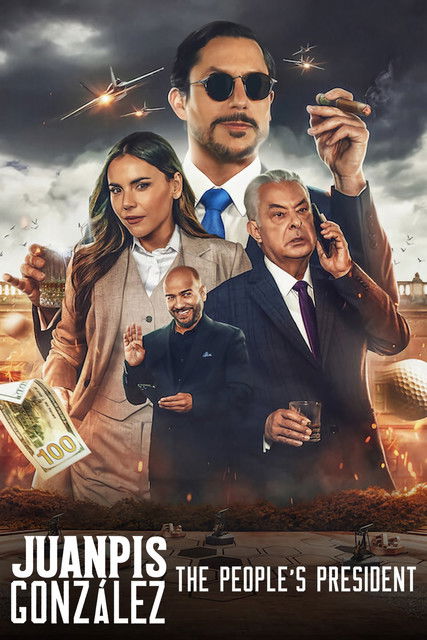
Juanpis González: The People's President is a 2024 Colombian comedy-action film about a wealthy, spoiled socialite who uses his money and connections to become president, only to discover that maintaining power is far more challenging than he anticipated. The movie satirizes politics and privilege through humorous situations and exaggerated scenarios.
Parent Guide
A political satire comedy with exaggerated humor and mild action elements. Best suited for older children who can understand the satirical context.
Content breakdown
Comedic violence and slapstick humor, such as characters falling or getting into minor physical altercations for laughs. Some mild peril situations where characters face exaggerated political challenges or comedic threats.
No genuinely scary or disturbing content. The film maintains a lighthearted, comedic tone throughout.
May include mild comedic insults or exaggerated political rhetoric typical of satire. No strong profanity expected.
No sexual content or nudity. The focus is on political satire and comedic situations.
No depiction of substance use. The film centers on political themes and comedic scenarios.
Light emotional moments related to character growth and realization of responsibility. Mostly maintains a comedic tone with occasional moments of self-reflection.
Parent tips
This film contains comedic violence, mild peril, and satirical themes about politics and wealth that may require explanation for younger viewers. The humor is often exaggerated and may include slapstick comedy. Some scenes depict characters in mildly dangerous situations for comedic effect. The movie's political satire might be more appreciated by older children who can understand the context.
Parent chat guide
Parent follow-up questions
- Did you think the funny parts were silly?
- What was your favorite part of the movie?
- Did you see anyone being mean or nice in the movie?
- Why do you think the main character wanted to be president?
- What funny things happened when he tried to be in charge?
- What do you think he learned by the end of the movie?
- How does the movie make fun of politics and rich people?
- What does the film say about using money to get what you want?
- Do you think the main character really changed by the end?
- What political and social issues is the film satirizing?
- How does the movie comment on corruption and privilege in politics?
- What does the film suggest about the responsibilities that come with power?
🎭 Story Kernel
The film serves as a scathing critique of Latin American populism and the performative nature of modern political campaigns. At its core, it explores the absurdity of an ultra-wealthy, out-of-touch elitist attempting to rebrand himself as a man of the people to secure the presidency. Juanpis González embodies the 'gomelo' stereotype—arrogant, classist, and profoundly ignorant—yet he successfully navigates the political landscape by weaponizing social media and empty rhetoric. The narrative exposes the vulnerability of the democratic process to charismatic charlatans who view the electorate as a tool for personal ego rather than a responsibility. It is less about a specific policy and more about the toxic intersection of wealth, privilege, and the desperate search for a savior in a fractured society.
🎬 Visual Aesthetics
Director Juan Felipe Cano utilizes a visual palette that emphasizes the jarring disconnect between Juanpis’s curated, high-fashion aesthetic and the diverse environments of the Colombian electorate. The cinematography frequently employs tight close-ups on Juanpis to capture his performative sincerity, which often slips into expressions of genuine disdain when he thinks the cameras are off. High-saturation colors in his private quarters contrast sharply with the more muted, naturalistic tones of the public rallies, symbolizing the artifice of his campaign. The visual storytelling relies heavily on the juxtaposition of luxury symbols—designer watches and champagne—against the backdrop of grassroots political mobilization, effectively highlighting the protagonist's fundamental alienation from the very people he claims to represent.
🔍 Details & Easter Eggs
💡 Behind the Scenes
Alejandro Riaño developed the character of Juanpis González initially as a social media parody to critique the Colombian upper class and its detachment from national reality. The character became a cultural phenomenon, leading to a successful live show and a Netflix series before this feature film. Riaño has stated that the character is a 'mirror' intended to make the elite feel uncomfortable by exaggerating their worst traits. The production involved filming in various locations across Bogotá to capture the city's extreme socio-economic divides, which are central to the film's satirical impact and its commentary on contemporary political climates.
Where to watch
Choose region:
- Netflix
- Netflix Standard with Ads
Trailer
Trailer playback is unavailable in your region.