
Judgment at Nuremberg (1961)
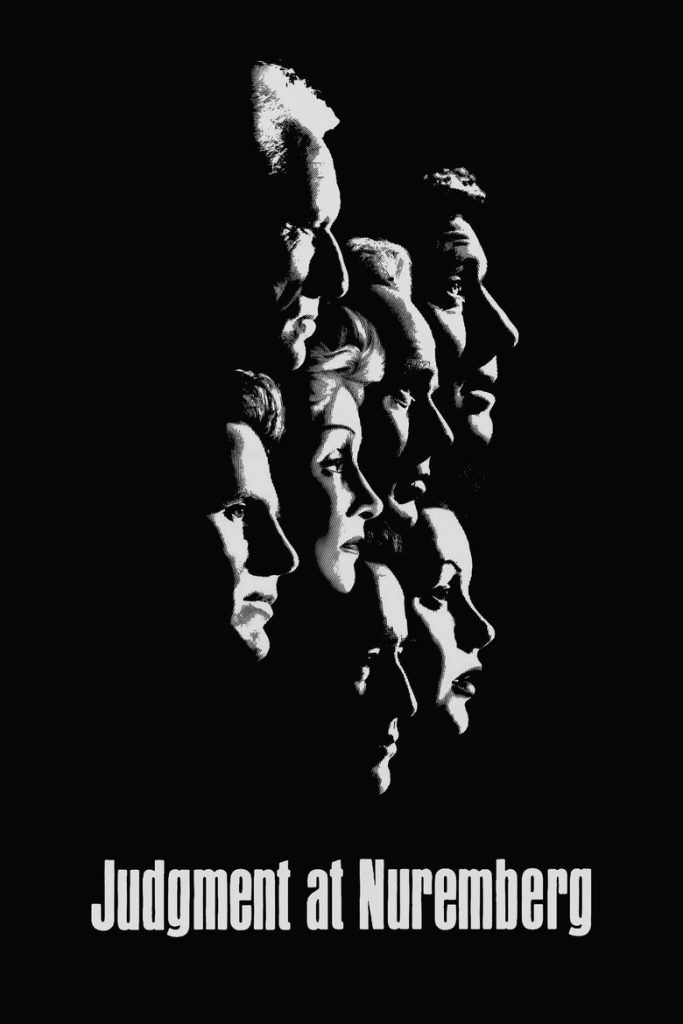
Story overview
Judgment at Nuremberg is a historical courtroom drama set in post-World War II Germany. The film follows an American judge presiding over the trial of four German judges accused of enabling Nazi atrocities through their legal decisions. Through testimony and evidence, the movie explores complex themes of justice, morality, and individual responsibility during oppressive regimes. The lengthy runtime allows for deep examination of these weighty topics through compelling legal arguments and character development.
Parent Guide
A serious historical drama exploring complex moral and legal questions about responsibility during the Nazi era, suitable for mature teenagers with appropriate context.
Content breakdown
No physical violence shown, but discussion of war crimes, genocide, and atrocities. Some tense courtroom moments.
Discussion of Holocaust atrocities and war crimes. Emotional testimony about horrific historical events. The subject matter is inherently disturbing.
Period-appropriate dialogue. No strong profanity, but legal and historical terminology.
No sexual content or nudity.
No substance use depicted.
Intense moral and ethical questions. Heavy subject matter about genocide and responsibility. Courtroom drama creates sustained tension.
Parent tips
This film deals with mature historical themes including war crimes, genocide, and moral responsibility during the Nazi era. While there's no graphic violence shown, the subject matter involves discussion of horrific events that may be disturbing for younger viewers. The courtroom setting means most content is verbal rather than visual, but the emotional weight and historical context require significant maturity to process.
At nearly three hours, the film demands sustained attention and intellectual engagement. The legal arguments and moral questions are complex, making this more suitable for older children and teenagers who can handle abstract ethical discussions. Parents should be prepared to provide historical context about World War II and the Holocaust.
Parent chat guide
After watching, focus on the film's core questions about justice, responsibility, and moral courage. Ask what your child thinks about the characters' choices and how the film connects to broader questions about following orders versus doing what's right. This can lead to valuable discussions about ethics, history, and personal responsibility in difficult situations.
Parent follow-up questions
- What did you notice about the people in the courtroom?
- How did the judges help people make good choices?
- What does it mean to be fair to others?
- Can you tell when someone is telling the truth?
- What makes a good leader?
- Why were the German judges on trial?
- What does it mean to take responsibility for your actions?
- How can laws help protect people?
- What makes something right or wrong?
- How do people show courage in difficult situations?
- What arguments did the defense and prosecution make about responsibility?
- How does this trial connect to what happened during World War II?
- What are the challenges of judging people's actions during wartime?
- How do legal systems balance justice and mercy?
- What lessons can we learn from history about following orders?
- How does the film explore the tension between legal duty and moral responsibility?
- What does the trial reveal about collective versus individual guilt?
- How do the characters represent different perspectives on justice and accountability?
- What contemporary parallels exist to the ethical questions raised in the film?
- How does the film challenge viewers to think about their own moral choices in difficult circumstances?
🎭 Story Kernel
The film's core theme is the moral bankruptcy of legalism in the face of evil, questioning whether adherence to law can absolve individuals of complicity in atrocity. It explores how ordinary people, driven by careerism, nationalism, or fear, become enablers of genocide through bureaucratic compliance. The trial of four judges for enforcing Nazi racial laws serves as a metaphor for the collective guilt of German society and the international community's uneasy conscience. Ultimately, it argues that justice must transcend legal technicalities to address fundamental human decency, as Judge Haywood's verdict condemns not just the defendants but the moral relativism that allowed the Holocaust to occur.
🎬 Visual Aesthetics
The film employs a stark, claustrophobic visual style dominated by tight close-ups in the courtroom, emphasizing the psychological weight on each character. The black-and-white cinematography, with its high-contrast lighting, mirrors the moral absolutes at stake, while shadows often obscure faces, symbolizing hidden guilt. Outside scenes in Nuremberg's ruins use wide shots to show the physical and societal devastation, contrasting with the ordered courtroom. The camera lingers on evidence like Holocaust footage, forcing viewers to confront reality without cinematic embellishment, making the visuals a silent prosecutor in the trial.
🔍 Details & Easter Eggs
💡 Behind the Scenes
The film was shot in a remarkably short 10 weeks on a modest budget, using the actual courtroom in Nuremberg for authenticity, which added to its grim atmosphere. Spencer Tracy, as Judge Haywood, insisted on minimal rehearsal to capture raw emotional responses, while Maximilian Schell, who won an Oscar for his role as defense attorney Rolfe, was a last-minute replacement and delivered his intense monologues largely improvised. The Holocaust footage included was real archival material, not recreated, making it one of the first mainstream films to confront audiences with such graphic evidence, a decision that sparked controversy during production.
Where to watch
Choose region:
- fuboTV
- MGM+ Amazon Channel
- MGM Plus Roku Premium Channel
- MGM Plus
- Philo
- Apple TV
- Fandango At Home
- Spectrum On Demand
- Amazon Video
- Tubi TV
- Kanopy
- Hoopla
Trailer
Trailer playback is unavailable in your region.