
June 17th, 1994 (2010)
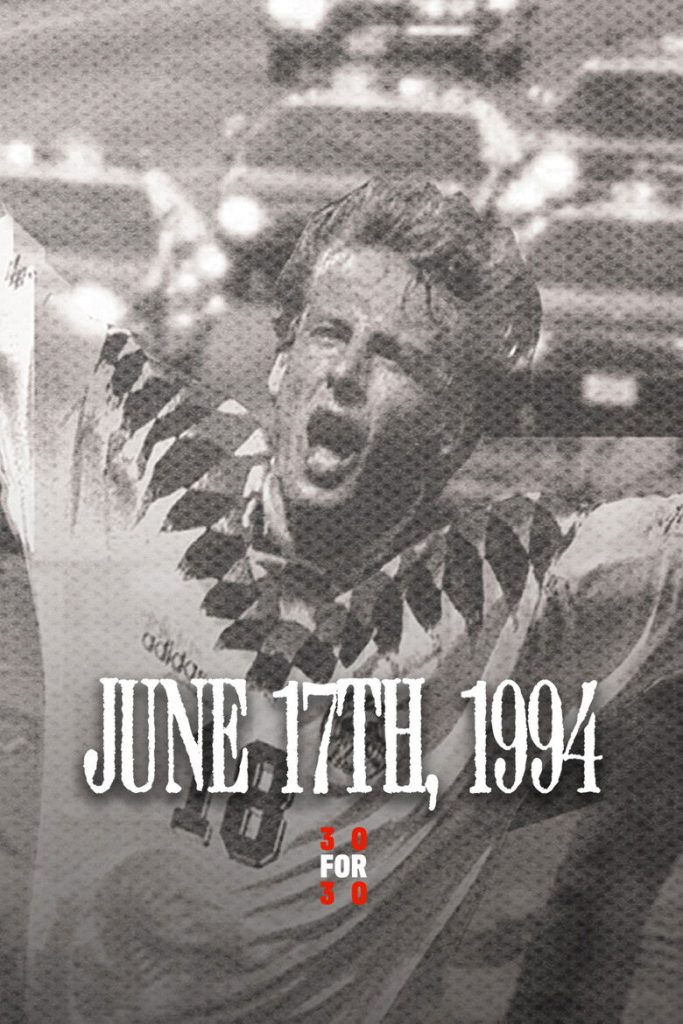
Story overview
This documentary revisits June 17, 1994, a day marked by significant sports events and the infamous O.J. Simpson low-speed car chase. It uses archival footage to juxtapose moments like Arnold Palmer's final U.S. Open round, the FIFA World Cup kickoff, New York Rangers' celebration, and Patrick Ewing's championship pursuit with the unfolding Simpson chase, highlighting how the latter overshadowed other news.
Parent Guide
A documentary suitable for older children and teens, focusing on historical events with mild thematic intensity related to crime. No graphic violence, strong language, or explicit content is present, but it deals with serious real-life topics.
Content breakdown
References to a murder case and police pursuit, but no violent acts are depicted. Archival news footage shows police cars and a slow-speed chase without injury or confrontation.
The subject matter involves a criminal investigation and chase, which might be unsettling for sensitive viewers. No disturbing imagery is shown, but the context could provoke anxiety about crime or police.
No offensive or strong language is present in the archival footage or narration, consistent with its TV-G rating.
No sexual content or nudity.
No depiction or reference to substance use.
Moderate emotional intensity due to the serious nature of the O.J. Simpson case and the juxtaposition with celebratory sports events. May evoke curiosity or concern rather than strong emotions.
Parent tips
This TV-G rated documentary is suitable for most audiences but deals with real-life events that include a criminal investigation. Parents should be aware that while no graphic content is shown, the subject matter involves a high-profile murder case and police pursuit. It may prompt questions from older children about crime, media coverage, and justice. The pacing is moderate, focusing on historical footage without dramatization.
Parent chat guide
Parent follow-up questions
- What sports did you see in the movie?
- Can you name a team or athlete from the film?
- What does it mean to celebrate like the Rangers did?
- Why do you think the O.J. Simpson chase was on TV so much?
- How do you feel when you see police cars on TV?
- What is a documentary and how is it different from a cartoon?
- Why was June 17, 1994, a memorable day according to the film?
- How does the movie show the difference between sports news and crime news?
- What questions do you have about the O.J. Simpson case?
- How does the documentary use editing to contrast the sports events with the Simpson chase?
- What does this film reveal about media sensationalism in the 1990s?
- Discuss the ethical implications of broadcasting police pursuits live on TV.
🎭 Story Kernel
The film isn't about sports or celebrity, but about America's media-saturated consciousness in the mid-90s. It explores how televised spectacle became our shared reality, weaving together O.J. Simpson's white Bronco chase, Arnold Palmer's final U.S. Open round, the NBA Finals, and the World Cup opening into a single narrative fabric. The driving force isn't any character's motivation but the collective national gaze, revealing how disparate events become connected through the medium of broadcast television. It's about how we process information when everything demands our attention simultaneously, creating accidental connections that feel both random and strangely meaningful.
🎬 Visual Aesthetics
The film's visual language is entirely archival, creating meaning through juxtaposition rather than original cinematography. Director Brett Morgen employs rapid-fire editing that mimics channel-surfing, cutting between grainy news footage, polished sports broadcasts, and helicopter shots with jarring rhythm. The color palette shifts between the sun-drenched greens of golf courses, the sterile blues of courtroom coverage, and the hazy grays of freeway chases. There's no traditional 'action style'—the action is the editing itself, creating tension through what's shown versus what's withheld, and how different visual textures (live news, pre-recorded sports, crowd shots) comment on each other.
🔍 Details & Easter Eggs
💡 Behind the Scenes
Director Brett Morgen constructed the entire film from existing archival footage without shooting a single new frame—every image comes from news broadcasts, sports coverage, and home videos from that specific day. The film was originally part of ESPN's '30 for 30' documentary series. Morgen spent months researching footage from over 20 different sources, including international broadcasts of the World Cup and local Los Angeles news stations. The film's title refers to the actual date when all these events occurred simultaneously, with the editing creating connections that didn't exist in real-time viewing.
Where to watch
Choose region:
- Netflix
- Netflix Standard with Ads