
Juror #2 (2024)
Story overview
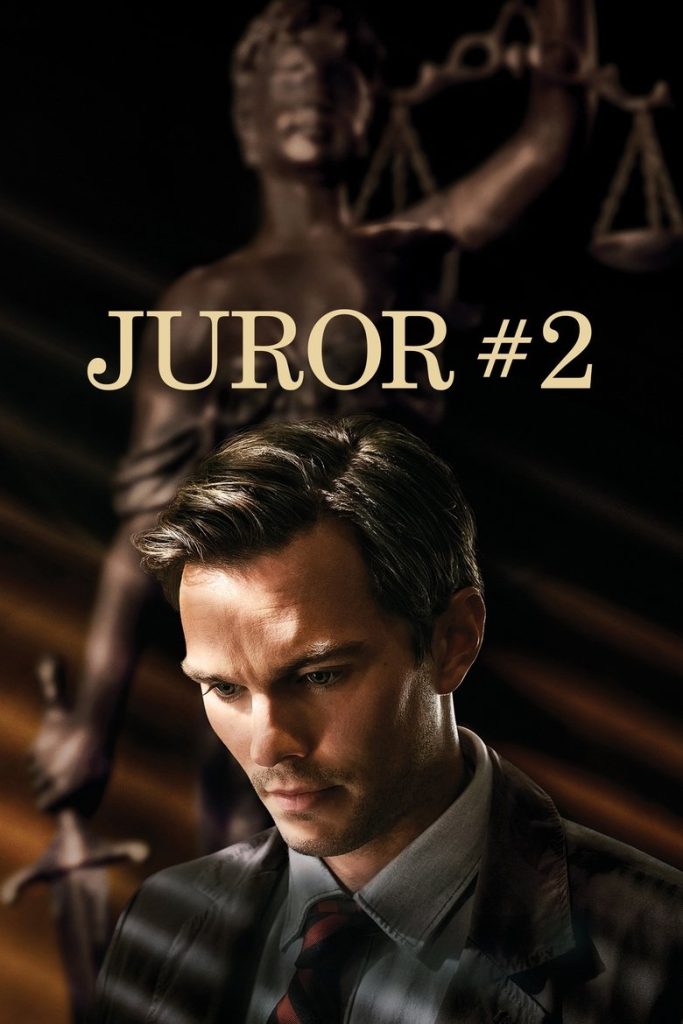
Juror #2 is a 2024 drama-thriller directed by Clint Eastwood, starring Nicholas Hoult as Justin Kemp, a family man serving on a jury in a high-profile murder trial. The film explores his moral dilemma as he grapples with personal knowledge that could influence the verdict, creating tension between duty and conscience. With a PG-13 rating and 114-minute runtime, it focuses on ethical conflicts in a legal setting, featuring an ensemble cast including Toni Collette and J.K. Simmons.
Parent Guide
A thought-provoking drama about moral dilemmas in a legal context, with minimal objectionable content but significant emotional and thematic intensity.
Content breakdown
References to a murder trial, but no graphic violence shown. Some tense courtroom scenes and discussions of crime.
Themes of guilt, justice, and moral conflict may be disturbing. The trial's high-stakes nature creates psychological tension.
Occasional mild profanity typical of PG-13 ratings. No strong or frequent offensive language.
No sexual content or nudity.
No depiction of substance use.
High emotional stakes due to the moral dilemma. Characters experience stress, guilt, and ethical conflicts, which may be intense for sensitive viewers.
Parent tips
This film is suitable for teens and mature pre-teens due to its thematic complexity. It contains no graphic violence, strong language, or sexual content, but deals with intense moral and emotional dilemmas. Parents should note: 1) The trial involves a murder case, which may be disturbing for younger viewers. 2) Discussions of guilt, justice, and ethical conflicts are central. 3) The pacing is deliberate, with tension built through dialogue rather than action. 4) It can serve as a conversation starter about legal systems and personal integrity. Recommended for ages 13+, with parental guidance for ages 10-12.
Parent chat guide
Parent follow-up questions
- What did you think about the people in the courtroom?
- Was it good to tell the truth in the movie?
- How did the movie make you feel?
- Why was Justin confused about what to do?
- What does it mean to be on a jury?
- How do you think the story ended?
- What would you have done if you were Justin?
- How does the movie show the importance of honesty?
- What did you learn about how trials work?
- How does the film explore the conflict between personal ethics and legal obligations?
- What commentary does it make about the justice system?
- How do the characters' motivations reflect real-world moral dilemmas?
🎭 Story Kernel
Juror #2 is a profound exploration of the intersection between personal guilt and civic duty. At its heart, the film is an interrogation of the American justice system's reliance on the 'reasonable doubt' of individuals who carry their own unexamined baggage. When Justin Kemp realizes he is the actual perpetrator of the crime for which another man is being tried, the narrative shifts from a standard whodunit to a psychological thriller about moral erosion. Eastwood examines how easily the truth can be manipulated when the person meant to uphold it is the one with the most to lose. It’s not just about a trial; it’s about the terrifying realization that justice is often a byproduct of convenience and consensus rather than objective reality, highlighting the fragile nature of human integrity under extreme pressure.
🎬 Visual Aesthetics
Working with cinematographer Yves Bélanger, Eastwood employs a visual language defined by 'late-style' austerity. The film avoids flashy camerawork, opting instead for steady, medium shots that trap the characters within the frame, mirroring Justin’s internal entrapment. The color palette is intentionally desaturated, leaning into cold blues and muted earth tones to reflect the somber, high-stakes nature of the deliberation room. Lighting is used strategically to cast half-shadows across Nicholas Hoult’s face, visually representing his dual identity as both juror and culprit. The courtroom itself is stripped of cinematic grandeur, presented as a functional, almost bureaucratic space where life-altering decisions are made amidst mundane surroundings. This visual restraint forces the audience to focus on the subtle micro-expressions of the cast, emphasizing the internal psychological warfare over external spectacle.
🔍 Details & Easter Eggs
💡 Behind the Scenes
Juror #2 is widely regarded as the legendary Clint Eastwood’s final directorial effort, completed when he was 94 years old. The production primarily took place in Savannah, Georgia, which provided the film's distinct Southern judicial atmosphere. Despite being helmed by one of Hollywood’s most iconic figures, the film received a surprisingly limited theatrical release from Warner Bros., appearing in only a handful of screens across the United States. This distribution strategy became a point of significant discussion in the industry. Nicholas Hoult secured the lead role after an efficient meeting with Eastwood, who is famous for his 'one-take' directing style.
Where to watch
Choose region:
- HBO Max
- HBO Max Amazon Channel
- HBO Max Amazon Channel
- Amazon Video
- Apple TV Store
- Google Play Movies
- YouTube
- Fandango At Home
- Plex
Trailer
Trailer playback is unavailable in your region.