
Justice (2024)
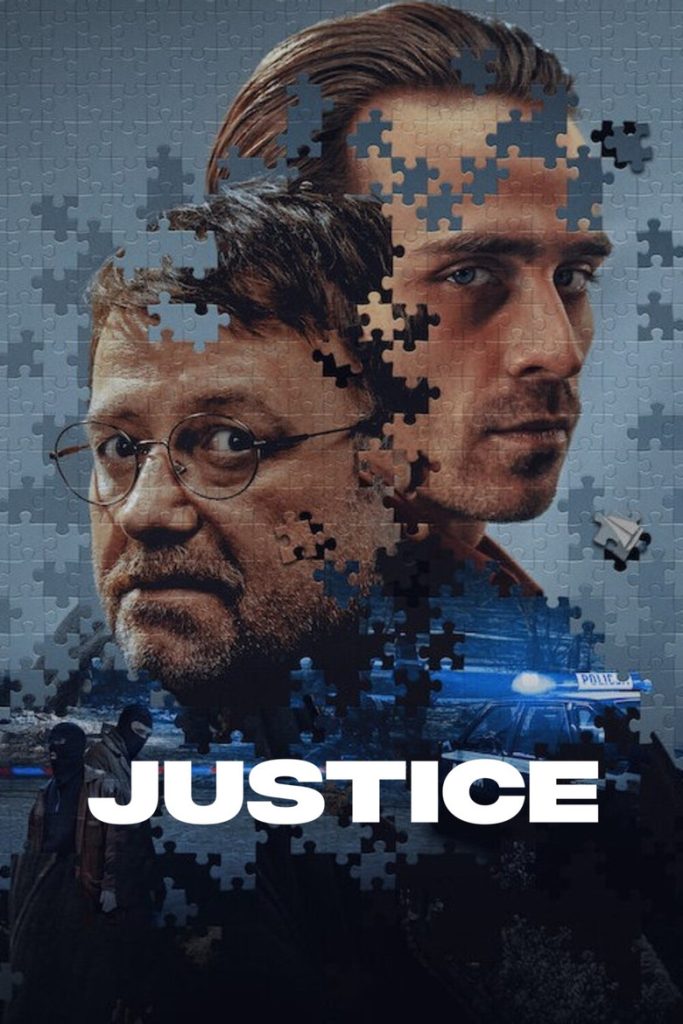
Story overview
In this Polish crime drama, a young detective recruits a discharged police officer to solve a bank robbery case, offering him a chance to regain his former life and career.
Parent Guide
A gritty Polish crime drama with mature themes including police corruption, moral ambiguity, and intense investigative sequences. Contains strong violence, language, and emotional intensity.
Content breakdown
Includes scenes of bank robbery, criminal confrontations, police operations, and tense standoffs. Some physical violence and threats are depicted, though not excessively graphic.
Contains tense investigative scenes, criminal activities, and moral dilemmas that may be disturbing. Themes of corruption and betrayal create an unsettling atmosphere.
Features strong language including Polish profanity and harsh dialogue typical of crime dramas. Characters use coarse language in tense situations.
Minimal sexual content. May include brief suggestive dialogue or mild romantic elements, but no explicit scenes or nudity.
May include social drinking or smoking in background scenes, but not central to the plot or glorified.
High emotional intensity throughout as characters grapple with moral dilemmas, career consequences, and personal redemption. Tense investigative sequences create sustained suspense.
Parent tips
This TV-MA rated crime drama contains mature themes including violence, strong language, and intense emotional situations. It explores complex moral dilemmas and police corruption. Best suited for older teens and adults due to its gritty realism and mature content.
Parent chat guide
Parent follow-up questions
—
—
- What makes someone a good detective?
- Why do you think the police officer was discharged from his job?
- What would you do if you found something that didn't seem right?
- How does the film portray the justice system in Poland?
- What ethical dilemmas do the main characters face?
- Do you think the discharged officer deserves a second chance? Why or why not?
- How does the film explore themes of redemption?
- What commentary does the film make about institutional corruption?
🎭 Story Kernel
Justice (Napad) explores the moral decay and desperate opportunism of early 1990s Poland. At its core, the film is about the collision of two eras: the fading shadow of the communist security apparatus and the ruthless dawn of capitalism. The narrative follows a disgraced former investigator, Tadeusz Gadacz, who is recruited to solve a violent bank heist in exchange for his old life. The movie expresses the idea that justice is often a transactional commodity rather than a moral absolute. It delves into the psychological toll of the transition, where the line between the hunter and the hunted blurs. The heist serves as a catalyst for a deeper exploration of guilt, the weight of one's past, and the impossibility of true erasure in a society undergoing a radical systemic overhaul. It is a somber reflection on the price of order in a chaotic world.
🎬 Visual Aesthetics
Director Michał Gazda and cinematographer Tomasz Augustynek employ a muted, almost monochromatic color palette that captures the bleakness of the Polish transition period. The visuals are dominated by cold grays, browns, and harsh fluorescent lighting, reflecting the utilitarian and often soul-crushing aesthetic of the 1990s. The camera work is steady and observational, mirroring Gadacz’s methodical approach to the investigation. Symbolism is found in the stark contrast between the decaying, cramped apartments of the suspects and the imposing, sterile environment of the newly privatized bank. This visual dichotomy underscores the widening class gap and the alienation felt by those left behind by the economic shock therapy. The use of shadows and tight framing creates a claustrophobic atmosphere, emphasizing the characters' entrapment within their own choices and the rigid structures of the state.
🔍 Details & Easter Eggs
💡 Behind the Scenes
Justice reunites director Michał Gazda with actor Olaf Lubaszenko, following their collaboration on the highly acclaimed Netflix production Forgotten Love. Lubaszenko, a prominent figure in Polish cinema since the 1980s, underwent a physical transformation for the role of Gadacz, adopting a weary, stoic demeanor. The film is loosely inspired by the 2001 Kredyt Bank robbery in Warsaw, one of the most violent crimes in modern Polish history. However, Gazda chose to set the story earlier to better capture the atmosphere of the post-1989 transformation. The production meticulously recreated 1990s Warsaw, sourcing period-accurate vehicles and props to maintain historical authenticity.
Where to watch
Choose region:
- Netflix
- Netflix Standard with Ads
Trailer
Trailer playback is unavailable in your region.