
Justice League: The Flashpoint Paradox (2013)
Story overview
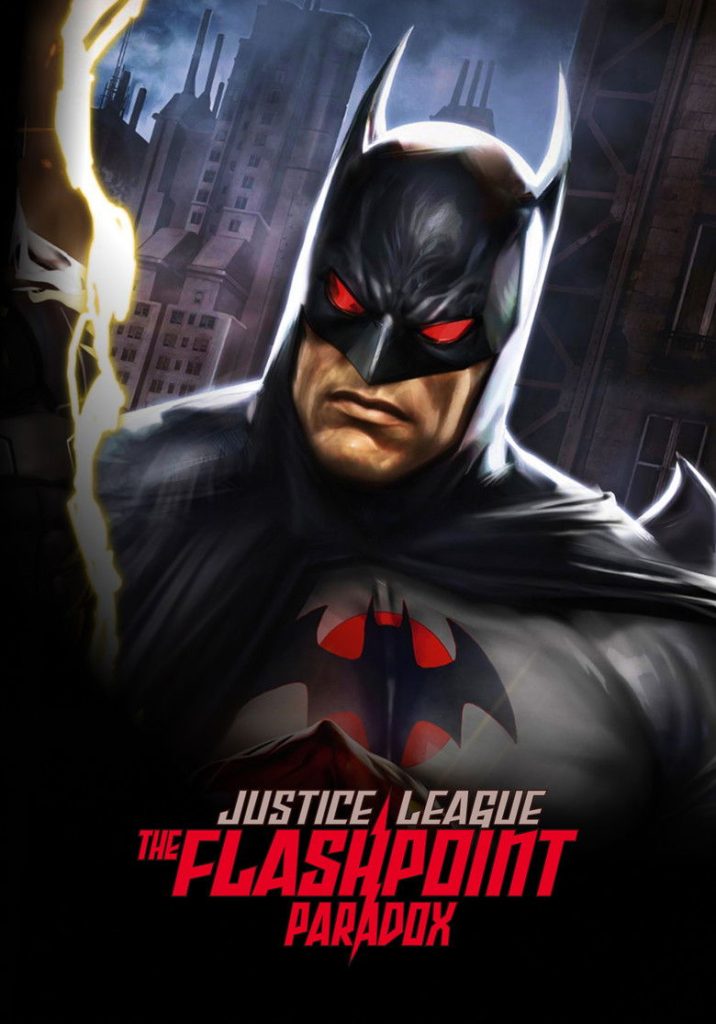
In this animated superhero adventure, The Flash accidentally creates an alternate timeline where the world is at war. He must work with different versions of familiar heroes to fix the timeline and restore reality. The story explores consequences of actions and features multiple versions of DC Comics characters in a high-stakes scenario.
Parent Guide
An animated superhero film with intense action and complex themes suitable for older children and teens.
Content breakdown
Superhero battles with hand-to-hand combat, energy attacks, and characters in perilous situations. Some characters are shown injured or in danger.
Alternate war-torn world setting and changed character relationships may be unsettling. Some tense moments as characters face threats.
Occasional mild language typical of superhero action films.
No sexual content or nudity present.
No substance use depicted.
Characters experience loss, regret, and high-stakes situations. The alternate timeline creates emotional tension.
Parent tips
This PG-13 animated film contains intense action sequences with superhero battles, perilous situations, and some emotional moments. While animated, the violence includes hand-to-hand combat, energy blasts, and characters in dangerous situations. The alternate timeline concept involves some dark themes including war and changed relationships between characters.
Parents should note that while this is an animated film, it's aimed at older children and teens rather than young children. The complex timeline-altering plot may be confusing for younger viewers, and the war-torn setting creates a darker tone than typical superhero stories.
Parent chat guide
Focus conversations on the story's exploration of how one event can change everything, and how characters work together despite differences. This can lead to discussions about teamwork, problem-solving, and learning from errors.
Parent follow-up questions
- What was your favorite part of the movie?
- Which superhero did you like best?
- How did the characters help each other?
- What colors did you see in the movie?
- Was there anything that surprised you?
- Why do you think the Flash wanted to change the timeline back?
- How were the characters different in the alternate world?
- What does it mean to be a hero in this story?
- How did the characters work as a team?
- What would you do if you could change one thing in your life?
- What consequences did changing the timeline have?
- How did different characters react to the changed world?
- What does this story say about responsibility for our actions?
- How did the animation style help tell this story?
- What makes someone a hero when things go wrong?
- How does this film explore the concept of alternate realities?
- What ethical questions does changing the timeline raise?
- How do the characters' motivations differ between timelines?
- What commentary might this story make about war and conflict?
- How does this compare to other superhero stories you've seen?
🎭 Story Kernel
At its core, 'Justice League: The Flashpoint Paradox' explores the catastrophic consequences of attempting to rewrite personal trauma through cosmic intervention. Barry Allen's desperate act to save his mother isn't driven by heroism but by unresolved grief—a selfish impulse that unravels reality itself. The film presents time not as a linear path but as a fragile ecosystem where one alteration creates cascading failures. Thomas Wayne's brutal Batman reveals how tragedy shapes heroes differently, while Wonder Woman and Aquaman's war demonstrates how removing Superman creates a power vacuum filled by unchecked aggression. Ultimately, the movie argues that accepting loss, however painful, is necessary for maintaining cosmic balance—a lesson Barry learns only after witnessing the horrific alternative universe his grief created.
🎬 Visual Aesthetics
The animation employs a stark visual dichotomy between timelines. The 'correct' universe features brighter colors and smoother character designs, while Flashpoint's world drowns in desaturated grays, blood-red accents, and jagged lines that mirror its fractured reality. Action sequences are brutally efficient—Thomas Wayne's Batman doesn't perform acrobatic flips but executes precise, lethal takedowns. The camera lingers on emotional moments like Barry's childhood memory of his mother, using soft focus that contrasts with the harsh, wide shots of war-torn Europe. Symbolism appears in Barry's diminishing speed force aura as reality collapses around him, visually representing his fading connection to the timeline he destroyed.
🔍 Details & Easter Eggs
💡 Behind the Scenes
This 2013 direct-to-video film marked the first appearance of Thomas Wayne as Batman in animation, with Kevin McKidd providing both his voice and a distinct Scottish accent that differentiated him from Bruce. The production team studied Geoff Johns' comic miniseries but condensed the sprawling narrative into 81 minutes by focusing on Barry's emotional journey. Voice director Andrea Romano deliberately cast actors who could convey trauma through vocal performance alone, resulting in Justin Chambers' raw delivery as Barry. The film's success directly inspired the DC Animated Movie Universe continuity that followed, making it a pivotal project in DC's animation history.
Where to watch
Choose region:
- HBO Max
- Amazon Video
- Apple TV
- Google Play Movies
- YouTube
- Fandango At Home
Trailer
Trailer playback is unavailable in your region.