
Justice League vs. Teen Titans (2016)
Story overview
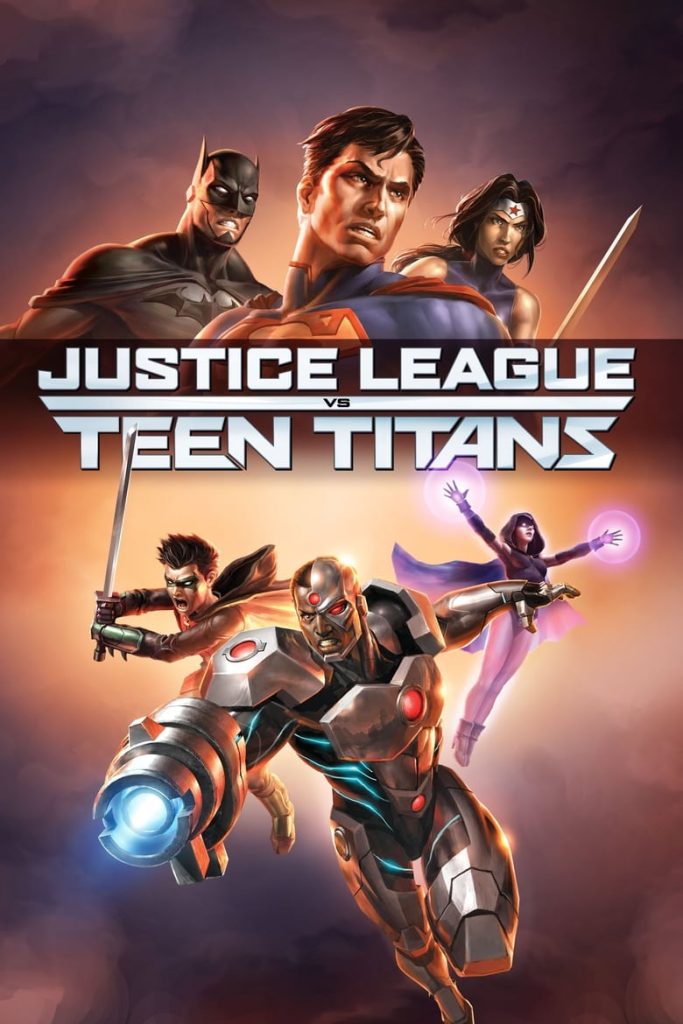
In this animated superhero film, Robin is assigned to join the Teen Titans after his impulsive actions disrupt a Justice League operation. The young heroes must work together when a powerful demonic entity possesses the Justice League and threatens global domination. The story explores teamwork, responsibility, and overcoming personal flaws while featuring action-packed confrontations between superheroes and supernatural forces.
Parent Guide
An animated superhero film with moderate action violence and supernatural themes suitable for older children and teens.
Content breakdown
Superhero battles with punches, energy blasts, and magical attacks. Characters are possessed and fight against their will. No graphic injuries shown.
Demonic possession themes, mind control, and supernatural threats. Dark imagery and intense confrontations with possessed heroes.
Occasional mild superhero-style taunts and exclamations. No strong profanity.
No sexual content or nudity. Characters wear standard superhero costumes.
No depiction of substance use.
Themes of anger, redemption, and teamwork. Characters experience frustration and personal growth. Intense supernatural confrontations.
Parent tips
This PG-13 animated film contains moderate superhero violence with characters battling possessed heroes and demonic forces. There are intense scenes of mind control and supernatural threats that may be frightening for younger viewers. The film explores themes of anger management, teamwork, and redemption through its teenage superhero characters.
Parents should note the demonic possession storyline and supernatural elements, which include dark imagery and magical attacks. While the animation style is colorful and superhero-focused, the peril level is consistent with other animated superhero films aimed at older children and teens.
Consider your child's sensitivity to supernatural themes and superhero violence when deciding if this film is appropriate. The 78-minute runtime makes it manageable for family viewing, but the PG-13 rating suggests content may be intense for children under 13.
Parent chat guide
During viewing, pause if scenes become intense to check in with your child. Point out positive behaviors like characters supporting each other or admitting mistakes. Discuss how the characters handle conflicts and whether they're making good choices.
After the movie, talk about the themes of responsibility and controlling emotions. Ask how the characters grew throughout the story and what lessons they learned. Discuss real-life situations where teamwork and managing emotions are important.
Parent follow-up questions
- Which superhero did you like best?
- What was your favorite color in the movie?
- Did you see any friends working together?
- What was something funny that happened?
- How did the music make you feel?
- Why do you think Robin had trouble working with others at first?
- What made the Teen Titans a good team?
- How did the characters help each other when things got scary?
- What would you do if you saw someone being controlled like the Justice League?
- What lesson did Robin learn about his behavior?
- How did the movie show that everyone has strengths and weaknesses?
- What strategies did the Teen Titans use to work together effectively?
- How did the characters balance using their powers with being responsible?
- What does the movie suggest about dealing with anger or frustration?
- How did the supernatural elements affect how you viewed the conflict?
- How does this portrayal of teenage superheroes compare to other media you've seen?
- What commentary does the film make about mentorship and independence?
- How effectively did the movie handle themes of possession and free will?
- What did you think about the way conflict resolution was portrayed?
- How might the team dynamics reflect real-world group collaboration challenges?
🎭 Story Kernel
Beneath the supernatural threat of Trigon, the film explores the psychological inheritance of heroism. Damian Wayne's arc isn't about becoming a better Robin, but about confronting his League of Assassins upbringing through the Teen Titans' found family dynamic. Raven's struggle represents inherited trauma manifesting as literal demonic possession, forcing the Justice League to confront their limitations as mentors rather than just protectors. The real conflict isn't Justice League versus Teen Titans, but established authority versus emergent identity—how the next generation must solve problems their predecessors created but cannot fix.
🎬 Visual Aesthetics
The animation employs a stark visual dichotomy: the Justice League's scenes use cooler, metallic color palettes with rigid, symmetrical compositions reflecting their institutional nature, while Teen Titans sequences burst with warmer, saturated colors and dynamic, chaotic framing. Trigon's realm shifts to expressionist horror with crimson-dominated palettes and distorted perspectives. Action choreography distinguishes generations—Justice League fights are calculated, almost clinical, while Teen Titans brawl with improvisational, emotionally charged movements. Camera work during possession scenes uses Dutch angles and rapid zooms to create psychological disorientation.
🔍 Details & Easter Eggs
💡 Behind the Scenes
This film marked the first time Taissa Farmiga voiced Raven, bringing a more vulnerable, nuanced performance compared to previous voice actors. Director Sam Liu intentionally designed Trigon's realm without right angles or straight lines to create subconscious unease. The baseball scene was added late in production to provide character moments that test screenings found lacking. Several Justice League fight sequences were storyboarded by artists who previously worked on 'Justice League: The Flashpoint Paradox,' creating visual continuity with earlier DC animated films.
Where to watch
Choose region:
- HBO Max
- HBO Max Amazon Channel
- Amazon Video
- Apple TV
- Google Play Movies
- YouTube
- Fandango At Home
- Spectrum On Demand
Trailer
Trailer playback is unavailable in your region.