
Kabhi Khushi Kabhie Gham (2001)
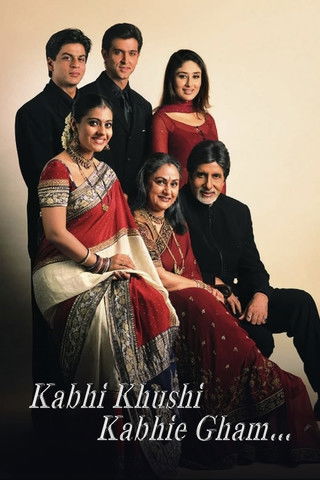
Story overview
Kabhi Khushi Kabhie Gham is a 2001 Indian family drama that explores themes of love, tradition, and reconciliation. The story follows a wealthy family torn apart when the patriarch disapproves of his adopted son's marriage to a woman from a different social class. Through emotional conflicts and cultural expectations, the film depicts the journey toward forgiveness and family unity, blending heartfelt moments with musical sequences typical of Bollywood cinema.
Parent Guide
A family drama exploring emotional conflicts and reconciliation with cultural elements typical of Bollywood cinema.
Content breakdown
No physical violence or perilous situations depicted.
Emotional family conflicts and separation scenes that may be intense for sensitive viewers.
No offensive language noted in typical Bollywood family films.
No sexual content or nudity; contains traditional romantic elements typical of family-oriented Bollywood films.
No substance use depicted.
Contains emotionally charged family conflict scenes and themes of separation and reconciliation.
Parent tips
This film deals with family conflicts and emotional separation that may resonate with older children and teenagers. Parents should be prepared to discuss themes of parental disapproval, social class differences, and the importance of forgiveness. The emotional intensity of family drama scenes might be challenging for younger viewers, so consider watching together to provide context and support.
Parent chat guide
Parent follow-up questions
- What was your favorite song or dance in the movie?
- How did the family members show they loved each other?
- What colors or clothes did you like seeing in the movie?
- How did the characters feel when they were happy?
- What made you smile during the movie?
- Why do you think the father was upset about the marriage?
- How did the brothers show they cared about each other?
- What does it mean to be part of a family?
- How did the characters try to solve their problems?
- What traditions did you notice in the movie?
- What are different ways families can handle disagreements?
- How do social expectations affect family relationships?
- What does forgiveness mean in the context of this story?
- How do cultural traditions influence family decisions?
- What makes a family strong even when they have conflicts?
- How does the film portray intergenerational conflict and resolution?
- What role do social class and tradition play in family dynamics?
- How do the characters balance personal happiness with family expectations?
- What does the film suggest about the nature of forgiveness and reconciliation?
- How are cultural values both challenged and preserved in the story?
🎭 Story Kernel
At its core, 'Kabhi Khushi Kabhie Gham' explores the tension between tradition and modernity through the lens of familial love and pride. The driving force isn't romance but the patriarchal ego of Yashvardhan Raichand, whose rigid adherence to social hierarchy fractures his family. Rahul's rebellion and subsequent exile represent the painful cost of choosing individual integrity over filial duty, while Rohan's quest to reunite them becomes a mission to heal generational wounds. The film ultimately argues that true family values aren't about obedience but acceptance, though it takes a decade of separation and a literal ocean crossing to prove it.
🎬 Visual Aesthetics
The film's visual language creates distinct worlds: the cold, symmetrical opulence of the Raichand mansion versus the warm, chaotic vibrancy of London. Director Karan Johar uses sweeping crane shots during emotional musical numbers to elevate domestic drama to epic scale. The color palette shifts dramatically—muted golds and browns in India give way to brighter reds and blues abroad, mirroring emotional liberation. Costumes serve as character armor: Anjali's simple saris versus Poo's designer outfits visually mark class divisions. The iconic 'Suraj Hua Maddham' sequence uses soft focus and water symbolism to create intimacy amidst grandeur.
🔍 Details & Easter Eggs
💡 Behind the Scenes
The iconic 'Suraj Hua Maddham' song featuring Shah Rukh Khan and Kajol was filmed at Egypt's Pyramids of Giza, making it one of Bollywood's most expensive song sequences at the time. Amitabh Bachchan insisted on performing his own stunts during the emotional confrontation scenes despite being nearly 60. Jaya Bachchan's real-life maternal anxiety reportedly influenced her portrayal of Nandini's silent suffering. The film's title was almost changed due to concerns about being too long, but Karan Johar fought to keep it as a thematic statement about life's emotional contrasts.
Where to watch
Choose region:
- Netflix
- Amazon Prime Video
- Netflix Standard with Ads
- Amazon Prime Video with Ads
- Apple TV
Trailer
Trailer playback is unavailable in your region.