
Kevin Nash: Too Sweet (2015)
Story overview
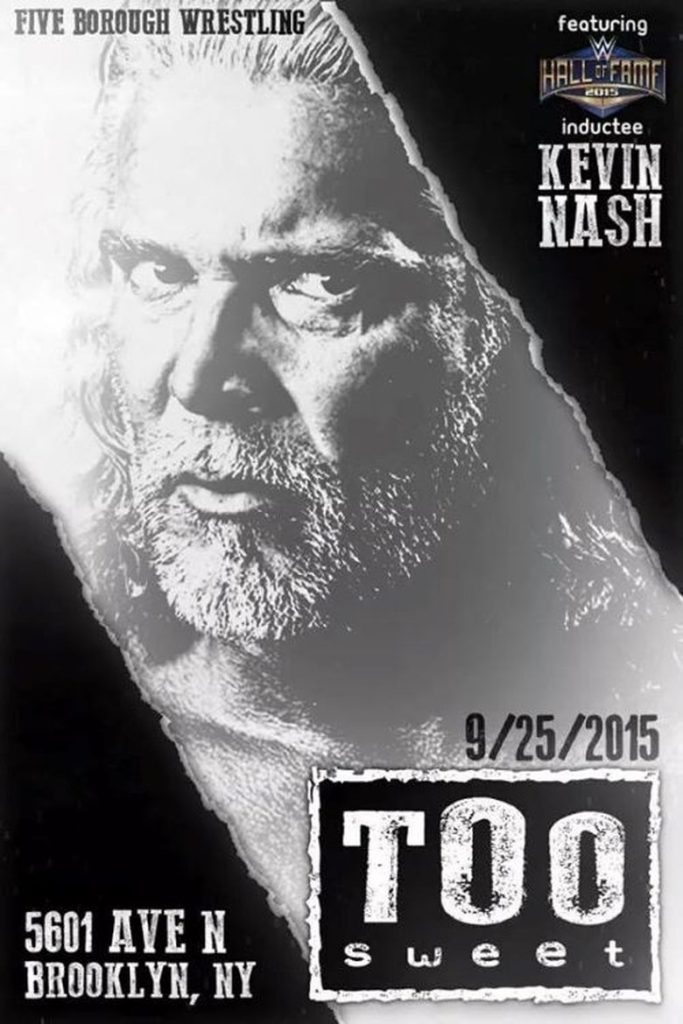
This 30-minute documentary follows professional wrestler Kevin Nash during his 2015 WWE Hall of Fame induction, featuring reflections on his career in WWE and WCW, his relationship with Shawn Michaels, and the origins of The Kliq wrestling group. It includes archival wrestling footage and interviews with wrestling personalities.
Parent Guide
A mild documentary suitable for elementary school children and up, focusing on wrestling career reflection without concerning content.
Content breakdown
Contains wrestling footage with staged physicality typical of professional wrestling entertainment. No graphic violence, blood, or real injury shown.
No frightening or disturbing content. The documentary maintains a celebratory tone throughout.
No profanity or concerning language noted in the documentary description.
No sexual content or nudity present.
No depiction or discussion of substance use.
Mild emotional moments related to career reflection and Hall of Fame celebration. No intense emotional scenes.
Parent tips
This documentary focuses on professional wrestling careers and behind-the-scenes relationships. While wrestling content includes staged physicality, there's no graphic violence. Some wrestling terminology and mild references to industry politics may require explanation for younger viewers. The short runtime makes it manageable for family viewing.
Parent chat guide
Parent follow-up questions
- What was your favorite part of the wrestling show?
- What do you think makes someone a 'Hall of Fame' wrestler?
- How do you think wrestlers practice their moves safely?
- Why do you think Kevin Nash was chosen for the Hall of Fame?
- What does it mean to have a 'career' in sports entertainment?
- How are wrestling documentaries different from wrestling matches on TV?
- What qualities do you think make a successful professional wrestler?
- How does this documentary show the difference between wrestling personas and real people?
- Why might someone reflect on their career when receiving an honor like Hall of Fame induction?
- How does this documentary portray the business side of professional wrestling?
- What insights does it provide about wrestling industry relationships and politics?
- How do career retrospectives like this help us understand athletic entertainment as both performance art and sport?
🎭 Story Kernel
The film isn't just a career retrospective—it's an exploration of the duality required to survive in professional wrestling. Kevin Nash's journey exposes how the industry demands performers to construct larger-than-life personas while systematically eroding their physical and emotional foundations. The documentary reveals that Nash's legendary 'too sweet' gesture becomes a bittersweet symbol of brotherhood forged in pain, representing both the camaraderie that sustained him and the physical toll that nearly destroyed him. His motivations shift from chasing championship gold to simply surviving with dignity, making this less about wrestling glory and more about human resilience.
🎬 Visual Aesthetics
The cinematography employs intimate close-ups that contrast sharply with archival wrestling footage, creating a visual dialogue between Nash's current vulnerability and past invincibility. A muted, almost desaturated color palette dominates present-day interviews, while the wrestling clips explode with arena lighting and vibrant costumes—highlighting the stark difference between performance and reality. Camera angles frequently shoot upward at Nash even in casual settings, preserving his physical presence while subtly commenting on how his stature defined his life. The editing rhythm mirrors wrestling's pacing: quiet, reflective moments are interrupted by sudden bursts of archival violence.
🔍 Details & Easter Eggs
💡 Behind the Scenes
The documentary was shot over three years, with director Greg Whiteley initially approaching Nash for a different project before realizing his life story warranted its own film. Several interviews were conducted at Nash's actual home rather than a studio, contributing to the raw, unvarnished atmosphere. Most of the archival wrestling footage came from Nash's personal collection, including never-before-seen backstage tapes. The film's title references both Nash's signature hand gesture and the ironic reality that his career contained far more bitterness than sweetness. Notably, several wrestling legends appear only in archival footage rather as talking heads, preserving the focus squarely on Nash's perspective.
Where to watch
Choose region:
- Peacock Premium