
Kho Gaye Hum Kahan (2023)
Story overview
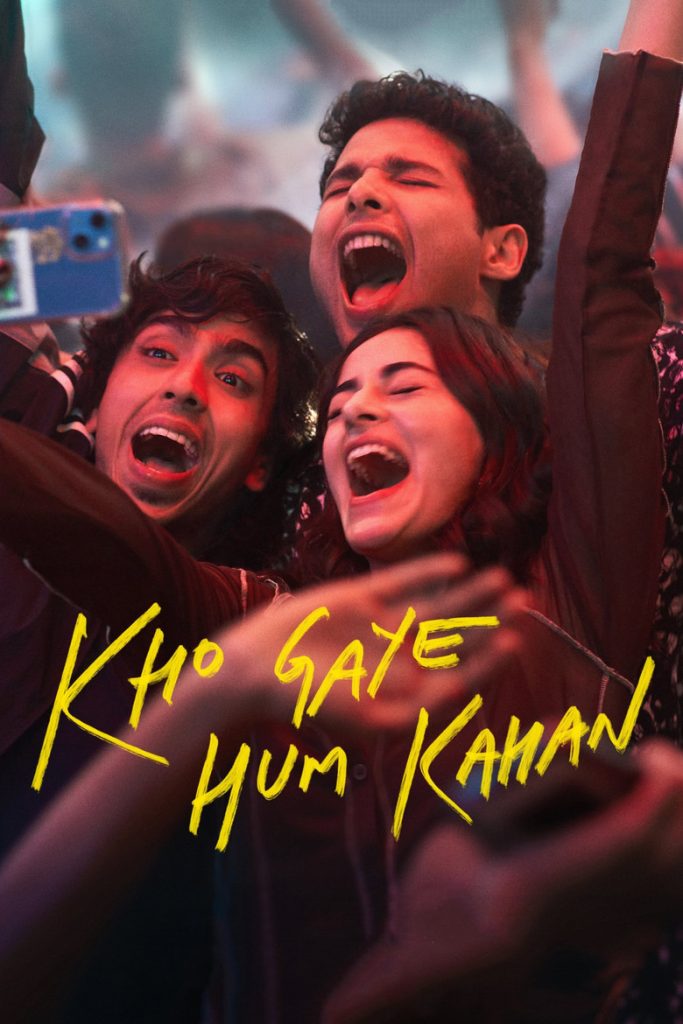
Kho Gaye Hum Kahan follows three close friends in their 20s navigating life in Mumbai, where their personal and professional aspirations intersect with the pervasive influence of social media. The film explores themes of modern relationships, career pressures, and the emotional complexities of young adulthood, blending dramatic moments with comedic elements to portray the challenges of staying connected in a digitally dominated world.
Parent Guide
A contemporary drama-comedy exploring young adulthood in the digital age, with moderate thematic elements best suited for mature teens.
Content breakdown
No physical violence. Some emotional confrontations and tense arguments between characters. Mild peril related to career pressures and relationship conflicts.
Emotionally intense scenes involving heartbreak, social media anxiety, and personal failures. Some scenes depict characters feeling isolated or overwhelmed by pressure.
Occasional mild profanity and slang. Some suggestive dialogue related to relationships and social situations.
Implied sexual situations and romantic relationships. Kissing and intimate moments. No nudity or explicit sexual content.
Social drinking in party scenes and casual settings. Characters shown with alcoholic beverages, but no excessive drinking or substance abuse depicted.
Significant emotional themes including heartbreak, career anxiety, friendship conflicts, and social media-induced stress. Characters experience disappointment, jealousy, and pressure to succeed.
Parent tips
This film is suitable for mature teens and adults due to its themes of social media addiction, relationship conflicts, and adult situations. Parents should be aware of moderate language, mild sexual content, and emotional intensity related to heartbreak and ambition. It offers opportunities to discuss healthy social media use, peer pressure, and navigating young adulthood. Best viewed with teens 14+ for guided discussion.
Parent chat guide
Parent follow-up questions
—
—
- What do you think about how the characters use phones and social media?
- How do friends help each other when they're feeling sad?
- How does social media pressure affect the characters' decisions and relationships?
- What healthy boundaries could the characters set with technology?
- How do the characters balance their dreams with reality?
- What did you think about how the film portrays modern dating and friendships?
🎭 Story Kernel
The film serves as a sharp commentary on the curated lives of Gen Z in Mumbai, focusing on three friends—Imaad, Ahana, and Neil—as they navigate the treacherous waters of social media validation and real-world insecurity. It explores the 'performance of happiness' where Ahana uses Instagram to win back an ex, Neil battles class-envy while trying to become a fitness influencer, and Imaad uses stand-up comedy to mask deep-seated childhood trauma. At its heart, the movie is about the erosion of authentic human connection in an era of constant connectivity. It captures the hollow ache of the 'scroll' culture, where self-worth is measured in likes and the fear of missing out overrides the joy of being present, ultimately questioning what remains when the screens go dark.
🎬 Visual Aesthetics
Director of Photography Tanay Satam employs a vibrant, contemporary aesthetic that mirrors the polished surface of social media while subtly exposing the cracks beneath. The visual narrative is heavily integrated with digital UI elements—floating text messages, Instagram notifications, and live-stream overlays—which effectively blur the line between the characters' physical and virtual realities. The lighting often shifts between the warm, saturated tones of social gatherings and the cold, isolating blue light of smartphone screens during moments of private vulnerability. Symbolically, the film uses reflections in glass and mirrors to represent the fragmented identities of the protagonists, emphasizing how they are constantly viewing themselves through the lens of external perception rather than internal reality, creating a sense of urban claustrophobia despite the open Mumbai settings.
🔍 Details & Easter Eggs
💡 Behind the Scenes
Kho Gaye Hum Kahan marks the directorial debut of Arjun Varain Singh, who previously worked as an assistant director on films like Gully Boy. The project is a collaboration between Excel Entertainment and Tiger Baby Films, reuniting producers Zoya Akhtar and Reema Kagti. The film's title is a direct homage to the popular song from the 2016 movie Baar Baar Dekho, reflecting a thematic continuity of urban exploration. To ensure authentic chemistry, the lead trio—Ananya Panday, Siddhant Chaturvedi, and Adarsh Gourav—underwent extensive workshops and spent significant time together before filming commenced in the real-world locations of Mumbai.
Where to watch
Choose region:
- Netflix
- Netflix Standard with Ads
Trailer
Trailer playback is unavailable in your region.