
Kiki’s Delivery Service (1989)
Story overview
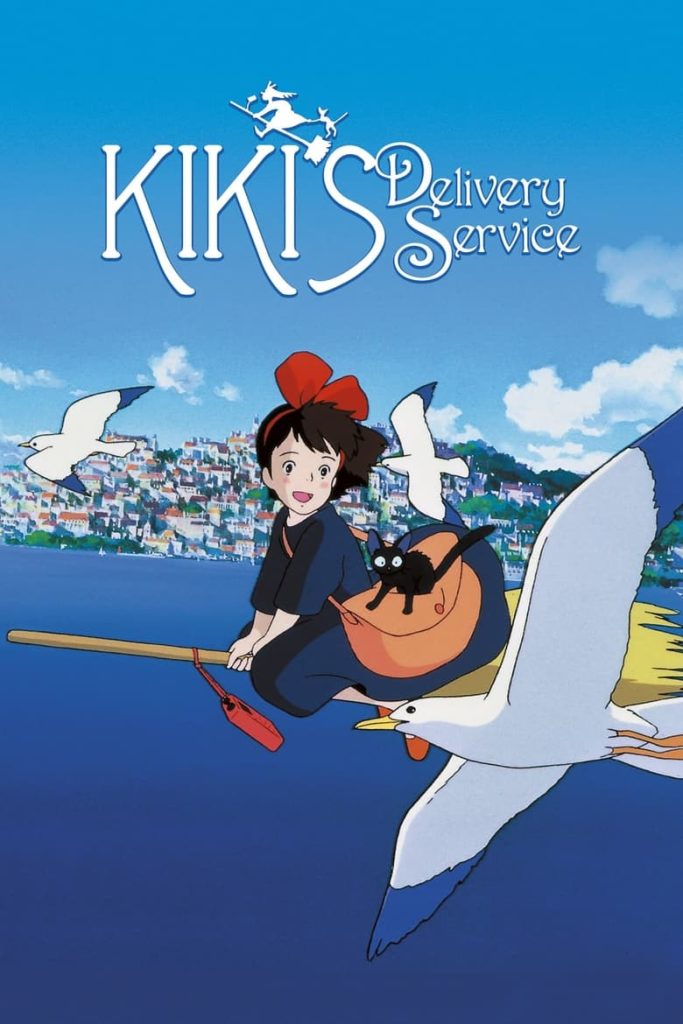
Kiki's Delivery Service is a charming animated film about a 13-year-old witch who leaves home for her traditional year of independence. She settles in a coastal town and starts a delivery service using her flying broomstick, facing challenges as she adapts to her new life. The story explores themes of self-reliance, friendship, and finding one's place in the world through gentle fantasy elements.
Parent Guide
A gentle coming-of-age fantasy suitable for all ages, focusing on themes of independence and self-discovery.
Content breakdown
Brief moments of fantasy peril during delivery mishaps, all resolved safely.
Mild tension when Kiki faces challenges or feels lonely, but nothing truly frightening.
No offensive language or harsh words.
No sexual content or nudity.
No depiction of substance use.
Mild emotional moments related to homesickness and self-doubt, handled gently.
Parent tips
This G-rated film is appropriate for all ages with its gentle storytelling and positive messages. The movie contains mild fantasy peril when Kiki encounters difficulties during her deliveries, but these moments are brief and resolved positively. Parents should note that the film deals with themes of homesickness, self-doubt, and the challenges of growing up, which may resonate with children experiencing similar feelings.
Parent chat guide
Parent follow-up questions
- What was your favorite part when Kiki flew on her broom?
- How did Kiki feel when she met new friends?
- What would you deliver if you had a flying broom?
- What did you like about Kiki's black cat?
- How did Kiki help people in the town?
- What challenges did Kiki face when she moved to the new town?
- How did Kiki's feelings change throughout the story?
- What does it mean to be independent like Kiki?
- How did Kiki's delivery service help her make friends?
- What would you do if you had to live away from home for a year?
- What does Kiki learn about herself during her year of independence?
- How does the movie show that growing up involves both excitement and challenges?
- What responsibilities come with having special abilities like Kiki's?
- How do Kiki's relationships with others help her grow?
- What message does the film give about finding your place in the world?
- How does Kiki's journey reflect real-life transitions to independence?
- What does the film suggest about balancing tradition with personal growth?
- How does Kiki's experience with self-doubt relate to adolescent development?
- What commentary does the film make about finding purpose through service to others?
- How does the fantasy setting enhance the coming-of-age themes?
🎭 Story Kernel
Kiki's Delivery Service is about creative burnout disguised as a witch's journey. At 13, Kiki leaves home for her mandatory year of independence, but the film reveals this isn't just about growing up—it's about maintaining passion in a capitalist world. Her magic fading mirrors artistic block when creativity becomes labor. The bakery owner Osono represents the practical adult who channels creativity into commerce, while Ursula the painter shows how isolation can preserve art but at personal cost. Kiki's crisis isn't about losing magic but about rediscovering why she loved flying in the first place, making this Miyazaki's most honest portrayal of what happens when joy becomes job.
🎬 Visual Aesthetics
Miyazaki's coastal city Koriko is a masterclass in European architectural synthesis—Swedish rooftops meet Italian piazzas with French bakeries, creating a utopian Europe that never existed. The color palette shifts with Kiki's emotional state: vibrant greens and blues during confident flights, muted grays during her depression, and warm golds during her renewal. Notice how camera angles change—early scenes show Kiki flying high with expansive aerial shots, but as she loses confidence, the framing becomes ground-level and claustrophobic. The climactic rescue uses dramatic Dutch angles and rapid cuts, visually representing her regained agency through chaotic, purposeful movement rather than graceful floating.
🔍 Details & Easter Eggs
💡 Behind the Scenes
Koriko's city design combines elements from multiple European cities Miyazaki visited, particularly Stockholm and Visby, but the clock tower was inspired by a San Francisco photograph—an intentional anachronism. The flying sequences required innovative animation techniques, with animators studying seagull movements for Kiki's gliding but human runners for her takeoffs. Voice casting created controversy—Phil Hartman improvised much of Jiji's sarcastic dialogue in the English dub, which Miyazaki reportedly disliked for deviating from the original's more subtle cat characterization. The film was originally darker, with storyboards showing Kiki never regaining her flight ability, but was revised to maintain Studio Ghibli's hopeful signature.
Where to watch
Choose region:
- HBO Max
- HBO Max Amazon Channel
- Amazon Video
- Apple TV
- Google Play Movies
- Fandango At Home
Trailer
Trailer playback is unavailable in your region.