
King of Clones (2023)
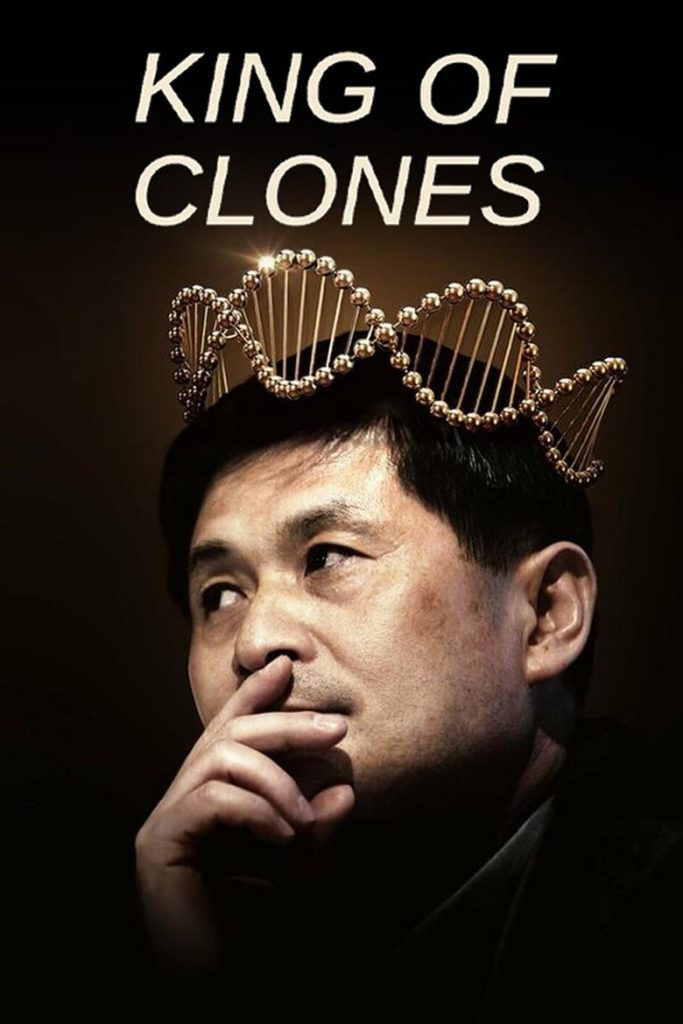
Story overview
This 2023 documentary explores the controversial career of Korean scientist Hwang Woo-suk, from his pioneering work in human cloning research to the ethical and legal scandals that led to his downfall. It examines scientific ambition, research ethics, and the consequences of misconduct through interviews and archival footage.
Parent Guide
A thought-provoking documentary about scientific ethics suitable for mature middle schoolers and teenagers. Focuses on intellectual and ethical issues rather than visual content.
Content breakdown
No physical violence or peril depicted. The 'danger' presented is ethical and professional rather than physical.
Some viewers might find discussions of human cloning and research fraud conceptually disturbing. No graphic or visually disturbing content.
No offensive language noted. Documentary features interviews and narration in English.
No sexual content or nudity.
No depiction of substance use.
Emotional intensity comes from the serious ethical questions and the downfall of a prominent scientist. May provoke strong reactions about honesty and scientific responsibility.
Parent tips
This documentary deals with mature themes like scientific ethics, fraud, and public deception. While there's no graphic content, the discussion of human cloning and research misconduct may raise complex questions. Best for mature middle schoolers and up who can understand the ethical dimensions.
Parent chat guide
Parent follow-up questions
—
- What is cloning?
- Why do scientists do experiments?
- What does it mean to tell the truth?
- What ethical rules should scientists follow?
- Why did Hwang Woo-suk's research become controversial?
- How does society decide what scientific research is acceptable?
- What are the ethical implications of human cloning research?
- How did institutional and cultural factors contribute to this scandal?
- What safeguards exist today to prevent similar research misconduct?
🎭 Story Kernel
The documentary explores the meteoric rise and catastrophic fall of South Korean scientist Hwang Woo-suk. It is not merely a chronicle of scientific advancement but a profound examination of the intersection between nationalistic pride and bioethical boundaries. Hwang was once hailed as a pioneer capable of curing incurable diseases, positioning South Korea as a global biotech leader. However, the film reveals how the intense pressure to deliver a miracle led to the exploitation of female researchers' eggs and the systematic fabrication of data. It expresses the fragility of truth in high-stakes innovation, illustrating how a society’s collective desperation for a breakthrough can blind it to blatant moral transgressions. Ultimately, it is a cautionary tale about the hubris of man playing God while remaining tethered to the very human flaws of ego, vanity, and the pursuit of fame.
🎬 Visual Aesthetics
Director Aditya Thayi employs a visual language that mirrors a psychological thriller, utilizing a stark contrast between sterile, clinical laboratory environments and the chaotic, emotional fervor of archival public protests. The cinematography frequently utilizes reflections and symmetry, a subtle visual nod to the concept of cloning and the duality of Hwang’s persona. High-contrast lighting is used effectively to isolate Hwang during contemporary interviews, emphasizing his transition from a populist icon to a pariah. The framing often traps subjects in tight compositions, creating a sense of clinical unease and scrutiny. By blending grainy news footage from the early 2000s with sleek, modern digital cinematography, the film visually bridges the gap between the height of 'Hwang-mania' and the cold reality of his current existence, effectively capturing the haunting persistence of his controversial legacy.
🔍 Details & Easter Eggs
💡 Behind the Scenes
Director Aditya Thayi spent significant time tracking down Hwang Woo-suk, who had largely retreated from the global spotlight following his 2006 disgrace and subsequent criminal conviction. The film features rare, direct access to Hwang, offering him a platform to speak extensively for the first time in nearly two decades. The production had to navigate the complex legal and social sensitivities that still linger in South Korea regarding the scandal. Additionally, the documentary provides a platform for the original whistleblowers, whose internal reports to the investigative program 'PD Note' eventually triggered the collapse of Hwang’s fraudulent scientific empire.
Where to watch
Choose region:
- Netflix
- Netflix Standard with Ads