
Kingdom of the Planet of the Apes (2024)
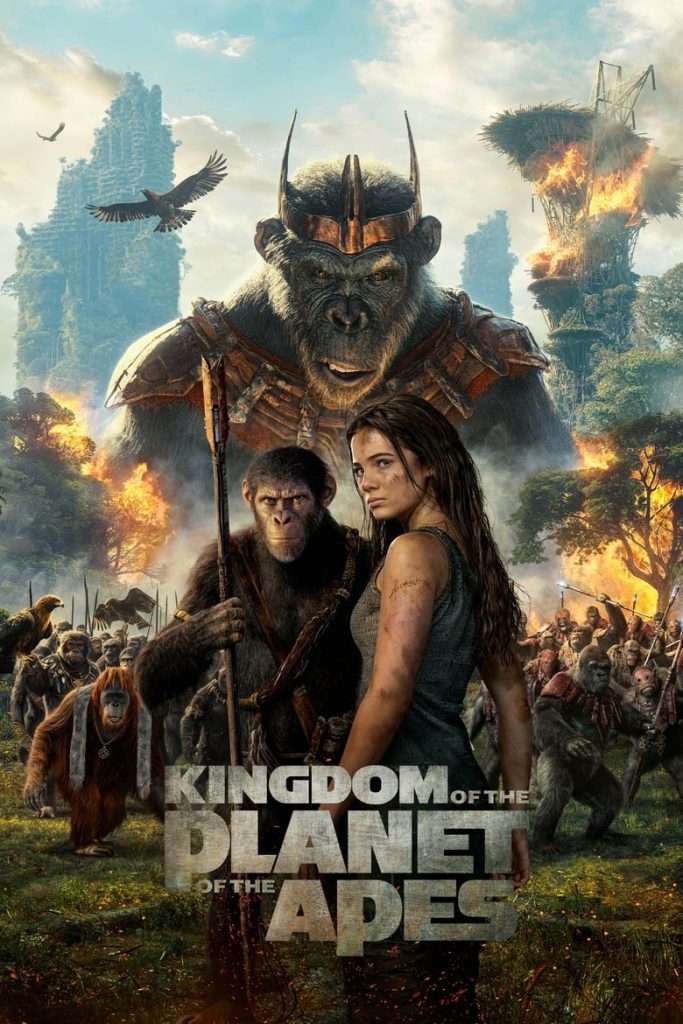
Story overview
Kingdom of the Planet of the Apes is a 2024 science fiction adventure film set in a future where apes have become the dominant species on Earth. The story follows a young ape as he navigates a complex world of rival ape clans and the remnants of human civilization. This installment explores themes of leadership, survival, and the consequences of power in a post-human world. The film continues the franchise's tradition of blending action with thoughtful social commentary.
Parent Guide
A science fiction adventure with mature themes about power, survival, and community in a post-human world. Contains action sequences and peril typical of the franchise.
Content breakdown
Contains action sequences with ape combat, perilous situations, and conflict between groups. Violence is stylized and not graphic, but contributes to tense moments.
Some intense scenes of conflict and peril that may be unsettling for sensitive viewers. The post-apocalyptic setting creates a serious tone throughout.
May include occasional mild language consistent with PG-13 rating. No strong profanity expected.
No sexual content or nudity present in the film.
No depiction of substance use in the film.
Contains themes of loss, conflict, and survival that create emotional weight. Character relationships and high-stakes situations contribute to the intensity.
Parent tips
This PG-13 rated film contains the level of action and intensity typical of the Planet of the Apes franchise. Parents should be aware that while the film features ape characters, the conflicts and themes are mature and may be intense for younger viewers. The science fiction setting involves perilous situations and some violence that contributes to the film's dramatic tension.
Consider your child's sensitivity to scenes of conflict and peril when deciding if this film is appropriate. The film's exploration of power dynamics and survival in a post-apocalyptic world may prompt discussions about leadership, ethics, and community. The visual effects and action sequences are well-executed but maintain a serious tone throughout.
Parent chat guide
You could also explore how the film uses science fiction elements to examine real-world issues like power, trust, and cooperation. The relationships between characters offer chances to discuss loyalty, sacrifice, and what it means to build a better society. These themes are presented through the lens of ape characters, which may make them more accessible for discussion with older children and teens.
Parent follow-up questions
- What was your favorite animal in the movie?
- How did the apes talk to each other?
- What colors did you see in the forest?
- Did you see any friendly apes?
- What sounds did the animals make?
- What makes a good leader in the ape community?
- How do the apes work together to solve problems?
- What did you learn about how apes communicate?
- Why is it important for different groups to understand each other?
- What would you do if you were in charge of an ape clan?
- How does the film show the consequences of power and leadership?
- What different approaches to building community did you notice among the ape clans?
- How does the setting affect the characters' decisions and relationships?
- What themes about survival and cooperation did the film explore?
- How do the ape societies compare to human societies in their organization?
- How does the film use science fiction to comment on contemporary social and political issues?
- What philosophical questions about power, ethics, and civilization does the film raise?
- How does the film handle themes of legacy and the weight of history on present decisions?
- In what ways does the film explore the tension between individual ambition and community welfare?
- How does the visual storytelling contribute to the film's themes about nature, technology, and society?
🎭 Story Kernel
Set generations after the death of Caesar, the film explores the evolution of myth into dogma. The narrative centers on Noa, a young ape from the Eagle Clan, whose world is shattered by the expansionist ambitions of Proximus Caesar. Proximus perverts Caesar’s original teachings of 'Apes Together Strong' to justify a burgeoning empire built on the enslavement of other clans. The movie is a profound meditation on the fallibility of oral history and the dangerous allure of lost technology. By introducing Mae, a human with a hidden agenda, the story complicates the binary of ape versus human, suggesting that the cycle of dominance is an inescapable biological trap. It is less about the end of the world and more about the messy, violent birth of a new civilization struggling to define its own moral compass.
🎬 Visual Aesthetics
Wes Ball transitions the franchise from the gritty, war-torn realism of the previous trilogy to a lush, 'post-post-apocalyptic' aesthetic where nature has fully reclaimed the urban landscape. The cinematography by Gyula Pados utilizes sweeping wide shots to emphasize the scale of this new world, turning vine-choked skyscrapers into majestic, naturalistic cliffs. The performance capture by Wētā FX achieves a new level of nuance, particularly in the expressive eyes of Noa and the charismatic, menacing physicality of Proximus. Symbolism is woven into the environment; the contrast between the open, sun-drenched heights of the Eagle Clan’s home and the dark, rusted, claustrophobic interior of the human bunker serves as a visual metaphor for the transition from primitive innocence to the corrupting influence of ancient human knowledge.
🔍 Details & Easter Eggs
💡 Behind the Scenes
Production primarily took place in New South Wales, Australia, utilizing the diverse landscapes and Disney Studios Australia in Sydney. To ensure authentic movement, the cast underwent 'Ape School' for several weeks under the guidance of movement coach Alain Gauthier, who previously worked with Cirque du Soleil. Director Wes Ball, known for the Maze Runner series, was selected to spearhead this new chapter, intentionally setting the story centuries after Matt Reeves' trilogy to explore a 'Bronze Age' for ape-kind. The film was designed as the starting point for a new trilogy, focusing on the geopolitical shifts of a world where humans are no longer the dominant species.
Where to watch
Choose region:
- HBO Max
- HBO Max Amazon Channel
- Amazon Video
- Apple TV
- Google Play Movies
- YouTube
- Fandango At Home
- Spectrum On Demand
Trailer
Trailer playback is unavailable in your region.