King’s Faith (2013)
Story overview
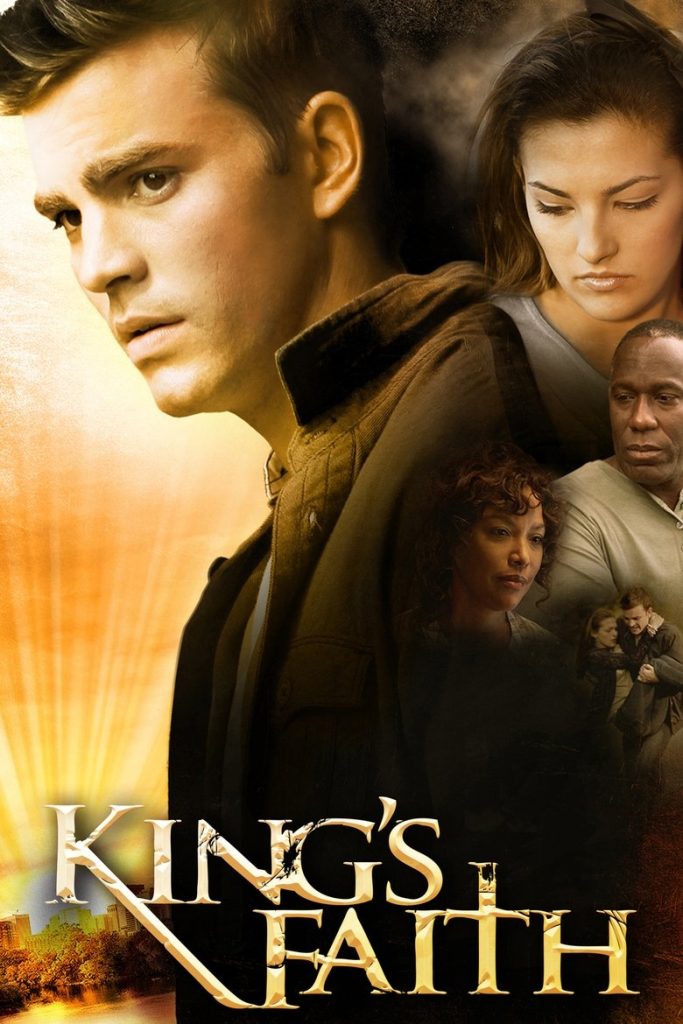
King's Faith is a 2013 American drama film directed by Nicholas DiBella. The story follows Brendan King, a teenager whose life hits rock bottom before finding hope through Christianity while serving time in a juvenile penitentiary. After his release, Brendan moves into the foster home of a couple dealing with their own suppressed grief, where he navigates the challenges of reintegration into society while maintaining his newfound faith. The film explores themes of redemption, forgiveness, grief, and the power of faith in overcoming personal struggles.
Parent Guide
A faith-based drama about redemption and second chances that deals with mature themes in a generally gentle manner. While appropriate for mature tweens and teens, younger children may find the themes of incarceration and grief difficult to understand.
Content breakdown
Some references to past violence (juvenile detention background), but no graphic violence shown on screen. Tense moments related to Brendan's past catching up with him, but no physical altercations.
Emotional intensity around grief and past mistakes. Some scenes may be emotionally heavy as characters deal with loss and regret, but nothing visually frightening or horror-based.
Minimal strong language. May include occasional mild profanity consistent with PG-13 rating.
No sexual content or nudity. The film focuses on emotional and spiritual themes rather than romantic relationships.
No depiction of substance use. The film avoids drug or alcohol content.
Significant emotional themes including grief, regret, redemption, and spiritual struggle. Characters deal with heavy emotional burdens, but the tone remains hopeful overall.
Parent tips
This faith-based drama deals with mature themes including juvenile incarceration, grief, and personal redemption. While rated PG-13, the content is more emotionally complex than violent or explicit. Best suited for mature tweens and teens who can handle discussions about difficult life circumstances. The Christian themes are central to the plot, so families of different faith backgrounds may want to discuss the religious elements. The film provides good opportunities to talk about second chances, forgiveness, and how people cope with loss.
Parent chat guide
Parent follow-up questions
—
- What did you think about Brendan trying to be better?
- How did the foster parents help Brendan?
- What does it mean to forgive someone?
- Why do you think Brendan turned to faith in prison?
- What challenges did Brendan face after being released?
- How did the movie show people dealing with grief?
- What does redemption mean in this story?
- How does the film portray the justice system's impact on youth?
- What role does faith play in personal transformation?
- How realistic do you find Brendan's reintegration journey?
- What does the film say about community support for former offenders?
- How do the characters' different approaches to grief reflect real coping mechanisms?
🎭 Story Kernel
At its core, 'King's Faith' is less about religious conversion and more about the brutal, practical impossibility of escaping one's past. The film posits that faith isn't a magic eraser but a new, fragile framework through which to navigate old, violent debts. Brendan King's struggle isn't primarily theological; it's a logistical and social nightmare. His new Christian community offers love, but it's ill-equipped to handle the lethal pragmatism of the streets. The central tension asks: Can a new identity survive when the old one still has contractual obligations? The characters are driven by competing definitions of loyalty—to God, to family, to a criminal code—creating a collision where spiritual peace and physical survival are mutually exclusive propositions.
🎬 Visual Aesthetics
The film employs a stark visual dichotomy to mirror Brendan's internal divide. Scenes in his foster home and church are bathed in warm, soft, high-key lighting, using steady, conventional framing to suggest order and transparency. Conversely, the world of his past is rendered in cold, desaturated blues and grays, often shot with handheld cameras that create a sense of pervasive, unstable threat. There's a deliberate lack of stylized 'action'; violence is abrupt, messy, and feels consequential rather than cool. A key visual motif is the barrier—windows, doorways, fences—constantly framing Brendan, visually trapping him between two worlds. The color palette never fully integrates, symbolizing his unresolved duality.
🔍 Details & Easter Eggs
💡 Behind the Scenes
The film was shot on location in Rochester, New York, utilizing many real community churches and neighborhoods to ground its story in authenticity. Lead actor Crawford Wilson performed many of his own stunt driving sequences for the film's chase scenes. Notably, several supporting roles and extras were filled by members of the local faith-based and community outreach organizations that the film's story revolves around, adding a layer of genuine lived experience to the ensemble scenes.
Where to watch
Choose region:
- Amazon Prime Video
- Peacock Premium
- Amazon Prime Video with Ads
- Peacock Premium Plus
- Fandango at Home Free
- Amazon Prime Video Free with Ads
- Tubi TV
- Amazon Video
- Apple TV Store
- Google Play Movies
- YouTube
- Fandango At Home
Trailer
Trailer playback is unavailable in your region.