
Knick Knack (1989)
Story overview
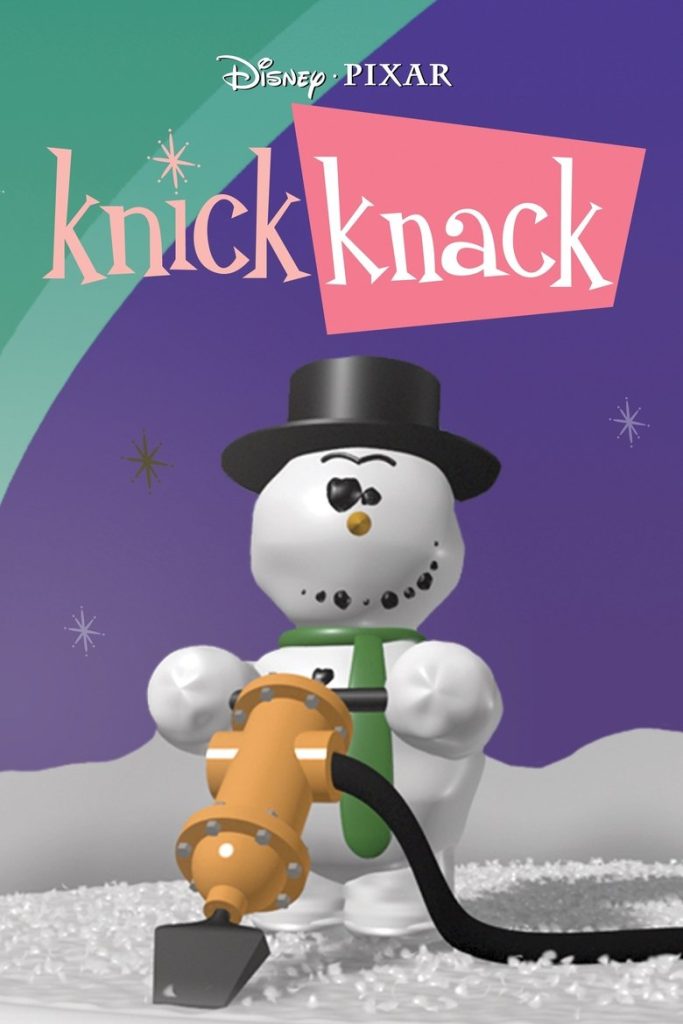
Knick Knack is a short animated film about a snowman figurine who lives inside a snow globe. He feels trapped and envious of other knickknacks that represent warmer, more exciting destinations. When he finally escapes his glass enclosure, his adventure doesn't go exactly as planned, leading to humorous situations.
Parent Guide
A completely safe and charming animated short suitable for viewers of all ages.
Content breakdown
No violence or peril present.
Nothing scary or disturbing in this gentle comedy.
No dialogue or language concerns.
No sexual content or nudity.
No substance use depicted.
Mild feelings of restlessness or envy from the main character, resolved humorously.
Parent tips
This 4-minute Pixar short is completely appropriate for all ages with no concerning content. The TV-Y rating indicates it's suitable for all children. The simple story about a character wanting adventure and freedom provides good opportunities to discuss feelings of restlessness or envy in age-appropriate ways. The animation is charming and the humor is gentle, making this an excellent choice for family viewing.
Parent chat guide
Parent follow-up questions
- How did the snowman feel in his snow globe?
- What happened when he tried to get out?
- Which knickknack did you like best?
- Why do you think the snowman wanted to leave his snow globe?
- What was funny about what happened when he escaped?
- Have you ever wanted to be somewhere else like the snowman did?
- What does this story show about wanting what others have?
- How did the snowman's expectations compare to reality?
- What might the snowman appreciate about his home after his adventure?
- How does this short film use visual storytelling without dialogue?
- What commentary might this make about envy or discontent?
- How does the animation style contribute to the humor and message?
🎭 Story Kernel
At its core, 'Knick Knack' explores the universal human desire for connection and escape from one's predetermined role. The snowman isn't just trying to break out of his globe; he's rebelling against the very identity assigned to him by his environment. His repeated failures and eventual acceptance (or is it resignation?) mirror our own struggles with limitations—whether physical, social, or psychological. The tropical knick-knacks represent not just physical freedom but social belonging he can observe but never join. The ending's ambiguous triumph—does he escape or just imagine it?—questions whether freedom is about changing circumstances or changing perspective.
🎬 Visual Aesthetics
Pixar's early 3D animation shines through deliberate limitations: the flat, gradient backgrounds emphasize the characters' two-dimensional existences within their shelves. The snowman's globe creates a literal fishbowl effect, with curved distortions that visually separate him from the 'real' world. Color coding is brilliant—cool blues and whites for the trapped snowman versus warm oranges and yellows for the free tropical souvenirs. Camera movements are minimal but meaningful; when the snowman dreams of escape, we get his POV looking out, making us complicit in his longing. The glass reflections aren't just technical achievements—they're prison bars.
🔍 Details & Easter Eggs
💡 Behind the Scenes
Created in 1989 as a technical demonstration for SIGGRAPH, 'Knick Knack' was director John Lasseter's follow-up to 'Tin Toy.' The snowman's voice was performed by sound designer Gary Rydstrom using processed water bubbles. Originally conceived as a darker story where the snowman melts upon escape, test audiences found it too depressing. The tropical knick-knacks were modeled after souvenirs Lasseter collected during his honeymoon. At 4 minutes, it remains Pixar's shortest theatrical short, yet its themes of confinement influenced later films like 'Toy Story.'
Where to watch
Choose region:
- Disney Plus
- Apple TV
- Google Play Movies
- YouTube
- Fandango At Home
Trailer
Trailer playback is unavailable in your region.