
Kongsi Raya (2022)
Story overview
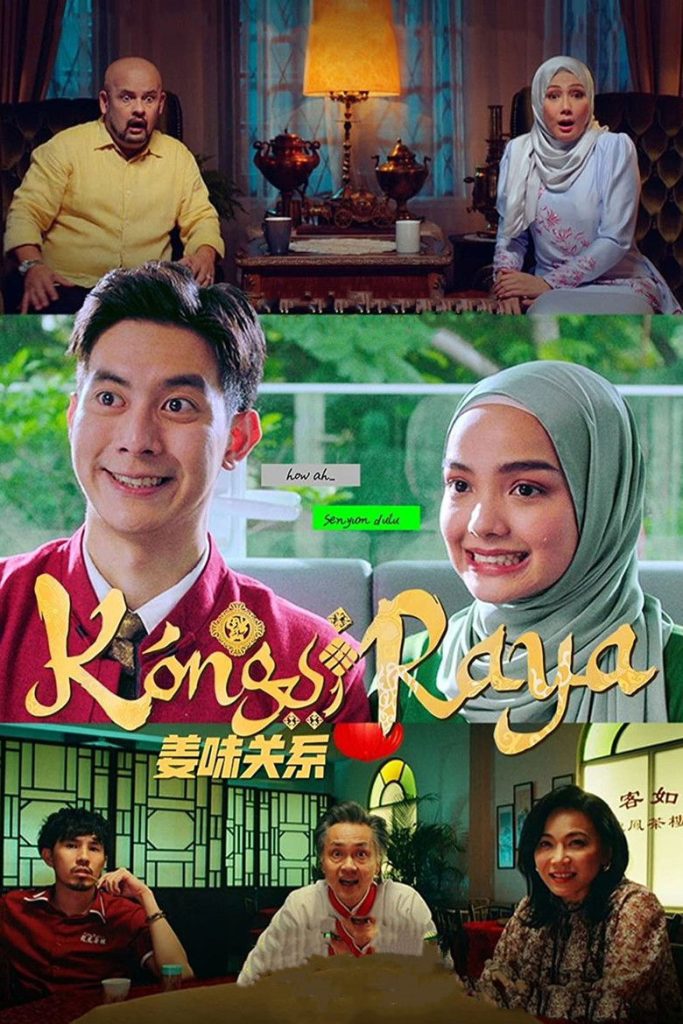
Kongsi Raya is a 2022 Malaysian family comedy about Jack, a Chinese chef poised to inherit his family's restaurant, and Sharifah, a TV producer for her celebrity chef father. Their interracial romance faces opposition from both fathers, leading to escalating tensions that culminate in a televised cooking competition between the families. The couple must navigate cultural differences and family expectations to resolve the conflict before it spirals out of control.
Parent Guide
Family-friendly comedy suitable for most children, with positive messages about love, cultural understanding, and family reconciliation. Mild conflict arises from family disagreements but resolves positively.
Content breakdown
No physical violence. Mild peril exists in the form of family arguments and competitive tension during cooking scenes, but nothing threatening or dangerous.
No scary or disturbing content. The film maintains a light, comedic tone throughout, even during moments of family conflict.
May include mild expressions of frustration or disappointment during family arguments (e.g., 'oh no,' 'this is ridiculous'), but no profanity or offensive language.
No sexual content or nudity. The romance is portrayed through innocent gestures like holding hands, smiling, and light conversation.
No depiction of alcohol, drugs, or tobacco use. Characters are shown cooking and eating food in family and restaurant settings.
Mild emotional intensity from family disagreements and romantic tension, but conflicts are resolved humorously and positively. Young children might feel temporary concern during arguments but will see happy resolution.
Parent tips
This lighthearted comedy focuses on family dynamics, cultural differences, and romantic relationships in a humorous context. The cooking competition creates mild tension but remains family-friendly. Parents may want to discuss themes of interracial relationships, respecting cultural traditions, and resolving family conflicts constructively. The film portrays positive messages about love overcoming differences.
Parent chat guide
Parent follow-up questions
- Which food in the movie looked most delicious?
- Did you like the cooking competition part?
- What colors did you see in the restaurant scenes?
- Why do you think the fathers didn't want Jack and Sharifah to be together?
- What would you cook in a cooking competition?
- How did the families solve their problem at the end?
- What cultural differences did you notice between the two families?
- Do you think the cooking competition was a good way to resolve their conflict?
- What does this movie teach us about judging people from different backgrounds?
- How does this film portray interracial relationships in Malaysian society?
- What stereotypes about different cultures did you notice, and how were they addressed?
- What real-world parallels can you draw to the family conflicts shown in the movie?
🎭 Story Kernel
At its core, 'Kongsi Raya' is a sharp satire on performative multiculturalism in Malaysia, using the frantic preparation of a joint Hari Raya and Chinese New Year feast as a pressure cooker for simmering familial and societal tensions. The driving force isn't just the desire for a perfect celebration, but the characters' desperate attempts to maintain facades—of harmony, success, and tradition—in the face of personal failures and generational clashes. The plot reveals that the true conflict isn't between ethnic customs, but between authenticity and the exhausting performance required to keep up appearances for the 'kampung' and social media. The climax, where the meticulously planned feast descends into a food fight, is the film's thesis: genuine connection often emerges from beautiful chaos, not sterile perfection.
🎬 Visual Aesthetics
The film employs a vibrant, almost oversaturated color palette—fiery reds for Chinese New Year and luminous greens for Hari Raya—that initially feels celebratory but gradually becomes visually claustrophobic, mirroring the characters' stress. Director Saw Teong Hin uses tight, handheld shots during chaotic kitchen scenes, making the audience feel the heat and panic, contrasted with wide, static shots of the pristine dining table that feel cold and staged. The action style of the cooking scenes is less 'master chef' and more slapstick comedy, with flying curry puffs and splattering sauces serving as visual metaphors for emotional spillage. A recurring visual motif is characters framed in doorways or windows, physically in the space but emotionally separated, highlighting the isolation within supposed togetherness.
🔍 Details & Easter Eggs
💡 Behind the Scenes
The film's chaotic kitchen scenes required extensive choreography, with actors like Frederick Lee and Amelia Chen reportedly splattered with real food takes after take. Key scenes were shot in a restored pre-war shophouse in Penang, chosen for its authentic 'kampung' atmosphere. Director Saw Teong Hin insisted the cast participate in actual cooking workshops to make their kitchen panic believable. The script was loosely inspired by real stories from mixed-cultural families during the 'Kongsi Raya' period when the holidays occasionally overlap.
Where to watch
Choose region:
- Netflix
- Netflix Standard with Ads