
Kumiko, the Treasure Hunter (2014)
Story overview
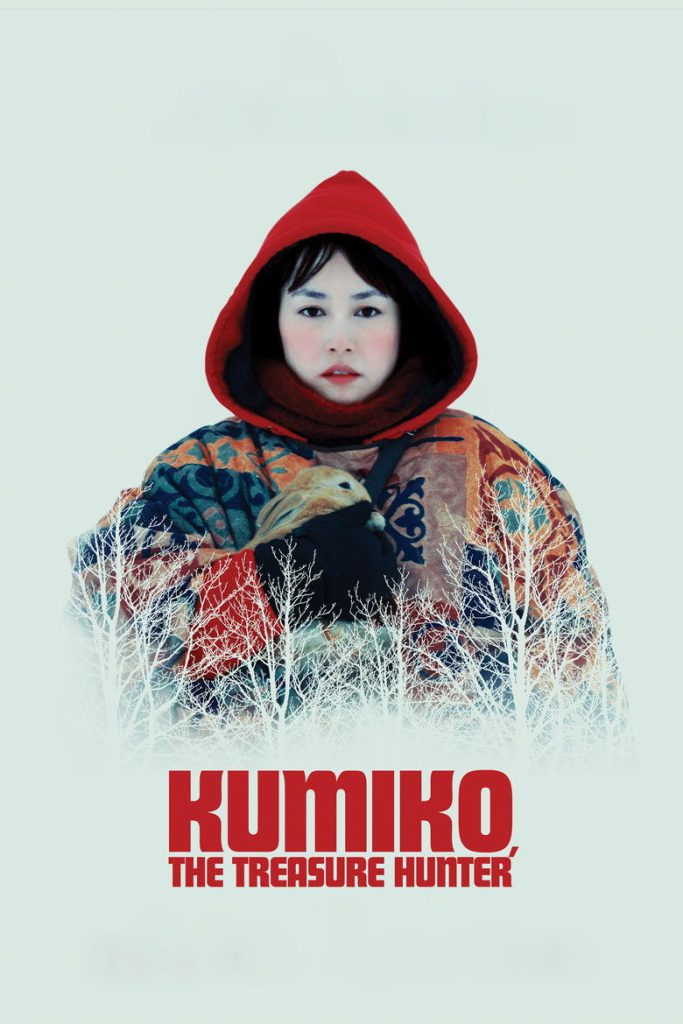
Kumiko, the Treasure Hunter is a 2014 drama about a lonely Tokyo office worker who becomes fixated on a fictional movie she believes is a documentary. Convinced that stolen cash is buried in North Dakota based on a scene from the film, she abandons her mundane life to travel to America in search of this treasure. The story explores themes of obsession, isolation, and the blurry line between fantasy and reality, following her determined but increasingly desperate journey.
Parent Guide
A contemplative drama about obsession and reality perception, best suited for mature teens due to its psychological themes and slow pacing. Contains no graphic content but deals with serious emotional issues.
Content breakdown
Some tense moments as Kumiko travels alone in unfamiliar territory. Mild peril when she faces harsh weather conditions and gets lost. No physical violence or fights.
Psychological elements may be disturbing as Kumiko's mental state deteriorates. Her detachment from reality and increasing desperation create an unsettling atmosphere. Some scenes show her in vulnerable, lonely situations that could be emotionally intense for sensitive viewers.
No offensive language noted. The film features dialogue in Japanese and English without profanity.
No sexual content or nudity present.
No depiction of alcohol, drugs, or tobacco use.
Strong themes of loneliness, obsession, and mental health struggles. The protagonist's emotional journey is central to the film, with moments of sadness, desperation, and isolation that could be heavy for younger viewers.
Parent tips
This film deals with mature themes of mental health, obsession, and cultural displacement. The protagonist's detachment from reality and her risky decisions may be confusing or concerning for younger viewers. Parents should be prepared to discuss the difference between fiction and reality, the portrayal of loneliness, and the consequences of impulsive actions. The movie's slow pace and somber tone might not hold the attention of children.
Parent chat guide
Parent follow-up questions
—
- Why did Kumiko travel so far from home?
- How did she feel when things didn't go as planned?
- What does 'treasure' mean in this story?
- What clues suggest Kumiko might be struggling with her mental health?
- How does the film show cultural differences between Japan and America?
- Why do you think the filmmakers chose such a quiet, slow-paced style?
- How does the film comment on modern alienation and escapism?
- What symbolic meaning might the treasure hunt represent?
- How does Kumiko's story relate to themes of depression or delusion?
- Discuss the film's portrayal of cross-cultural misunderstanding and isolation.
🎭 Story Kernel
The film explores the devastating consequences of mistaking fiction for reality in an age of media saturation. Kumiko isn't chasing treasure—she's escaping a life of crushing loneliness and societal expectations in Tokyo. Her obsession with the fictional money from 'Fargo' represents a desperate search for meaning in a world that offers her none. The movie suggests that for some, the fantasy of escape becomes more real than the unbearable reality they inhabit. Her journey isn't about greed but about the human need for purpose, however misguided that purpose may be.
🎬 Visual Aesthetics
The Zellner brothers employ a stark visual contrast between Tokyo's claustrophobic interiors and Minnesota's desolate winter landscapes. Tokyo scenes feel oppressive with tight framing and muted office colors, while Minnesota unfolds in wide, empty shots emphasizing Kumiko's isolation. The recurring red hoodie creates a visual anchor—a spot of artificial color against natural whites and grays. Camera work remains observational, rarely intruding with dramatic angles, mirroring how society observes but doesn't truly see Kumiko. The final underwater sequence uses ethereal, distorted visuals to blur reality's edges completely.
🔍 Details & Easter Eggs
💡 Behind the Scenes
Rinko Kikuchi learned minimal English for the role, enhancing Kumiko's isolation in American scenes. The production used actual Minnesota locations from the Coen brothers' 'Fargo,' including the fence where Steve Buscemi's character buries the money. Director David Zellner initially created a short film version that went viral, leading to this feature adaptation. The film was inspired by the urban legend of Takako Konishi, though the filmmakers fictionalized most events. Shooting in Minnesota's winter required careful coordination as temperatures regularly dropped below -20°F.
Where to watch
Choose region:
- Netflix
- Netflix Standard with Ads
- Fandango at Home Free
- Tubi TV
- Amazon Video
- Apple TV Store
- Google Play Movies
- YouTube
- Fandango At Home
Trailer
Trailer playback is unavailable in your region.