L.A. Confidential (1997)
Story overview
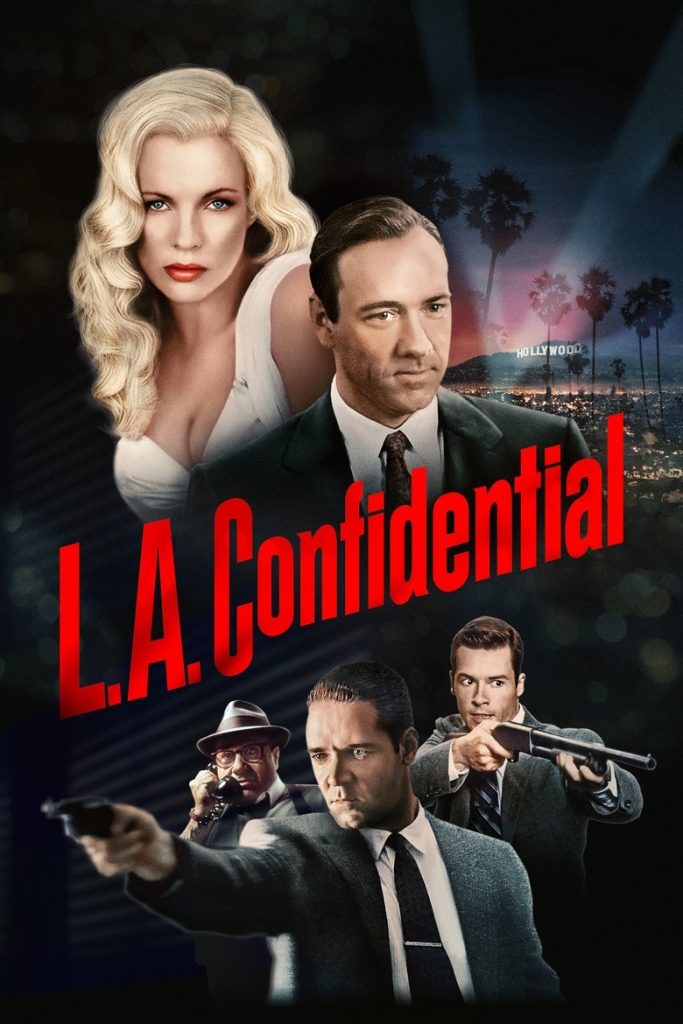
L.A. Confidential is a crime thriller set in 1950s Los Angeles, following three police detectives with different approaches to law enforcement. They investigate a violent diner shooting that reveals deeper corruption within the police department and city. The film explores themes of morality, justice, and the compromises people make in pursuit of their goals.
Parent Guide
This complex crime drama with strong violence and mature themes is appropriate only for older teens with parental guidance.
Content breakdown
Multiple shootings, beatings, and violent crime scenes; graphic aftermath of violence shown
Tense situations and criminal investigations; some disturbing crime scene imagery
Frequent strong profanity and period-appropriate derogatory terms
Suggestive situations, brief nudity, and sexual references
Period-appropriate drinking and smoking throughout; some references to drug use
High-stakes investigations, moral dilemmas, and betrayal create sustained tension
Parent tips
This R-rated film contains strong violence including shootings, beatings, and graphic crime scenes that may be disturbing. There is moderate sexual content with suggestive situations and brief nudity, along with strong language throughout. The complex plot involving police corruption and moral ambiguity requires mature understanding.
The film's 138-minute runtime and intricate mystery plot may challenge younger viewers' attention spans. Parents should be aware that the portrayal of 1950s Los Angeles includes period-appropriate smoking and drinking, as well as themes of institutional corruption that could prompt discussions about ethics and power.
Parent chat guide
After watching, focus conversations on the film's themes rather than specific violent scenes. Discuss how the different detectives approached justice, and what the film suggests about the relationship between personal ethics and professional duty. Ask open-ended questions about how your child responded to the moral dilemmas presented.
Parent follow-up questions
- What colors did you see in the movie?
- Did you see any cars or buildings you liked?
- What sounds did you hear?
- Was there any music you remember?
- How did the movie make you feel?
- What job did the main characters have?
- Why were the police trying to solve the mystery?
- What does 'corruption' mean in simple terms?
- How did the detectives work together?
- What was the setting or time period of the movie?
- What different approaches did the detectives take to solving crimes?
- How did the film show that people can have both good and bad qualities?
- What challenges did the characters face in finding the truth?
- How did the historical setting affect the story?
- What messages about justice did the film present?
- How does the film critique institutional power and corruption?
- What moral compromises did characters make, and were they justified?
- How does the film's portrayal of 1950s America compare to historical reality?
- What cinematic techniques did the director use to create tension and atmosphere?
- How do the different detective characters represent various approaches to ethics and justice?
🎭 Story Kernel
At its core, 'L.A. Confidential' explores the corruption of idealism within systems designed to protect. The film presents three distinct approaches to justice: Ed Exley's rigid adherence to rules, Bud White's brutal emotional vengeance, and Jack Vincennes' cynical celebrity-seeking. Their convergence reveals how institutional rot forces moral compromise, where the 'good cop' becomes whoever survives the system's hypocrisy. The movie suggests that in a world where justice is transactional, personal integrity is the ultimate casualty—and sometimes the only redemption.
🎬 Visual Aesthetics
Director Curtis Hanson crafts a noir aesthetic that's both nostalgic and unsettling. The color palette shifts from warm, golden Hollywood glamour to cold, blue-tinted violence, mirroring the characters' moral descent. Camera work is deliberately restrained in dialogue scenes, creating claustrophobic tension, then explodes in chaotic handheld shots during violence. The iconic 'Bloody Christmas' sequence uses stark lighting contrasts to highlight both brutality and complicity, while the final confrontation at the Victory Motel employs tight framing to trap characters in their choices.
🔍 Details & Easter Eggs
💡 Behind the Scenes
Russell Crowe gained 30 pounds and learned to box for Bud White, while Guy Pearce lost weight and studied old police manuals for Exley's precise physicality. The film's iconic production design used real 1950s Los Angeles locations that were about to be demolished, including the Formosa Café and the Bradbury Building. Kim Basinger's performance as Lynn Bracken was inspired by 1950s pin-up girls, with her costumes meticulously researched from period photographs—she won the Oscar for Best Supporting Actress.
Where to watch
Choose region:
- Amazon Video
- Apple TV
- Google Play Movies
- YouTube
- Fandango At Home
- Plex
- Plex Channel
Trailer
Trailer playback is unavailable in your region.