
La Haine (1995)
Story overview
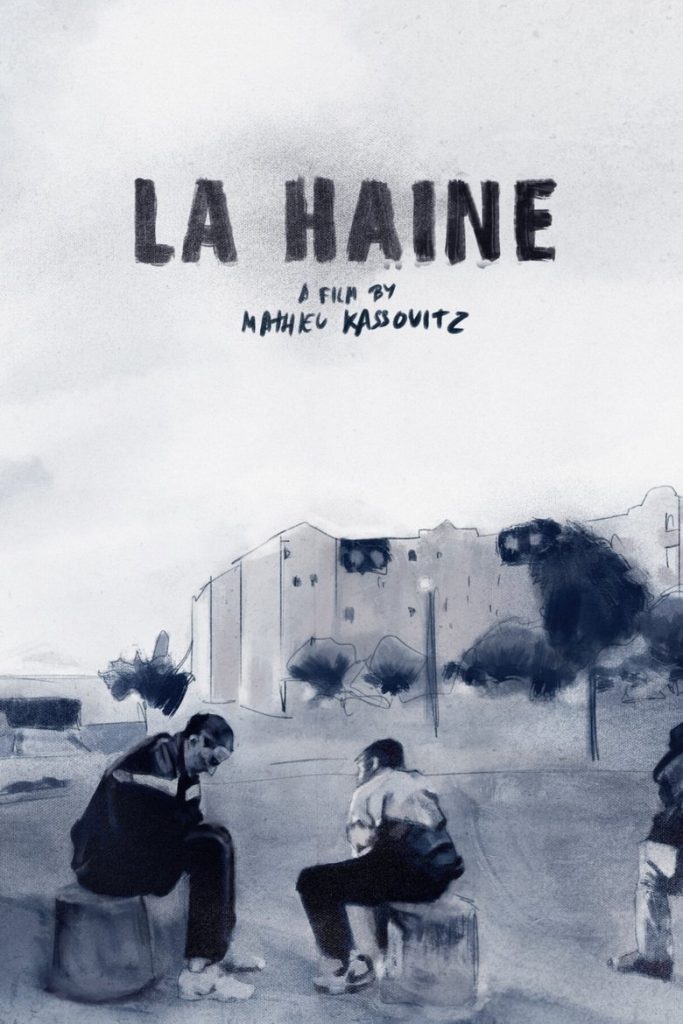
La Haine follows three young friends in a Paris suburb over 24 tense hours after a night of riots. The film explores their daily struggles, frustrations with police, and simmering tensions in their marginalized community. It presents a raw, black-and-white portrait of urban alienation and the cycle of violence through the perspectives of these three distinct characters.
Parent Guide
A gritty, realistic drama about urban tension and youth alienation with mature themes and intense situations.
Content breakdown
Includes police confrontations, riots, threats with weapons, and tense standoffs. Some violent acts are shown or strongly implied.
Atmospheric tension, urban decay, and realistic depictions of social conflict create an unsettling mood throughout.
Frequent strong language including profanity and offensive terms in French (with English subtitles).
Some sexual references and innuendo in dialogue, but no explicit sexual content or nudity shown.
Characters smoke cigarettes regularly, and there are scenes showing alcohol consumption and references to drug use.
High emotional tension throughout, with themes of anger, frustration, injustice, and impending violence creating sustained intensity.
Parent tips
La Haine is an intense French drama that realistically depicts urban tension, police confrontations, and youth alienation. The film contains strong language, violent situations, and mature themes that make it unsuitable for younger viewers.
Parents should be aware this film shows realistic urban violence, police brutality, and systemic injustice without romanticizing these elements. The black-and-white cinematography adds to the gritty atmosphere, but doesn't diminish the emotional impact of the content.
This film is best suited for mature teenagers who can process its social commentary and discuss the complex issues it raises about inequality, justice, and community relations.
Parent chat guide
During viewing, be prepared to pause and discuss scenes that show police interactions or tense confrontations. The film's pacing allows for natural breaks to process the escalating tension.
After watching, focus discussions on the characters' choices, the film's social commentary, and how the ending reflects on cycles of violence. Connect the film's themes to current events and discuss constructive responses to injustice.
Parent follow-up questions
- What colors did you see in the movie?
- How did the friends help each other?
- What places did they visit in their neighborhood?
- How did the music make you feel?
- What was your favorite part of the movie?
- Why were the friends worried about their injured friend?
- How did the characters show they cared about each other?
- What made the neighborhood feel tense or unsafe?
- How did the black-and-white filming affect the mood?
- What would you do if you saw friends in trouble?
- What social issues were the characters facing in their community?
- How did the film show different perspectives on justice?
- What choices did the characters make when they felt angry or frustrated?
- How did the setting contribute to the story's tension?
- What message do you think the film was trying to share?
- How does the film explore themes of systemic injustice and police relations?
- What commentary does the film make about cycles of violence in marginalized communities?
- How do the three main characters represent different responses to their situation?
- What social or political issues raised in the film remain relevant today?
- How does the film's style and cinematography enhance its themes and emotional impact?
🎭 Story Kernel
The film isn't about the riots, but about the suffocating aftermath—the 'hatred' that remains when the adrenaline fades. It explores how systemic oppression internalizes itself, turning three friends into walking time bombs in their own neighborhood. Vinz's obsession with a cop's lost gun isn't about power, but about possessing the very symbol of his powerlessness. Hubert's boxing represents a disciplined rage he can barely contain, while Saïd's humor is a defense mechanism against despair. Their 24-hour odyssey through Paris isn't a quest but a slow-motion detonation, where the real conflict is between their humanity and a world determined to strip it away.
🎬 Visual Aesthetics
Kassovitz's black-and-white cinematography isn't just gritty realism—it strips the banlieues of romantic color, rendering them as stark moral landscapes. The camera often floats with detached observation, then violently jerks into handheld chaos during confrontations, mirroring the characters' psychological instability. Recurring motifs like the spinning top and the astronaut on TV create a surreal counterpoint to the grim reality. The famous 'falling man' sequence isn't just a visual gag; it's a perfect metaphor for their existential freefall. Every frame feels both documentary-raw and meticulously composed, making the housing projects feel like both home and prison.
🔍 Details & Easter Eggs
💡 Behind the Scenes
Vincent Cassel performed all his own stunts, including the iconic rooftop running sequence. The film was shot chronologically over three months to maintain narrative tension, with many scenes improvised around real banlieue residents. Hubert Koundé, who played Hubert, wasn't a professional actor but a business student Kassovitz met at a party. The famous 'so far so good' falling man story was adapted from an actual joke circulating in French suburbs. Most riot scenes used non-actors from the actual Mantes-la-Jolie projects where filming occurred.
Where to watch
Choose region:
- Criterion Channel
- Amazon Video
- Apple TV
- Fandango At Home
- Kanopy
Trailer
Trailer playback is unavailable in your region.