
Lambert the Sheepish Lion (1952)
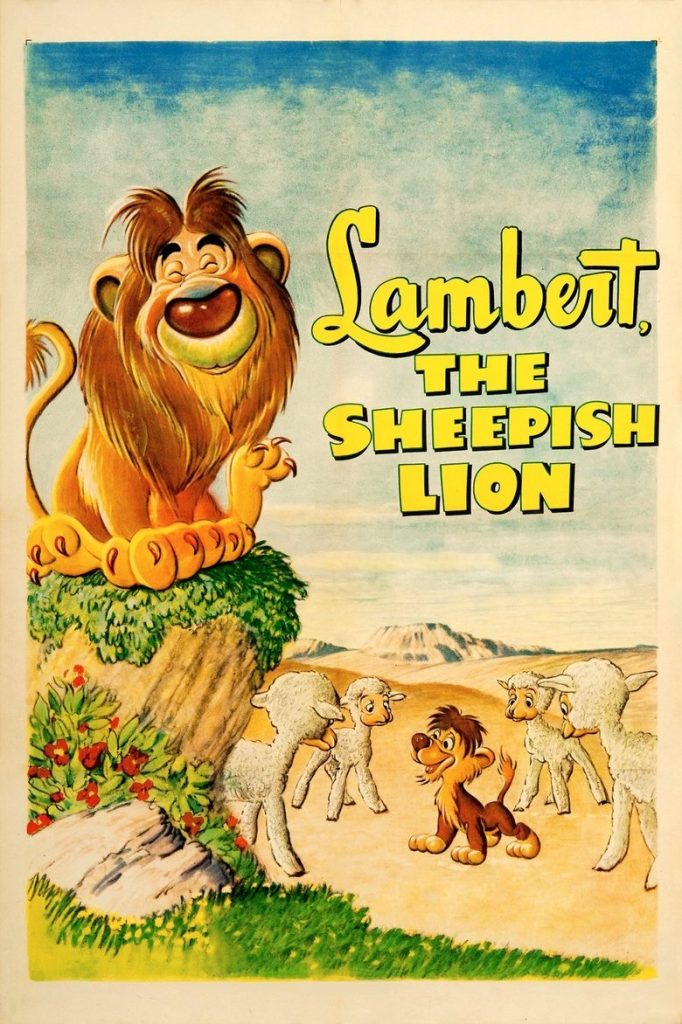
Story overview
This classic Disney animated short tells the story of a lion cub accidentally delivered to a flock of sheep by Mr. Stork. Raised by a gentle ewe, Lambert grows into a large lion but remains shy and timid like his adoptive family. When a wolf threatens the flock, Lambert must overcome his fears to protect his mother and the other sheep. The story explores themes of identity, courage, and family bonds in a gentle, pastoral setting.
Parent Guide
A gentle animated short about identity and courage with mild peril.
Content breakdown
A wolf threatens the sheep flock, creating tension but no graphic violence.
The wolf might be slightly frightening for very young children, but the threat is brief and resolved positively.
No inappropriate language.
No sexual content or nudity.
No substance use.
Mild emotional moments related to teasing and protecting loved ones.
Parent tips
This 8-minute animated short from 1952 is generally gentle and appropriate for most children. The main conflict involves a wolf threatening the sheep, which might be slightly intense for very young or sensitive viewers. The animation style is classic Disney with soft colors and expressive characters. Parents should note that while the story addresses themes of bullying (Lambert is teased by other lambs) and facing fears, it does so in a mild, age-appropriate manner.
Parent chat guide
Parent follow-up questions
- How did Lambert feel when the other lambs teased him?
- What did Lambert do to help his mama?
- What makes Lambert special even though he's different?
- How do you think the sheep felt when Lambert protected them?
- What would you do if someone was being mean to your friend?
- Why do you think Lambert was shy even though he was a lion?
- How did Lambert's differences help him protect the flock?
- What does this story teach us about being true to ourselves?
- How might Lambert's life have been different if he grew up with other lions?
- What does courage mean to you after watching this story?
- How does the story explore the idea of nature versus nurture?
- What does Lambert's journey teach us about finding strength in our differences?
- How do the themes of bullying and acceptance play out in the story?
- What might the wolf represent in terms of real-life challenges?
- How does the animation style from 1952 compare to modern animated films?
- How does the story use animal characters to explore human social dynamics?
- What commentary might the film be making about conformity and individuality?
- How does Lambert's character development reflect common coming-of-age themes?
- In what ways does the film's pastoral setting contribute to its themes?
- How might this 1952 film reflect the values of its time period?
🎭 Story Kernel
At its core, 'Lambert the Sheepish Lion' explores the anxiety of not meeting societal expectations. Lambert, a lion raised by sheep, internalizes the flock's fear of his own nature. His journey isn't about becoming a 'real lion' in the traditional sense, but about discovering that his unique upbringing—his perceived weakness—is actually the source of his true strength. The film critiques rigid definitions of identity; Lambert's heroism comes not from brute force, but from the protective, communal instincts learned from his adoptive mother. The villainous wolf represents the external pressure to conform to a predatory archetype, which Lambert ultimately rejects in favor of a more compassionate form of power.
🎬 Visual Aesthetics
The animation employs a soft, pastoral color palette of greens and browns for the idyllic farm, contrasting sharply with the wolf's introduction via dark, angular shadows and stark, wintry blues. Lambert's design is key: his awkward, lanky frame and perpetually worried eyes visually scream his dissonance with the powerful lion archetype. The camera language is simple but effective, using close-ups on Lambert's face to amplify his emotional isolation and wide shots to emphasize his smallness within the flock. The final confrontation uses dynamic, swirling snow and dramatic lighting to transform the previously comical Lambert into a figure of genuine, roaring majesty.
🔍 Details & Easter Eggs
💡 Behind the Scenes
This 1952 Disney animated short was directed by Jack Hannah, known for his work on Donald Duck cartoons, which explains the short's strong comedic timing. The voice of Lambert's mother, a sheep, was provided by actress and singer June Foray, who would later become legendary as the voice of Rocky the Flying Squirrel. The film's score heavily utilizes and adapts the folk song 'The Mocking Bird,' tying Lambert's story to a traditional musical theme of imitation and finding one's own voice. It was part of a post-war wave of Disney shorts focusing on outsider characters and themes of acceptance.
Where to watch
Choose region:
- Disney Plus