
Last Exit: Space (2022)
Story overview
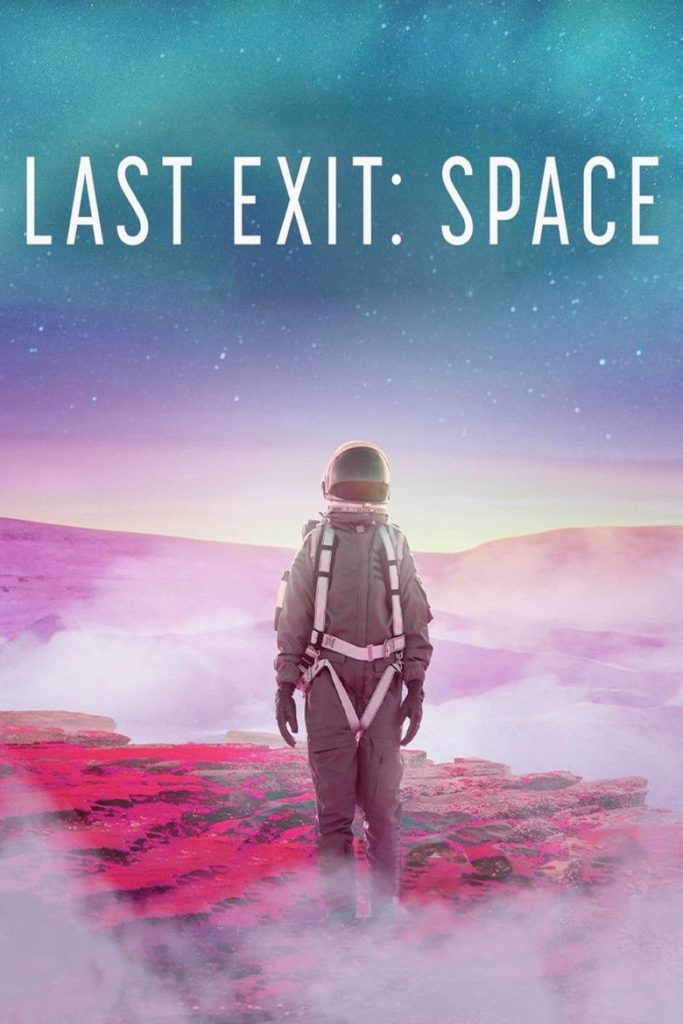
Last Exit: Space is a 2022 documentary exploring the concept of space colonization through a global journey, blending scientific insights with philosophical reflections on humanity's future beyond Earth.
Parent Guide
Educational documentary suitable for school-aged children with an interest in science and space. No concerning content, but some scientific concepts may be challenging for younger viewers.
Content breakdown
No violence or peril depicted. The documentary focuses on scientific exploration and philosophical discussion.
No scary or disturbing content. Some discussions about Earth's environmental challenges might be concerning but are presented in an educational context.
No inappropriate language. Professional, educational dialogue throughout.
No sexual content or nudity.
No depiction of substance use.
Some discussions about Earth's environmental future and humanity's place in the universe might provoke thoughtful reflection, but nothing emotionally overwhelming.
Parent tips
This documentary is suitable for curious children interested in space and science. It presents complex topics in an accessible way, but younger viewers might need help understanding some scientific concepts. Watch together to discuss the future of space exploration and its ethical implications.
Parent chat guide
Parent follow-up questions
- What was your favorite part about space?
- What do you think astronauts do in space?
- Would you like to visit space someday?
- What do you think are the biggest challenges of living in space?
- How do you think space exploration helps us on Earth?
- What would you want to bring if you traveled to space?
- What ethical considerations should we have about colonizing other planets?
- How does this documentary connect space exploration to environmental issues on Earth?
- What scientific facts from the film surprised you most?
- Do you think space colonization is a realistic solution to Earth's problems?
- How does the documentary address the philosophical implications of humanity expanding into space?
- What are the potential benefits and risks of privatized space exploration?
🎭 Story Kernel
Last Exit: Space isn't really about space travel—it's about escape. The film presents space colonization not as triumph but as desperation, framing it as humanity's final attempt to outrun self-inflicted crises rather than solve them. Characters are driven by a paradoxical mix of hope and resignation, chasing the stars while carrying Earth's baggage. The documentary's true tension lies in whether we're witnessing a new beginning or just a more spectacular form of denial. It suggests our obsession with exit strategies might prevent us from fixing what we're fleeing.
🎬 Visual Aesthetics
The film employs a stark visual dichotomy: Earth scenes are cluttered, saturated with pollution yellows and urban grays, while space sequences shift to sterile blues and empty blacks. Camera work feels observational yet intimate—lingering on scientists' tired eyes during failed simulations, using slow zooms on control panels during tense moments. The most striking choice is the absence of glamorous space shots; instead, we see cramped simulators, budget charts, and anxious faces. This visual language reinforces the documentary's central irony: our grandest visions are trapped in mundane realities.
🔍 Details & Easter Eggs
💡 Behind the Scenes
Director Werner Herzog insisted on filming actual scientists rather than actors, capturing their genuine reactions during real mission simulations. The Mars surface scenes were shot in Iceland's volcanic landscapes during winter storms to simulate extreme isolation. Notably, several aerospace engineers featured later consulted on NASA's Artemis program, blurring lines between documentary subjects and real-world space development. The score uses theremin recordings from 1950s sci-fi films, intentionally invoking outdated space fantasies against modern realities.
Where to watch
Choose region:
- HBO Max
- Discovery +
Trailer
Trailer playback is unavailable in your region.