Life Is Beautiful (1997)
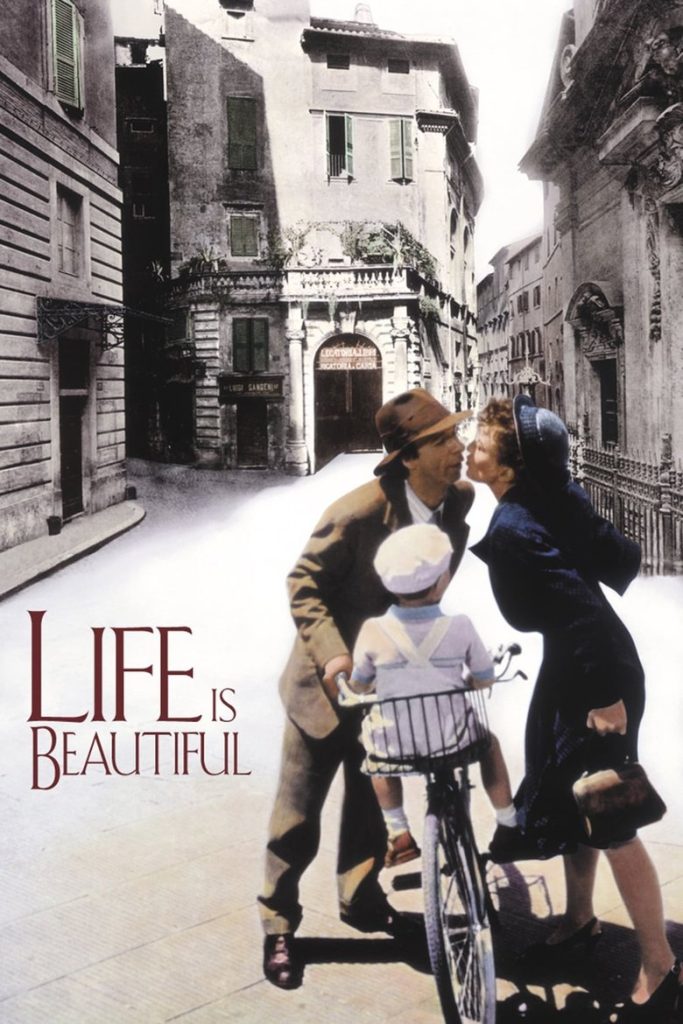
Story overview
Life Is Beautiful is a 1997 Italian film that blends comedy and drama to tell a poignant story set during World War II. It follows a Jewish Italian bookseller who uses his imagination to protect his young son from the harsh realities of their internment in a concentration camp. The film explores themes of love, resilience, and the power of hope in the face of adversity, balancing moments of humor with emotional depth.
Parent Guide
A moving film that uses humor and fantasy to address the Holocaust, suitable for older children with parental guidance due to its emotional intensity and historical context.
Content breakdown
Includes peril from wartime settings, implied threats, and scenes of characters in danger, but without graphic violence.
Themes of persecution, separation, and life in a concentration camp are emotionally heavy, though presented through a protective lens of imagination.
Minimal strong language; occasional mild expressions in subtitles or dialogue.
No sexual content or nudity.
No depiction of substance use.
High emotional impact due to themes of love, sacrifice, and historical tragedy, balanced with moments of humor.
Parent tips
This film deals with the Holocaust in a unique way, using humor and fantasy to shield a child from the horrors of a concentration camp. While it avoids graphic violence, the underlying themes of persecution, separation, and danger are emotionally intense and may be confusing or distressing for younger viewers. Parents should be prepared to discuss the historical context of World War II and the Holocaust, as the film's approach requires understanding that the 'game' depicted is a protective fiction against a tragic reality.
Parent chat guide
Parent follow-up questions
- What games did the father play with his son?
- How did the family show they loved each other?
- What made you feel happy or sad in the movie?
- Why do you think the father told his son it was a game?
- What was your favorite part of the story?
- Why do you think the father created a game instead of telling the truth?
- How did the family stay strong together during hard times?
- What does this movie teach us about being brave?
- How did the story mix funny moments with serious ones?
- What would you do to help someone feel safe if they were scared?
- How does the film use humor to handle a serious topic like the Holocaust?
- What does the father's actions show about parental love and sacrifice?
- Why is it important to learn about historical events like those in the movie?
- How did the son's perspective shape the way the story was told?
- What messages about hope and resilience did you take from the film?
- How effective is the film's approach of blending comedy with tragedy in depicting the Holocaust?
- What does the movie suggest about the power of imagination in coping with trauma?
- How does the film address themes of prejudice and persecution without graphic violence?
- In what ways does the father's character represent resistance against oppression?
- How does this story compare to other depictions of World War II you've seen?
🎭 Story Kernel
At its core, 'Life Is Beautiful' explores how human creativity and love can create meaning even in the most horrific circumstances. The film isn't about surviving the Holocaust—it's about protecting innocence. Guido's elaborate game isn't just for Giosuè; it's Guido's own psychological survival mechanism, transforming trauma into a narrative he can control. The driving force isn't heroism but parental love so profound it redefines reality itself. Benigni shows us that in the face of absolute evil, the most radical act isn't resistance but preserving childhood's magic.
🎬 Visual Aesthetics
Roberto Benigni masterfully uses visual contrast to tell two simultaneous stories. The first half bursts with warm, saturated colors—yellows, reds, and golds that create a fairy-tale atmosphere in Arezzo. Once the family reaches the camp, the palette drains to grays, blues, and browns, with only Guido's vibrant performances providing color islands. The camera often adopts Giosuè's low-angle perspective, making adult horrors literally loom overhead. Benigni's physical comedy becomes increasingly desperate visual poetry—his exaggerated marches and gestures are both hilarious and heartbreakingly performative.
🔍 Details & Easter Eggs
💡 Behind the Scenes
Roberto Benigni's father was actually imprisoned in a German labor camp, giving the film personal resonance. The Arezzo scenes were shot in Benigni's hometown. The film faced criticism for 'making light' of the Holocaust, but Benigni argued he was showing Italian resistance through humor. Nicoletta Braschi (Dora) is Benigni's real-life wife. The film's title comes from Leon Trotsky's alleged final words, creating an intentional ideological tension.
Where to watch
Choose region:
- Amazon Video
- Apple TV
- Google Play Movies
- YouTube
- Fandango At Home
- Kanopy
Trailer
Trailer playback is unavailable in your region.