
Little House: The Last Farewell (1984)
Story overview
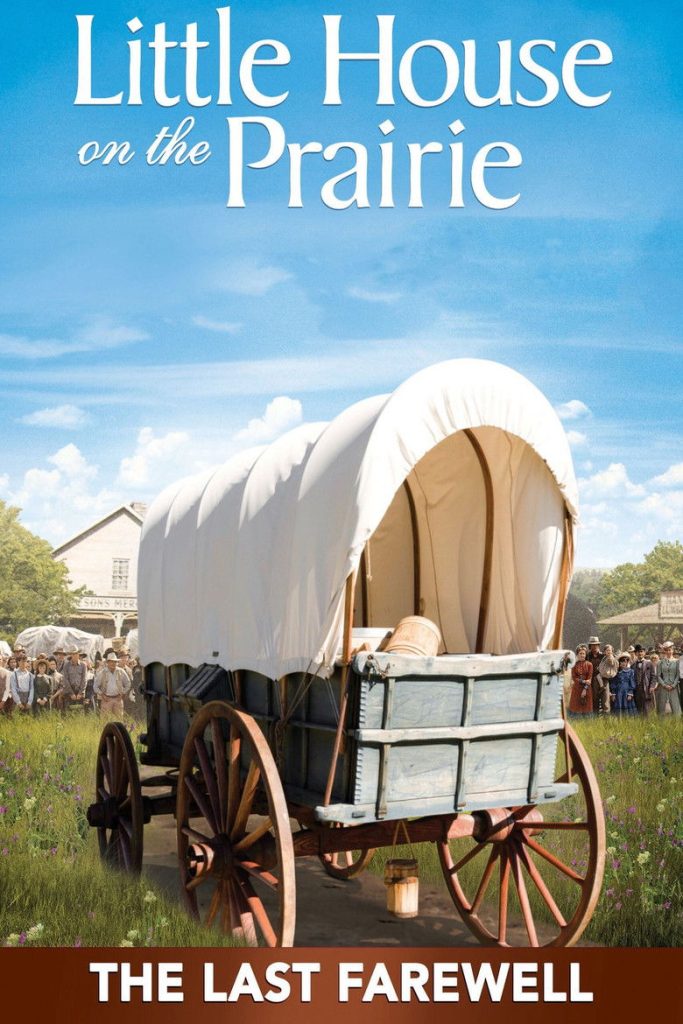
In this 1984 TV movie conclusion to the 'Little House on the Prairie' series, the Ingalls family returns to Walnut Grove to find their community threatened by a wealthy land developer who has legally acquired all the land in Hero Township. Led by Laura Ingalls Wilder's passionate response, the townspeople unite to confront this injustice and fight for their homes and way of life. The story explores themes of community solidarity, standing up against unfair systems, and preserving what matters most.
Parent Guide
A gentle, family-oriented drama with strong moral messages about community and justice. Suitable for most children with parental guidance for younger viewers during emotional scenes.
Content breakdown
No physical violence. Tense scenes of townspeople confronting the developer, emotional peril of potential displacement, and community gatherings that could be perceived as confrontational but remain peaceful.
Mildly disturbing themes of losing homes and community disruption. Some emotional scenes of townspeople expressing sadness and anger. No frightening imagery or jump scares.
No profanity or harsh language. Polite period-appropriate dialogue throughout.
No sexual content, nudity, or romantic situations beyond mild affection between married couples.
No depiction of alcohol, tobacco, or drug use.
Moderate emotional intensity surrounding themes of injustice, community loss, and standing up for rights. Several heartfelt speeches and community moments. Resolution is uplifting but may prompt questions about fairness and change.
Parent tips
This family-friendly Western drama offers positive messages about community action and moral courage. Parents can discuss: how communities can respond peacefully to injustice, the historical context of land rights in the American West, and the importance of standing up for what's right. The emotional scenes of townspeople facing displacement may resonate with children who have experienced moving or change. The resolution emphasizes community solidarity over violence.
Parent chat guide
Parent follow-up questions
- What was your favorite part of the movie?
- How did the people in the town help each other?
- What makes a home special?
- Why was the land developer able to take the town's land?
- How did Laura's words change how people felt?
- What does 'injustice' mean in this story?
- What legal and ethical issues surround the land acquisition?
- How does this story reflect historical westward expansion conflicts?
- What are effective versus ineffective ways to protest unfair situations?
- Analyze the power dynamics between the developer and townspeople.
- How does this story comment on capitalism versus community values?
- What contemporary parallels exist regarding property rights and displacement?
🎭 Story Kernel
The film's core theme explores the tension between cherished tradition and inevitable progress. The characters are driven by a deep-seated attachment to their way of life, represented by the Ingalls family's Walnut Grove. Their fight isn't just to save buildings, but to preserve a community identity and the intangible values of self-sufficiency, neighborly bonds, and a simpler existence. The central conflict arises when the railroad company's offer forces them to confront whether these ideals can survive in a changing world that prioritizes economic efficiency and expansion over sentimental history. The emotional drive is the painful acceptance that some chapters must end, even if the story lives on in memory.
🎬 Visual Aesthetics
The cinematography employs a nostalgic, sun-drenched palette of warm golds and earthy browns, visually cementing Walnut Grove as an idyllic, almost mythical place. This contrasts sharply with the sterile, impersonal grays and blues associated with the railroad representatives and the machinery of progress. Camera work often uses wide, lingering shots of the landscape and the town, emphasizing its scale and beauty as something to be lost. The final, powerful sequence of the town's demolition is filmed with a stark, documentary-like realism—the destruction is not glamorized but presented as a brutal, physical erasure, making the emotional impact visceral and direct.
🔍 Details & Easter Eggs
💡 Behind the Scenes
This 1984 television film served as the series finale for the long-running 'Little House on the Prairie,' providing closure after nine seasons. Notably, the town set built on the Paramount Ranch in California was actually demolished for the filming of the finale, making the destruction seen on screen real. Actor Michael Landon, who directed and starred as Charles Ingalls, was deeply involved in the creative decision to end the series with this definitive, metaphorical act. The emotional weight of the scene was amplified for the cast, many of whom had worked together for years, as they were saying goodbye to both their fictional homes and a significant chapter of their professional lives.
Where to watch
Choose region:
- Peacock Premium
- Peacock Premium Plus